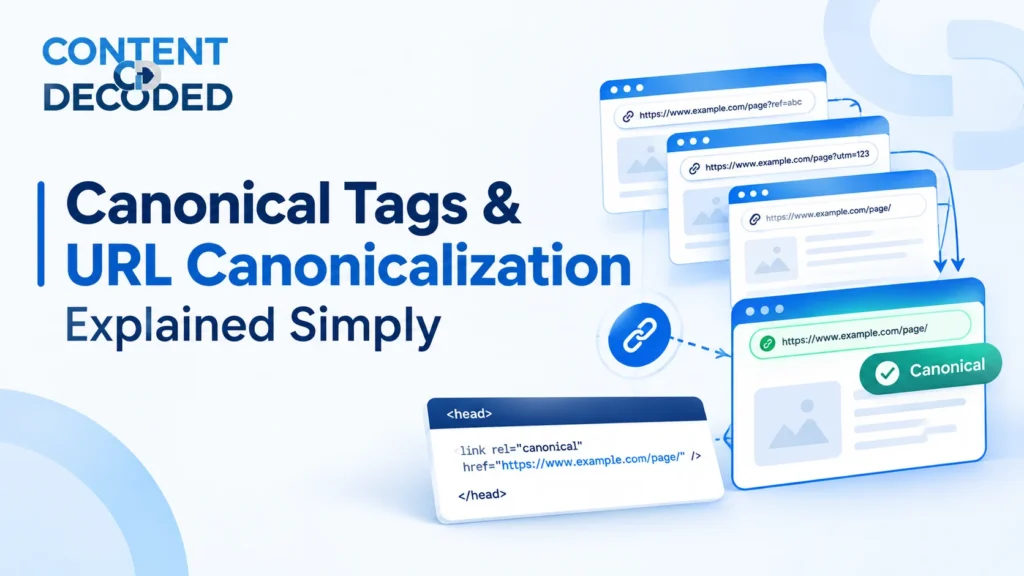
Canonical Tags and URL Canonicalization Explained Simply
Imagine you share the same photo on Instagram, WhatsApp, and Facebook. The photo is the same, but it appears in different places. Websites can work in a similar…
Decode this →
Content Decoded analyzes how Google's algorithms interpret quality, trust, intent, and usefulness — moving beyond SEO tactics to understand the systems themselves.
 Add Content Decoded as a preferred source on Google »
System-level analysis of your site's search performance
No spam. Just actionable insights.
Dive into analyses, trust signals, policies, and more — all structured to help you decode search evaluation systems.
Fresh breakdowns from how search systems think, judge, and reward content.
 Technical SEO Misunderstandings
Imagine you share the same photo on Instagram, WhatsApp, and Facebook. The photo is the same, but it appears in different places. Websites can work in a similar…
Decode this →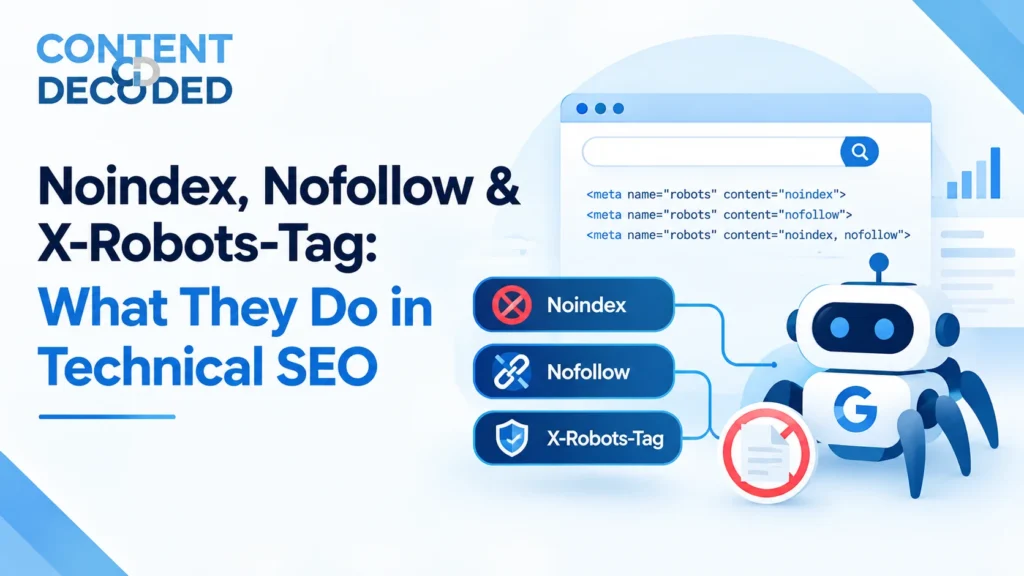 Technical SEO Misunderstandings
Imagine you launch a new website and, during a quick Google search, you notice that your thank-you page, internal search pages, or test pages are showing up in…
Decode this →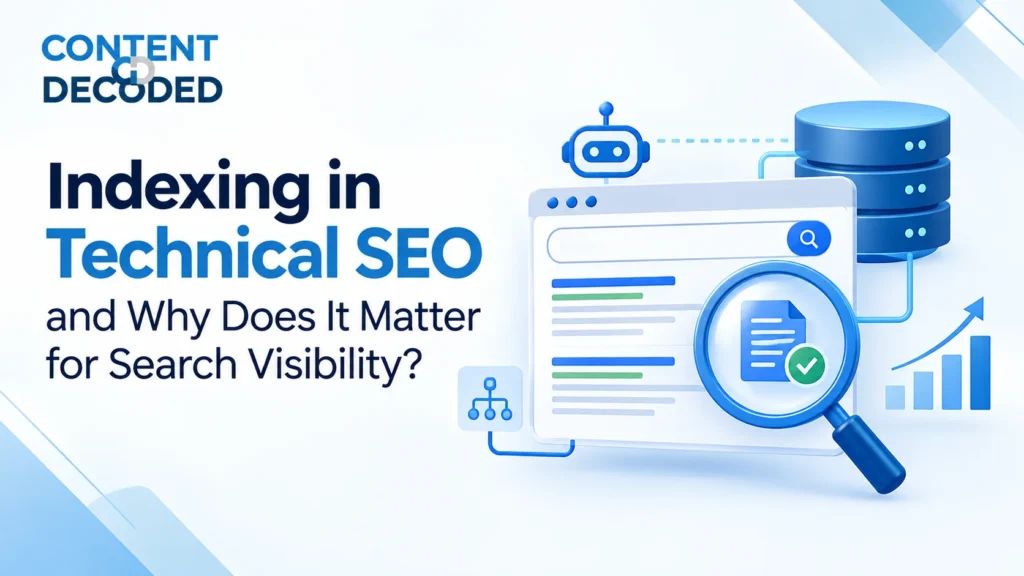 Technical SEO Misunderstandings
You search for a page on Google, but it doesn't appear in the results. The page is live, loads normally, and everything seems fine. So, why isn't Google…
Decode this →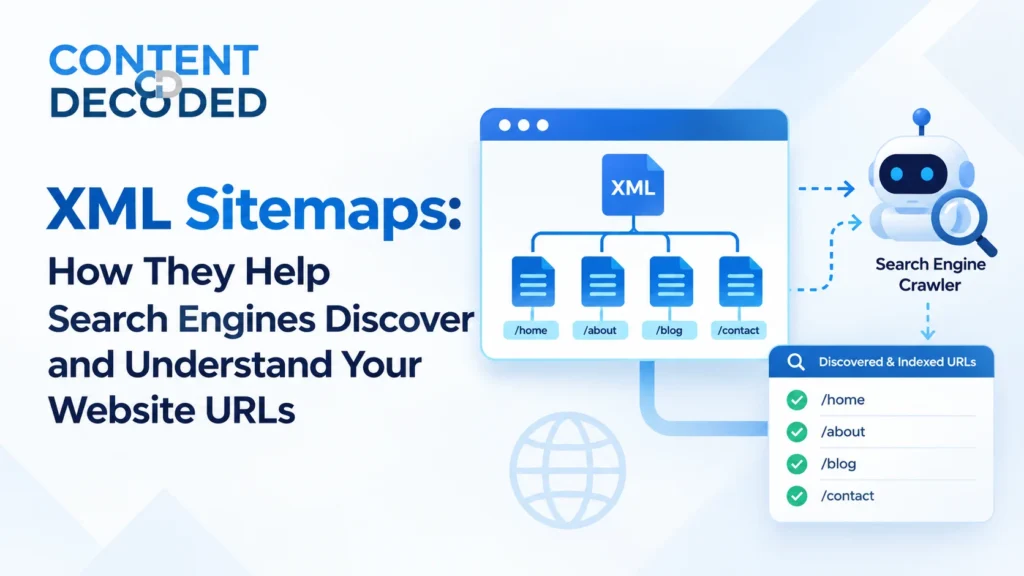 Technical SEO Misunderstandings
A small website can have just a few important pages, while a large website can have thousands of them. The challenge is making sure search engines can discover…
Decode this → Technical SEO Misunderstandings
Have you ever searched for something on Google, found a website, and then wondered why some pages appear in search while other areas of the same website don't?…
Decode this → Technical SEO Misunderstandings
Imagine you add a new product to your website. The page is live, but when you search for it on Google days later, you still can't find it.…
Decode this →Decoding the gap between SEO advice and algorithmic reality
Hi, I'm Yash Gupta. Most SEO advice focuses on tactics: "Do this, rank higher." But Google's systems don't evaluate tactics — they evaluate content quality, trustworthiness, and usefulness through complex, interconnected systems.
This site exists to bridge that gap: moving from "what to do" to "how systems think".
Why 800-word pages sometimes beat 4,000-word guides under Helpful Content Systems.
Why credentials don't automatically build trust, and how Google evaluates expertise contextually.
Why sites can follow every guideline and still lose traffic — and how policy updates get misread.
How Google sometimes rewards "incomplete" answers and why matching intent doesn't guarantee rankings.
Why perfect formatting doesn't help if content lacks substance, and how hierarchy shapes evaluation.
Why AI content passes checks but fails rankings, and how automation weakens site-wide trust signals.
Understanding how Google's evaluation systems (Helpful Content, E-E-A-T, Quality Raters) actually work together, not just what they say individually.
Pinpointing where common SEO advice diverges from algorithmic reality — and why those gaps persist.
Looking beyond individual case studies to identify system-wide patterns in how content is evaluated.
Translating system understanding into actionable insights that work within Google's actual evaluation frameworks.
"SEO isn't about gaming algorithms — it's about understanding how systems evaluate quality, then creating content that naturally satisfies those criteria."
Applying system-level understanding to real-world content and SEO challenges
Content that works within search evaluation systems
I apply the same system-level analysis from this blog to create content that naturally satisfies Google's evaluation criteria — not just follows surface-level SEO rules.
No fake reports. No shortcuts. Just sustainable business growth.
I don't focus on rankings alone. My goal is to help your business earn Google's trust, attract qualified customers, and generate consistent organic leads that turn into real revenue.
Both services apply the same system-level analysis discussed in this blog's articles.