Why Long-Form Content Doesn’t Always Rank Under Helpful Content Systems?
Let’s kill the biggest myth first: longer does not automatically mean better. A lot of smart writers are frustrated right now. You did everything by the book. You wrote 2,500+ words, optimised headings, added FAQs, internal links, schema… and still the page didn’t move.
Here’s the thing. Google isn’t impressed by effort. It’s impressive. If your content takes too long to deliver value or dances around the real question, length becomes a liability, not a strength.
The uncomfortable truth: Google does not rank word count; it ranks how fast and how completely you satisfy intent.
What this really means is that long-form content only works when every section earns its place. In this post, you’ll learn exactly why long pages fail under the Helpful Content System, what Google is actually measuring in 2026, and how to decide when long-form helps versus when it quietly kills your rankings.
📌 TL;DR
Long-form content doesn’t fail because it’s long. It fails because it wastes time.
Google doesn’t rank word count. It ranks how quickly and completely a page satisfies search intent. When content takes too long to deliver value, repeats itself, or solves the wrong version of the problem, length becomes friction.
Under the Helpful Content System, utility beats volume. Pages win when every section earns its place, information density is high, and the answer arrives fast. A sharp 700-word page can outperform a bloated 3,000-word guide if it respects the user’s time.
Long-form still works when intent is complex, high-risk, or exploratory. It fails when deep-dive formats are forced onto fast-fact or simple educational queries.
The rule is simple: write the minimum amount of content needed to fully solve the problem. Anything extra doesn’t help rankings. It quietly hurts them.
The 2,000-Word Trap: When “More Effort” Becomes a Ranking Liability
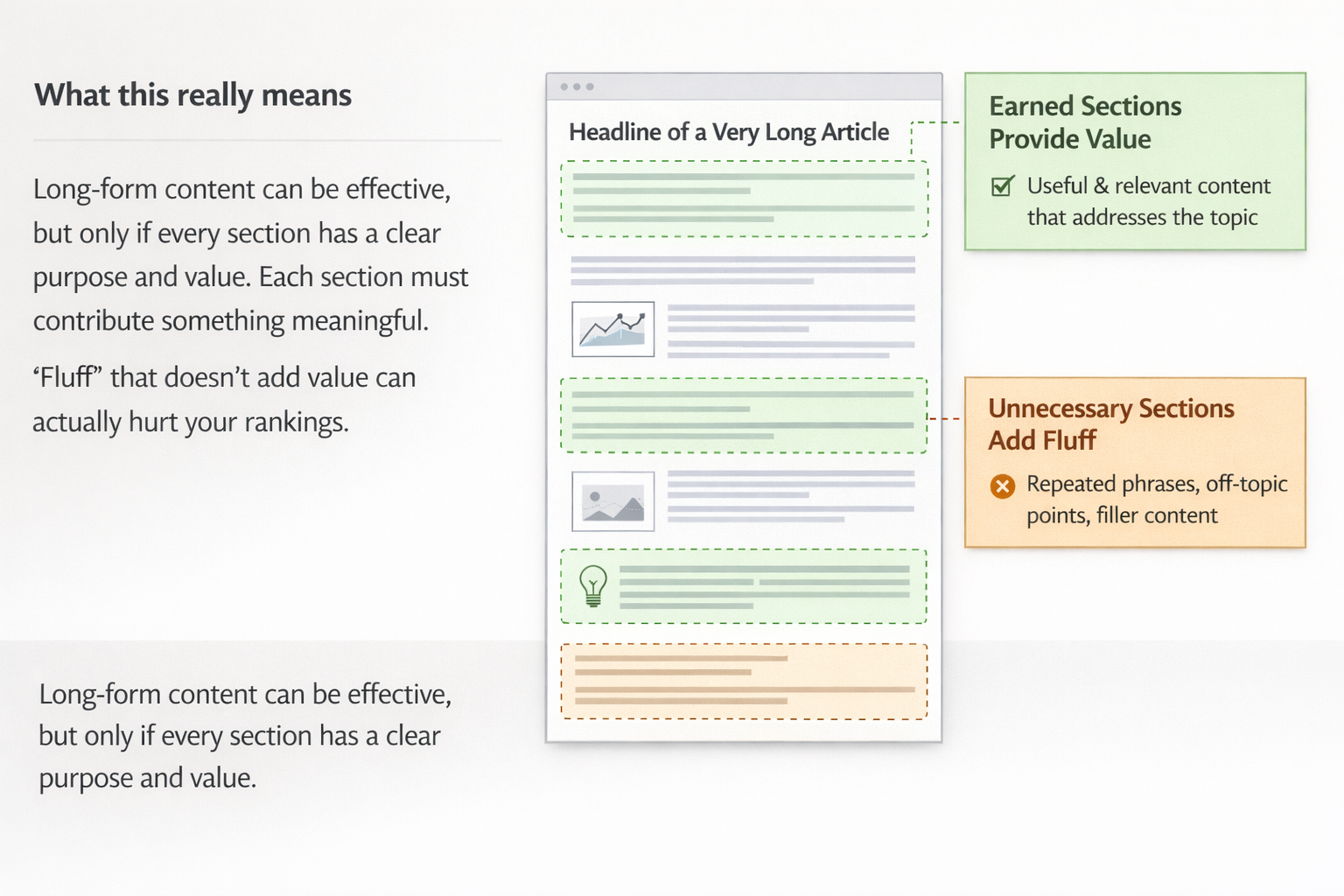
The Hidden Assumption That Breaks Most Long-Form Content
Here’s the thing: most long-form content gets wrong. It assumes Google measures effort by word count. Write more, work harder, rank higher. That belief didn’t come from Google. It came from old SEO playbooks where longer posts happened to rank because competition was weak and algorithms were blunt. The idea survived not because it works, but because it feels logical. I like thinking that more gym reps automatically mean better results. In reality, ten sloppy reps don’t beat three perfect ones. Form matters. Precision matters. Effort only counts when it’s applied correctly. Google works the same way. It’s not rewarding how much you wrote. It’s reacting to how well the page actually helps someone finish what they came for.
Word count is not an effort. Correct intent fulfilment is.
How Google Actually Interprets Over-Length Pages
When a page is unnecessarily long, users don’t read it. They scan, get tired, miss the answer, and bounce back to search. That behaviour is visible. Not in some creepy surveillance way, but in aggregate patterns that scream frustration.
Long pages increase cognitive load. Instead of feeling authoritative, they feel heavy. Users have to work to extract value, and most won’t.
Google notices signals like:
- Quick returns to the search results after scrolling
- Excessive skimming without meaningful interaction
- Drop-offs before key sections are reached
- Repeated visits to competing results for the same query
None of this means long content is bad. It means unnecessary length creates friction. And friction is the opposite of helpful.
Long ≠ Deep (And Google Knows the Difference)
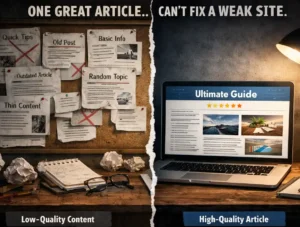
Depth solves the problem completely. Volume just circles it with extra words. A deep page anticipates confusion, answers it cleanly, and stops. A bloated page keeps talking to prove it worked hard. Google doesn’t confuse the two, because users don’t either.
Depth finishes the job. Volume just makes noise.
The Utility Rule: Why Density Replaced Volume
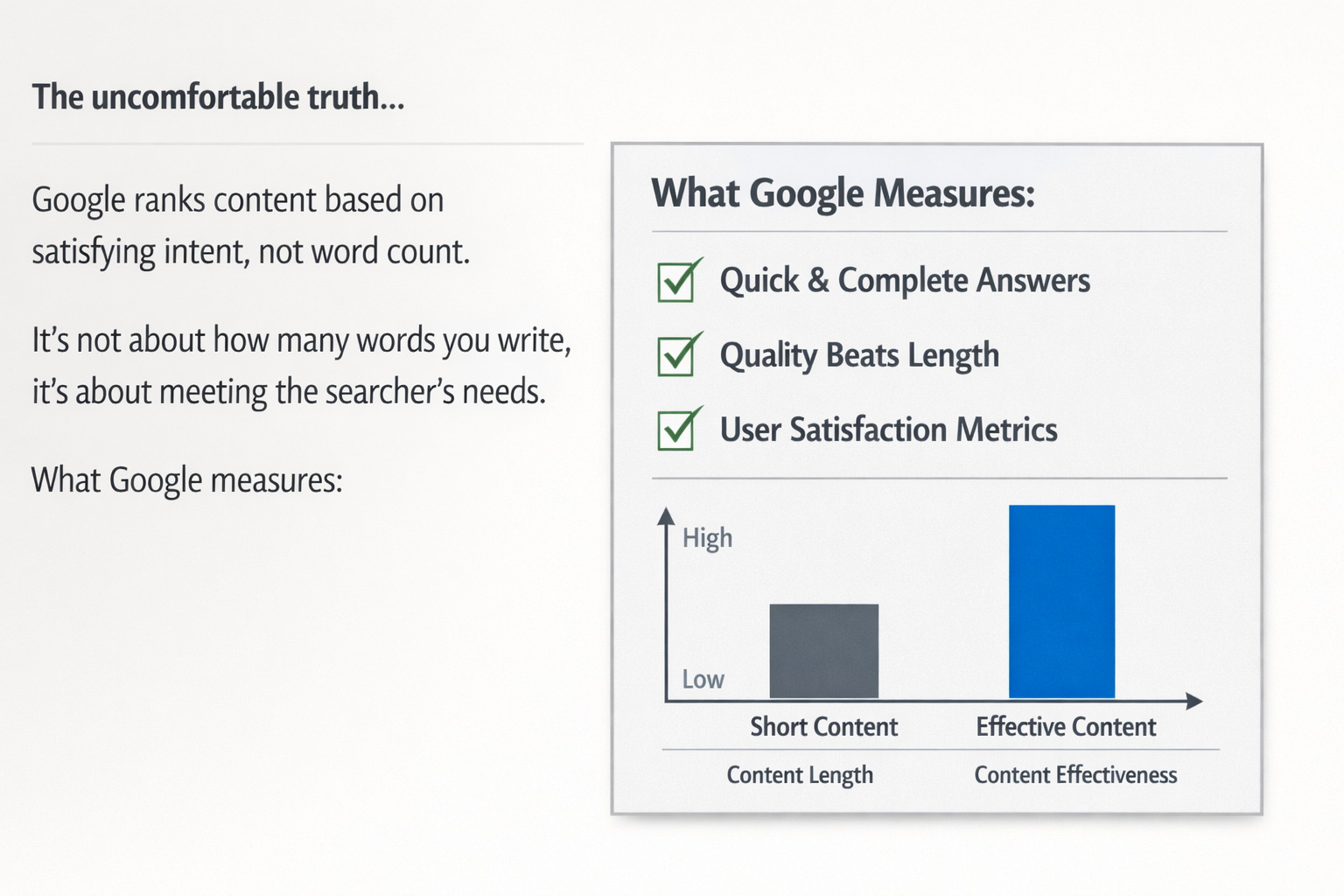
Helpful Content Systems don’t reward effort. They reward usefulness. That’s the shift most sites miss. For years, the playbook was simple: publish more, write longer, cover every angle. Now the rule is tighter. Every paragraph has to earn its place.
Google isn’t anti–long content. It’s anti–wasted content. If a page takes 800 words to deliver what could have been clear in 300, that’s friction. And friction is the opposite of helpful. Utility is no longer about how much you say. It’s about how efficiently you say the right thing.
This is why short, sharp pages are suddenly beating massive guides. They respect attention. They reduce cognitive load. They answer the question, then get out of the way.
Information Density Is the Metric That Replaced Word Count
Information density is simple: how much real value each sentence delivers. High density means every line moves the reader closer to an answer. Low density means filler, restating the obvious, or padding to hit a number.
Here’s the difference.
Padded sentence: “Content creators should always make sure that they are focusing on providing high-quality information to users so that the content can perform better in search results.”
Dense sentence: “Pages rank better when each sentence delivers new, actionable information.”
Same idea. One respects time, the other burns it. A 900-word article packed with clear insights can outperform a 3,000-word post that circles the same point five times.
Why Time to Value Matters More Than Dwell Time Now
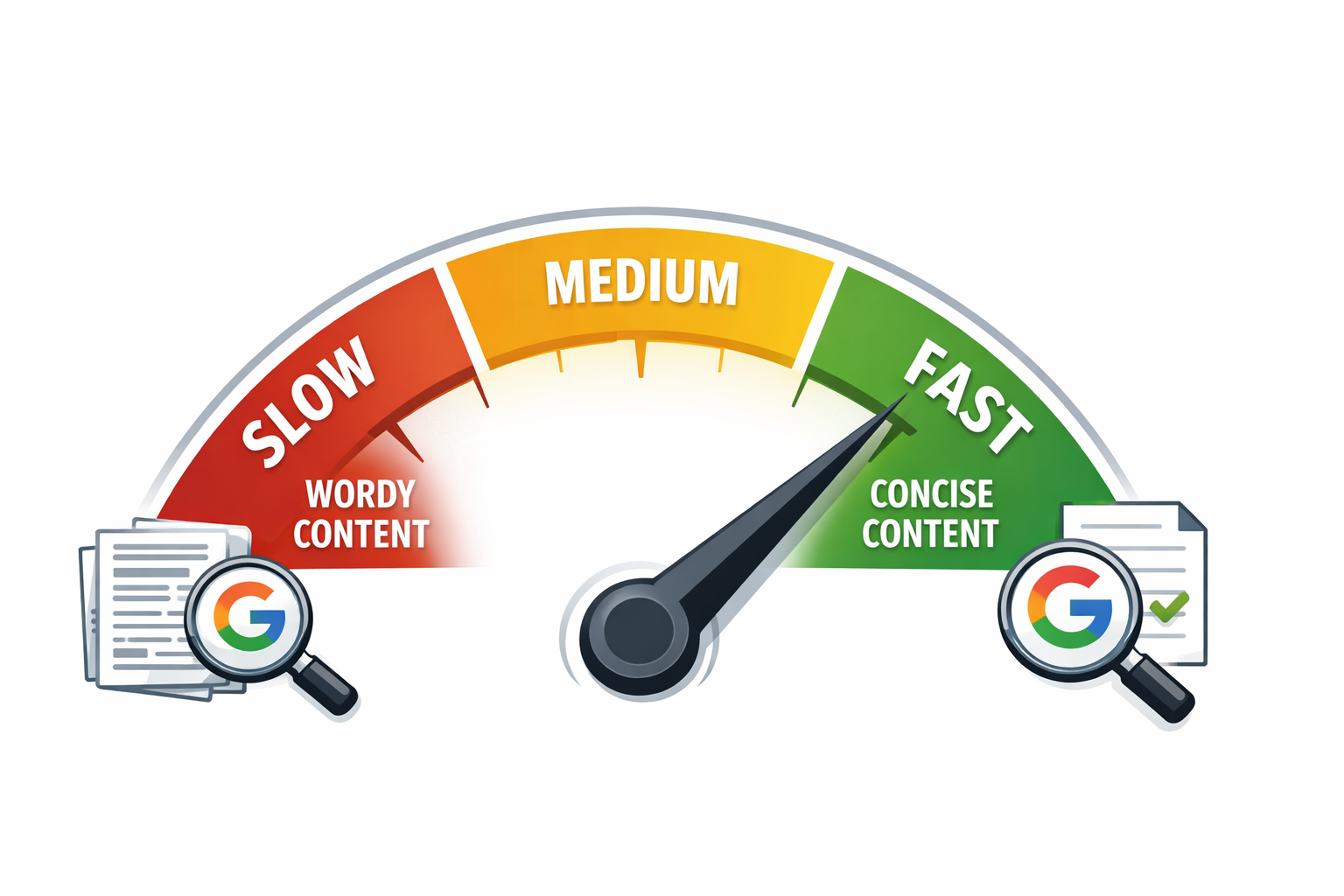
Dwell time used to be misunderstood as “keep users on the page longer.” That’s not the goal anymore. Google is watching how quickly users get what they came for.
If someone lands on your page, finds the answer in 20 seconds, and leaves satisfied, that’s a win. If they scroll for three minutes just to locate one useful paragraph, that’s a failure.
If the answer is clear, why force the reader to hunt for it?
The Question Google Is Really Scoring Your Page On
At a high level, Google’s evaluation has collapsed into one principle. It’s not about length, templates, or formatting tricks. It’s about intent fulfilment.
Did this page respect the user’s time?
If the answer is yes, volume becomes irrelevant.
Searcher Intent Misalignment: The Real Reason Long Content Fails
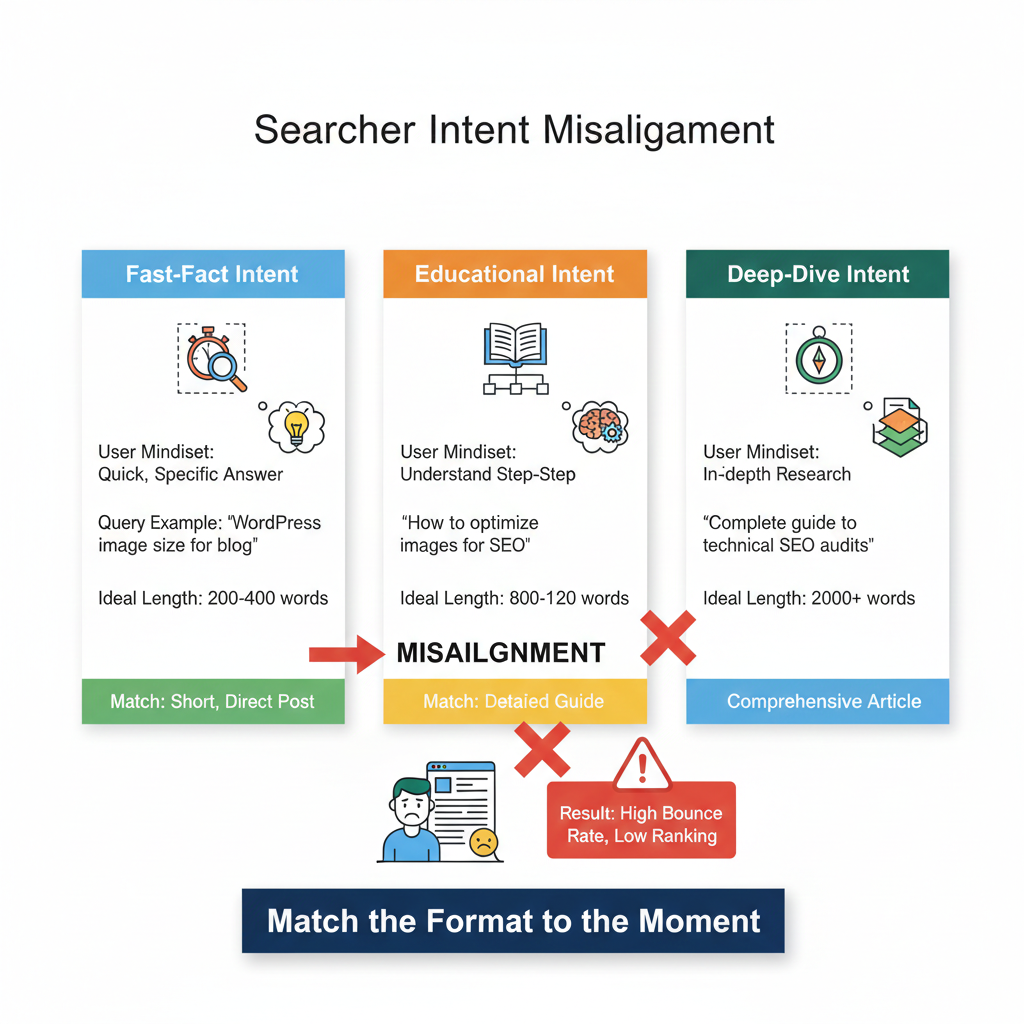
Fast-Fact, Educational, and Deep-Dive Intent Explained Simply
Here’s the thing. Most ranking problems aren’t about content quality. They’re about intent confusion . People search with different mental clocks running, and your content either respects that or ignores it.
| Intent type | User mindset | Ideal length |
|---|---|---|
| Fast-Fact | I need a quick, specific answer right now | 200 to 400 words |
| Educational | I want to understand this clearly, step by step | 800 to 1,200 words |
| Deep-Dive | I’m researching seriously and am willing to invest time | 2,000+ words |
If you want a step-by-step framework for deciding the exact word count based on real search intent signals, read this guide on how to decide blog post length by search intent →.
A fast-fact search looks like “WordPress image size for blog.” The user wants one correct answer and wants it fast. Educational intent sounds like “How to optimise images for SEO,” where explanation matters. Deep-dive intent shows up as “Complete guide to technical SEO audits,” where depth is expected and rewarded.
Problems start when content creators treat every query like a research paper. Google doesn’t ask how much you know. It asks whether you solved the problem at the speed the user wanted.
If you want practical word count benchmarks mapped to real search intent, see our full guide on how long a blog post should be for SEO.
What Happens When You Serve a Deep-Dive to a Fast-Fact Query
When a user wants a fast answer and lands on a massive article, friction starts immediately. They scroll. They skim. They look for anchors, bold text, anything that rescues them from effort.
If the answer isn’t visible in seconds, frustration kicks in. The user bounces, not because your content is bad, but because it feels heavy for a light question.
This sends clear signals. Low engagement. Short dwell time. Rapid return to search results.
Over-delivery to the wrong intent quietly trains Google to stop trusting your page.
Encyclopedia vs Manual: A Mental Model for Intent Matching
Think of it this way. An encyclopedia is built to explore a topic deeply. A manual is built to solve one problem quickly. Both are valuable. Both fail miserably when used at the wrong moment.
If someone wants to fix a leaking tap, handing them plumbing history is useless. If someone is studying plumbing systems, a one-page fix guide feels shallow.
Use this quick check before publishing:
- Use encyclopedia-style content when the query includes words like guide, complete, strategy, or framework
- Use manual-style content when the query signals urgency, setup, size, cost, or definition.
Match the format to the moment. That’s how long content earns its place instead of fighting for it.
Industry-Specific Length Sweet Spots (Why One Size Never Works)
Why Google Allows Long Content in Some Niches (And Punishes It in Others)
Length becomes acceptable to Google when the risk of being wrong is high. In niches where decisions involve money, health, safety, or long-term business impact, users expect depth before acting. Google reflects that expectation. If shallow content could cause harm or bad outcomes, longer explanations help reduce uncertainty and show responsibility. In low-risk niches, the opposite is true. Extra length adds friction, not trust, because users only want a quick answer.
Length follows consequence. The higher the cost of a wrong decision, the more patience Google assumes users will have before committing time, money, or trust to your content now.
Optimal Length by Content Type (2026 Lens)
| Content Type / Niche | Exact Word Count Range | Why It Works |
|---|---|---|
| B2B / SaaS / Enterprise | 1,500 – 3,000+ | B2B buying decisions involve multiple stakeholders and long sales cycles; comprehensive pages help teams justify ROI and compare technical specs. |
| YMYL (Health, Finance, Legal) | 2,000 – 4,000+ | These topics demand extreme depth. Incomplete advice can cause real harm, so thoroughness is a primary signal of authority and Trust (E-E-A-T). |
| How-To / Tutorials | 800 – 2,500 | Length scales with complexity. A “How to tie a shoe” guide should be brief, while “How to build a deck” requires extensive steps and edge-case explanations. |
| News / Breaking Reports | 300 – 800 | News favours brevity. Freshness and clarity matter more than exhaustive background once the core “Who, What, When, Where” is delivered. |
| Opinion / Thought Leadership | 700 – 1,200 | These succeed at a moderate length—enough to argue a unique stance clearly without exhausting the reader with repetitive justification. |
| E-commerce Product Pages | 300 – 600 | Intent is transactional. Users want quick specs, benefits, and social proof. Too much text can actually hurt conversion rates by burying the “Buy” button. |
| Lifestyle / Travel / Hobby | 1,000 – 2,000 | High intent for inspiration and storytelling. Readers expect a balance of vivid descriptions, practical tips, and high-quality imagery. |
The Mistake of Copying Length From Competitors
Copying competitor length feels safe, but it usually produces bloated replicas of the same ideas. Google sees sameness instantly. When everyone matches word count instead of intent coverage, nobody adds new value.
If the top result already answers everything at that length, what exactly are you adding by repeating it with a few extra headings and rearranged paragraphs, really helping?
Information Gain: Why “Better Written” Is No Longer Enough
How Google Detects Redundant Content in 2026
Google has moved past judging pages by polish or length. It now looks at whether a page adds anything new to the conversation. If a piece repeats ideas already common across the top results, it gets treated as interchangeable, even if the writing is clean and confident.
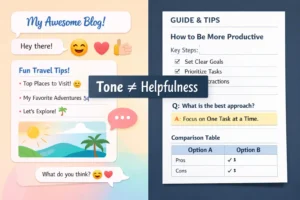
This is exactly why “writing for humans” alone doesn’t guarantee helpful content → — because tone and polish mean nothing if the page doesn’t add new value or fully satisfy intent.
This judgment is not about matching sentences. It is about matching thinking. When multiple articles answer the same questions in the same order, with the same assumptions, the page blends in. The outcome is simple: no reason for Google to prioritise it over what already exists. Better phrasing cannot rescue content that says nothing different from competitors ranking above you right now, today.
What the Top Results Usually Miss (And How to Exploit That)
Most high-ranking pages fail in predictable ways. They chase completeness, not insight, which creates openings you can exploit.
- Outdated assumptions that no longer match how users behave today
- Edge cases that real users hit, but template-driven content ignores
- Unanswered objections that make readers hesitate or doubt the advice
Example: When This Advice Fails for First-Time Site Owners
Gap finding starts by reading top results as a critic, not a fan. Notice what feels glossed over, avoided, or frozen in time. Then write directly into that silence. A single section that answers what others dodge can carry more weight than thousands of safe, familiar words. That is where information gain actually shows up and earns attention from algorithms.
Turning Experience Into a Ranking Advantage
Firsthand experience changes the texture of content. It introduces friction, nuance, and specific consequences that generic advice avoids. When you describe what actually happened, including mistakes and tradeoffs, readers recognise reality. That recognition keeps them engaged and signals usefulness in ways summaries never can.
⚡ I followed this strategy on a low authority site, watched it stall for weeks, changed one assumption, and saw rankings move within days after removing advice that looked smart but confused real visitors and forced unnecessary steps before delivering the answer they came for initially anyway.
Structural Signals That Make Long Content Feel Effortless
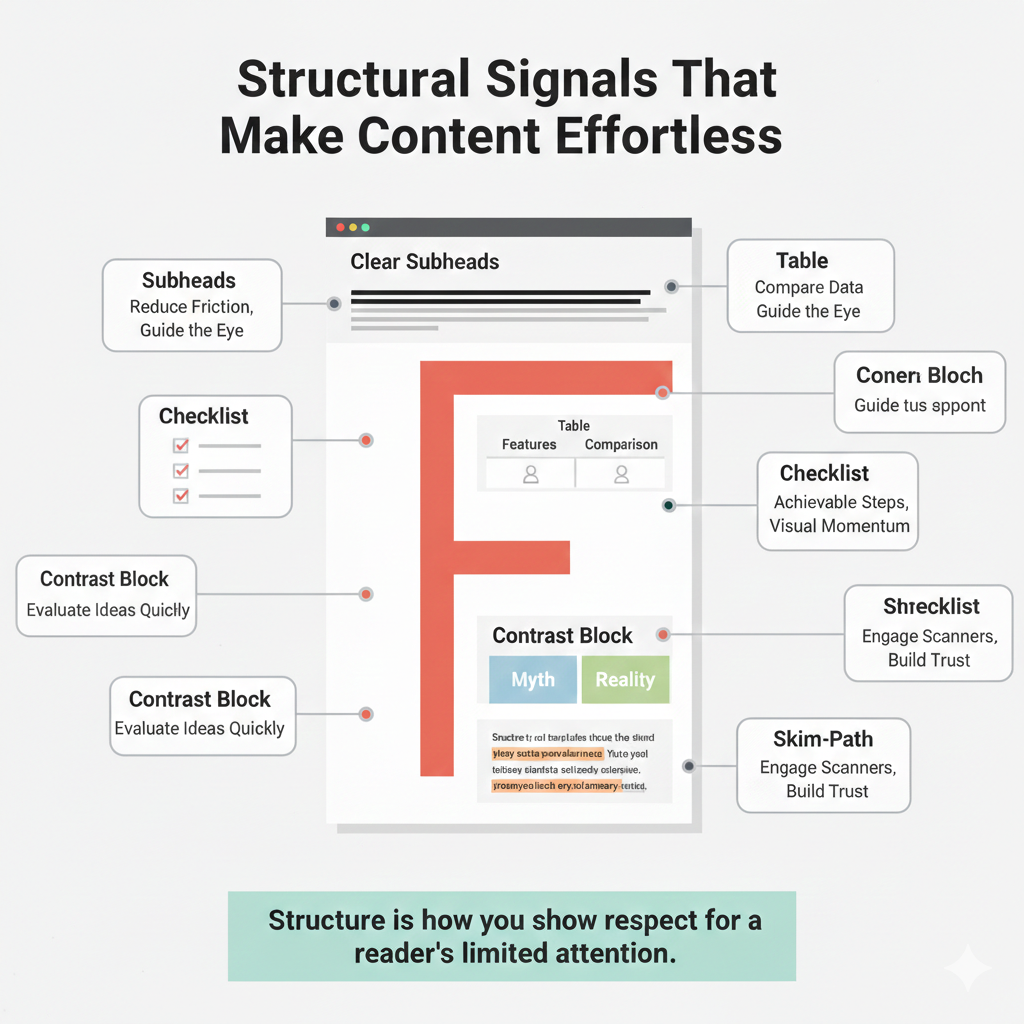
Writing for Skimmers Without Dumbing Things Down
Most readers do not read line by line. They scan in an F pattern, starting at the top, skimming left, then dropping down. If your structure ignores this behaviour, even great insights feel heavy and hard to access.
Clear subheads, predictable spacing, and visual pauses let skimmers extract meaning fast, then decide where to slow down. You are not simplifying ideas; you are reducing friction so depth becomes optional, not forced for readers who want to go deeper later.
Structure is how you show respect for a reader’s limited attention.
Strategic Use of Tables, Callouts, and Contrast Blocks
Data comparisons or feature differences work best as tables, because rows and columns remove ambiguity and let readers compare values without rereading surrounding explanations.
Sequential steps, frameworks, or checklists belong in bullets, where vertical rhythm guides the eye and completion feels achievable rather than cognitively exhausting.
Myth
Length proves depth. More words = smarter.Reality
Depth finishes the job; volume just repeats.Plain paragraphs are best reserved for narrative flow, nuance, or synthesis when the goal is persuasion, not quick extraction, and readers expect to slow down deliberately without scanning for shortcuts or exits.
The “Skim-Path” Technique That Keeps Readers Scrolling
The skim path is the invisible route a scanner takes through your page. By bolding only conclusions, causal links, and decision points, you create a quiet guide. Readers feel oriented, not manipulated, and trust that slowing down will actually reward them with clarity, momentum, and a sense of progress rather than fatigue or confusion over time online today.
Bold logic, not filler, and readers will follow the path you intend.
The Long-Form Self-Audit: Should This Page Be Shorter?
The Delete-20-Percent Test
Here’s the fastest way to find out if your content is bloated: cut it. Not rewrite. Not Polish. Delete. Long-form pages usually fail because they protect weak sections out of habit. Introductions that warm up forever. Explanations that repeat the same point three times. Examples that don’t add clarity. If your page is truly useful, it should survive aggressive trimming without collapsing. What remains after deletion is your real value.
- Copy the entire draft into a fresh document
- Delete at least 20 per cent without mercy
- Re-read and check if the core message still works
If nothing meaningful broke, the page was too long to begin with.
The Searcher’s Clock Test
Every search query comes with an unspoken time budget. Some users want a quick answer in thirty seconds. Others are willing to invest five or ten minutes. Very few want to scroll for half an hour. Your job is to match the page length to that expectation, not your ego as a writer.
Example: “What is schema markup?” suggests a short explanation. “How to implement schema for e-commerce SEO” earns a longer guide.
Mismatch the clock, and users bounce.
The “Would I Read This?” Gut Check
This one is uncomfortable, which is why it works. Step away from SEO tools and rankings for a moment. Read your page like a tired human, not a content strategist. If you find yourself skimming, scrolling faster, or mentally checking out, that reaction matters. Google doesn’t need to guess. Users show it instantly through behaviour.
Be honest with yourself.
If this weren’t your site, would you finish reading this page?
The Real Definition of Optimal Length
Minimum Viable Depth Explained
Optimal length isn’t about hitting a number; it’s about finishing the job for the reader. If someone searches with a clear problem, the page that ranks is the one that removes confusion, answers follow-up questions, and leaves nothing essential unresolved. Extra words that don’t move the solution forward dilute clarity and slow time-to-value.
Minimum viable depth is the smallest amount of content needed to completely satisfy intent, prevent follow-up searches, and let a reader confidently act without scrolling, skimming, or hunting elsewhere after finishing the page the first time only.
Not Sure How Long Your Blog Should Be?
Use the Ideal Blog Length Finder to calculate the exact word count your topic needs based on intent, competition, and complexity.
Calculate Your Ideal Blog Length →Why Shorter Content Often Wins in 2026
In 2026, Google will increasingly reward pages that resolve intent fast. Zero-click behaviour, featured answers, and AI summaries train users to expect efficiency, not exploration. Zero-click behaviour, featured answers, and AI summaries choose sources which provide exact answer early and provide solution in less words. When a page satisfies the query immediately, users don’t bounce back to results, scroll endlessly, or open competitors. Those efficiency signals tell Google the search is complete, even if the page is objectively short. Speed beats depth when intent is simple and singular for most searches.
When Long-Form Still Dominates (And Why)
Long-form still wins when intent is complex, comparative, or exploratory. Topics involving strategy, trust, or high-stakes decisions demand layered explanations, examples, and nuance. In those cases, depth improves satisfaction because the reader expects to spend time learning, not just confirming.
Final Takeaway: Stop Writing to Impress Google, Start Solving Problems
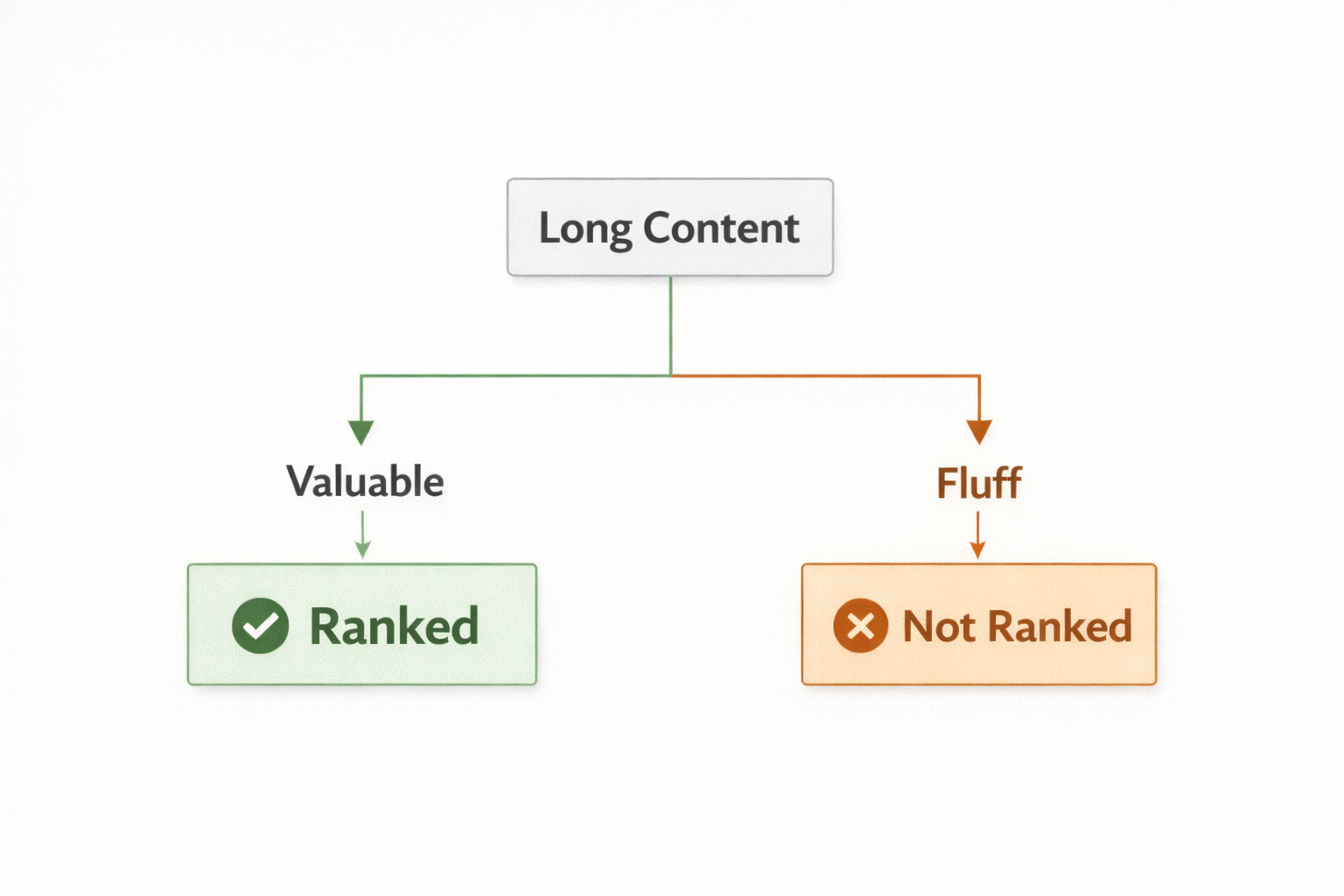
Now, at last, I want to say that Google is not a teacher grading homework. It’s a system trying to match humans with answers that actually help them move forward. When you write to impress algorithms, you default to padding, repetition, and safe clichés. When you write to solve a real problem, structure sharpens, examples matter, and unnecessary words fall away. SEO works best when it disappears behind usefulness, clarity, and speed of understanding.
Stop asking what Google wants and start fixing what the reader is stuck on. Remove friction and rankings follow. Write to be useful first, and let Google catch up naturally eventually.
📎 Google’s official guidance: Creating helpful content (google developers) — reference.
Frequently Asked Questions
Does Google still prefer long-form content over short articles?
Google no longer ranks by length. It checks intent speed. Quick facts win short answers, complex problems reward depth. Clarity beats word count, every time.
Can a 500–800 word article realistically outrank a 3,000-word post?
Yes, when density is higher. A clear 700-word guide can beat 3,000 bloated words by answering faster, reducing friction, and respecting reader time.
Is long-form content risky under the Helpful Content System?
Yes. Long-form is high-risk, high-reward. If sections don’t earn attention, fatigue spikes, abandonment rises. One weak section can sink the entire page.
How do I know if my content is too long for the query?
You’ll feel it. Users scroll aggressively, answers arrive late, ideas repeat. When reading your own post, do you feel relief or impatience?
Should I shorten existing long-form content that isn’t ranking?
Yes, but don’t panic. Trim redundancy, surface insights sooner, restructure for skimmers. The goal is simple: reduce friction, not depth.
— every paragraph must earn its place. —
 Add Content Decoded as a preferred source