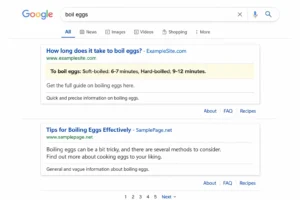
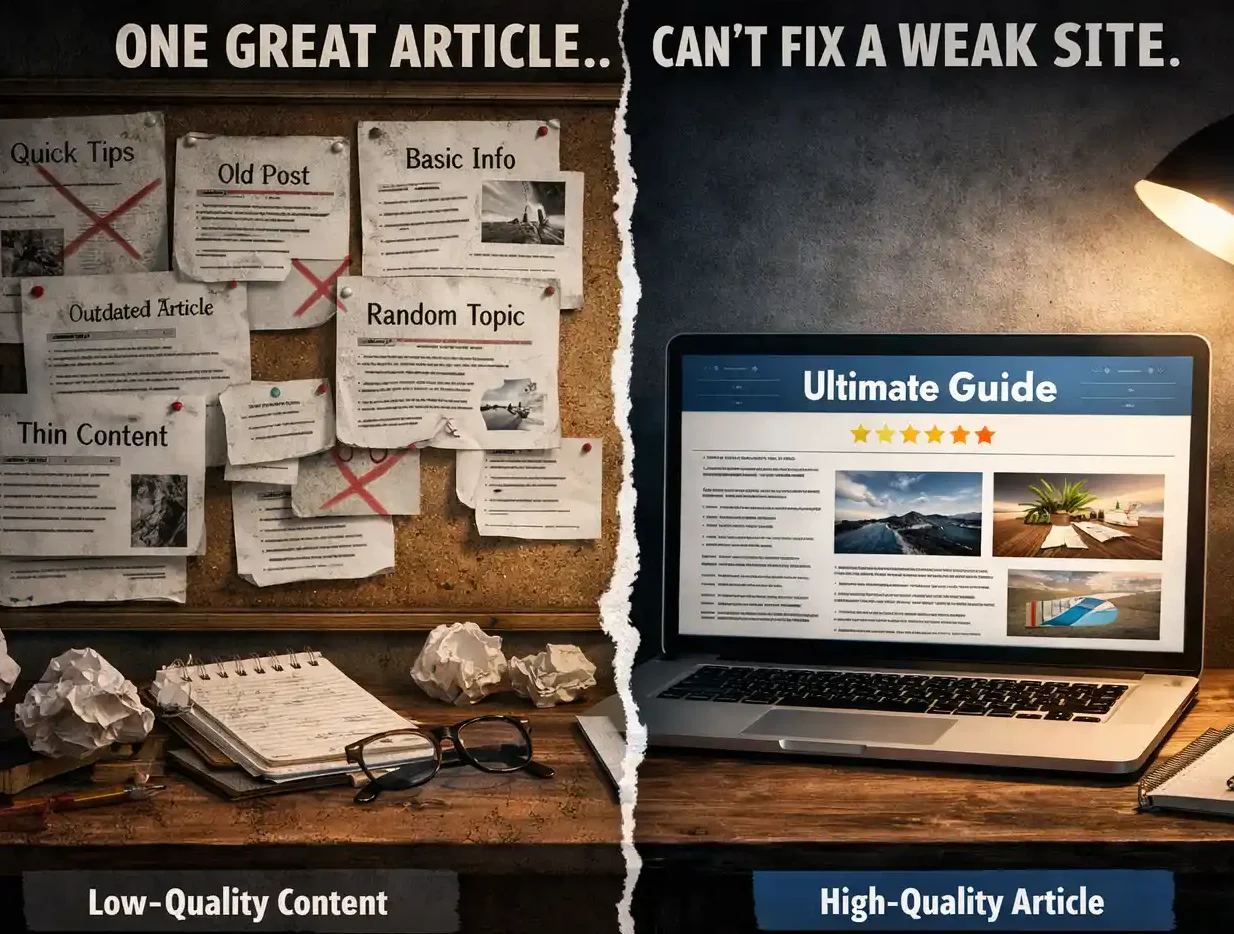
Why a Helpful Page Can’t Fix a Weak Site?
Imagine a collapsing house with one luxury room renovated to perfection. Marble floors. Designer lighting. Flawless decor. It still doesn’t matter. The foundation is cracked. The wiring is failing. No one trusts the structure.
In 2026, search engines no longer rank your best effort; they rank your average output. One ‘A+’ page cannot hide a sea of ‘C-‘ content because the algorithm is designed to find the floor, not the ceiling—this is exactly why exact-match blogs often fail to rank in the top 100.
Many creators believe one exceptional guide can carry an entire website. Publish a massive deep dive, add research, polish every sentence, and rankings will follow. It sounds logical. If the page is outstanding, why wouldn’t it win?
But search engines don’t evaluate pages in isolation. They evaluate ecosystems. Visibility is shaped by patterns across the entire site, including:
- Internal links
- Topic depth
- User behaviour
- Consistency
- Historical trust
Authority is not declared. It is accumulated over time through structure, reinforcement, and cohesion.
Helpfulness isn’t confined to a single URL. It’s structural. It’s behavioural. It’s cumulative. If users land on your hero article but bounce when exploring the rest of the site, that signal spreads. If the surrounding content is thin, outdated, or disconnected, the strong page inherits that weakness.
The myth of the hero page persists because it feels efficient. Build one masterpiece and win. But search doesn’t reward isolated brilliance. It rewards integrated value.
And that’s where the real misunderstanding begins.
📌 TL;DR — No Time? Read This.
One great article won’t save a weak website.
Search systems don’t rank pages in isolation. They evaluate patterns across your entire domain: topical focus, internal linking, user behaviour, depth, and consistency. If most of your site is thin, scattered, or outdated, one exceptional guide looks like an anomaly, not an authority.
Trust compounds. It forms when multiple pages reinforce each other, cover different search intents, and create a clear thematic identity.
A viral spike won’t fix structural weakness. More content won’t fix diluted focus.
What actually works?
Build clusters. Strengthen internal links. Raise your quality floor. Remove weak pages. Think in systems, not showpieces.
Authority isn’t declared by one masterpiece. It’s accumulated across the whole site.
The “Hero Page” Illusion Is Comforting — and Wrong
Let’s be honest. The idea that one massive, beautifully written 3,000-word guide can carry your entire site feels reassuring. Publish a masterpiece, sit back, and expect rankings to follow. Clean. Logical. Simple.
Here’s the problem. Search systems do not evaluate pages in isolation. They evaluate patterns.
A single strong URL sitting inside a weak ecosystem does not create authority. It creates contrast. Ranking systems observe signals that extend beyond one page, including:
- Domain-level consistency
- Topical coherence
- Internal linking logic
- User behaviour across multiple pages
If visitors land on your hero guide but bounce from supporting articles, that pattern becomes data. If related posts feel shallow, disconnected, or repetitive, that pattern becomes data too. The system doesn’t separate your best page from the rest. It reads the experience as a whole.
Authority is not declared. It is inferred from repeated signals across a site.
If your best page disappeared tomorrow, would the rest of your site still feel credible?
What this really means is that rankings are built on system evaluation, not isolated brilliance. And to understand why, we need to look at how pattern recognition shapes modern search mechanics.
How Search Systems Evaluate the Whole, Not the Highlight?
Here’s the thing: search systems don’t judge your site the way humans do. They don’t clap for your best article and ignore the rest. They look for patterns. Not moments. Not highlights. Patterns. What this really means is that performance is measured across the ecosystem of your URLs. If most of your pages confuse users, dilute topics, or fail to convey intent, that pattern defines you more than a single standout guide ever could.
Site-Level Quality Patterns
Algorithms detect signals that repeat across your domain. They look for coherence, alignment, and satisfaction trends such as:
- Internal linking coherence
- Topic consistency across clusters
- Intent alignment with queries
- Repeated short sessions
- Pogo-sticking across multiple URLs
| Signal Pattern | What It Suggests to Search Systems |
|---|---|
| Strong internal linking | Structured topic depth |
| Consistent topical focus | Clear domain expertise |
| Short repeat sessions | Dissatisfaction |
| Frequent pogo-sticking | Intent mismatch |
| Cross-page engagement | Ecosystem strength |
Imagine behaviour signals flowing between pages like connected nodes in a network. If users land on one page, then bounce to another, then back to search, that friction isn’t isolated. It forms a behavioural map. One strong page surrounded by weak ones doesn’t look authoritative. It looks accidental.
If 90% of your site sends weak signals, the strong page becomes statistical noise.

Helpful Content Is a Site-Wide Classifier
Helpfulness systems evaluate the source, not just the document. They’re designed to ask: Does this domain consistently satisfy users? That’s where concepts like E-E-A-T come in. Not as a checklist, but as a reputation layer formed over time. Experience, expertise, authority, and trust aren’t page decorations. They’re cumulative signals built through consistency.
This is why credentials alone don’t build trust → — consistency matters far more.
One insightful article cannot offset dozens of shallow ones. The system models reliability the way humans do. Patterns create confidence. Inconsistency creates doubt.
Helpfulness is not a page attribute. It is a site identity.
Consistency beats isolated brilliance every time.
Source Reputation Score
Think of your site like a witness in court. If a witness tells one brilliant truth but is caught in ten lies, the jury disregards everything they said. A weak site is a witness with a credibility problem. One strong statement doesn’t erase ten inconsistencies.
What Actually Makes a Site Weak?
Topic Dilution
Imagine landing on a blog that’s supposedly about car tyres. You expect comparisons, maintenance guides, and seasonal advice. Instead, one of the latest posts is a detailed sourdough baking tutorial. Another covers home gardening tips. The content might be well written, even helpful. But here’s the problem: it breaks the topical signal. A site that talks about everything ends up standing for nothing.
Search systems model relevance across the whole domain, not just a single page. When unrelated topics creep in, the core theme blurs. The site stops looking like an authority and starts looking like a content dump. What this really means is simple: inconsistency weakens trust, both algorithmically and psychologically.
Thin Supporting Content
Clusters only work when they deepen the main topic. Publishing ten short posts that skim the surface doesn’t strengthen expertise. It just creates noise.
Volume feels productive. Reinforcement builds authority. They are not the same.
Thin content usually looks like this:
- Surface summary
- No internal depth
- No contextual expansion
If supporting pages don’t add new layers, examples, comparisons, or data, they don’t strengthen the core. They just inflate the sitemap.
UX and Structural Friction
Now let’s talk about experience. A cluttered layout. Tiny fonts. Aggressive popups. Slow load time. Outdated formatting that feels stuck in 2012. Even strong content struggles inside a weak container. Users hesitate. They skim instead of reading. They bounce instead of exploring.
When structure creates friction, trust quietly disappears.
Why One Strong Page Cannot Carry the Weight?
Trust Is Compound
A single impressive article can grab attention, but trust doesn’t work that way. It builds quietly across sessions and clicks. Someone lands on your best page and feels satisfied. Good start. Then they explore. Another article. Then another. If those feel thinner or disconnected, the initial confidence fades. What felt like authority starts to look like luck.
Users don’t judge pages in isolation. They judge patterns. They notice tone shifts and uneven depth. They sense when one piece is crafted with care, and the rest are placeholders. The mind asks a simple question: was that first page the standard or the exception? Once doubt slips in, credibility falls faster than it was built.
Consistency builds belief.
Anomalies Don’t Equal Authority
Search systems work similarly. They look for repeated signals of quality. One high-performing page inside a weak domain does not establish expertise. It looks like a spike, not a trend. Algorithms are designed to reward sustained reliability, not isolated brilliance.
Authority is proven through repetition.
The Architecture of a Strong Site
Topical Clusters That Reinforce Expertise
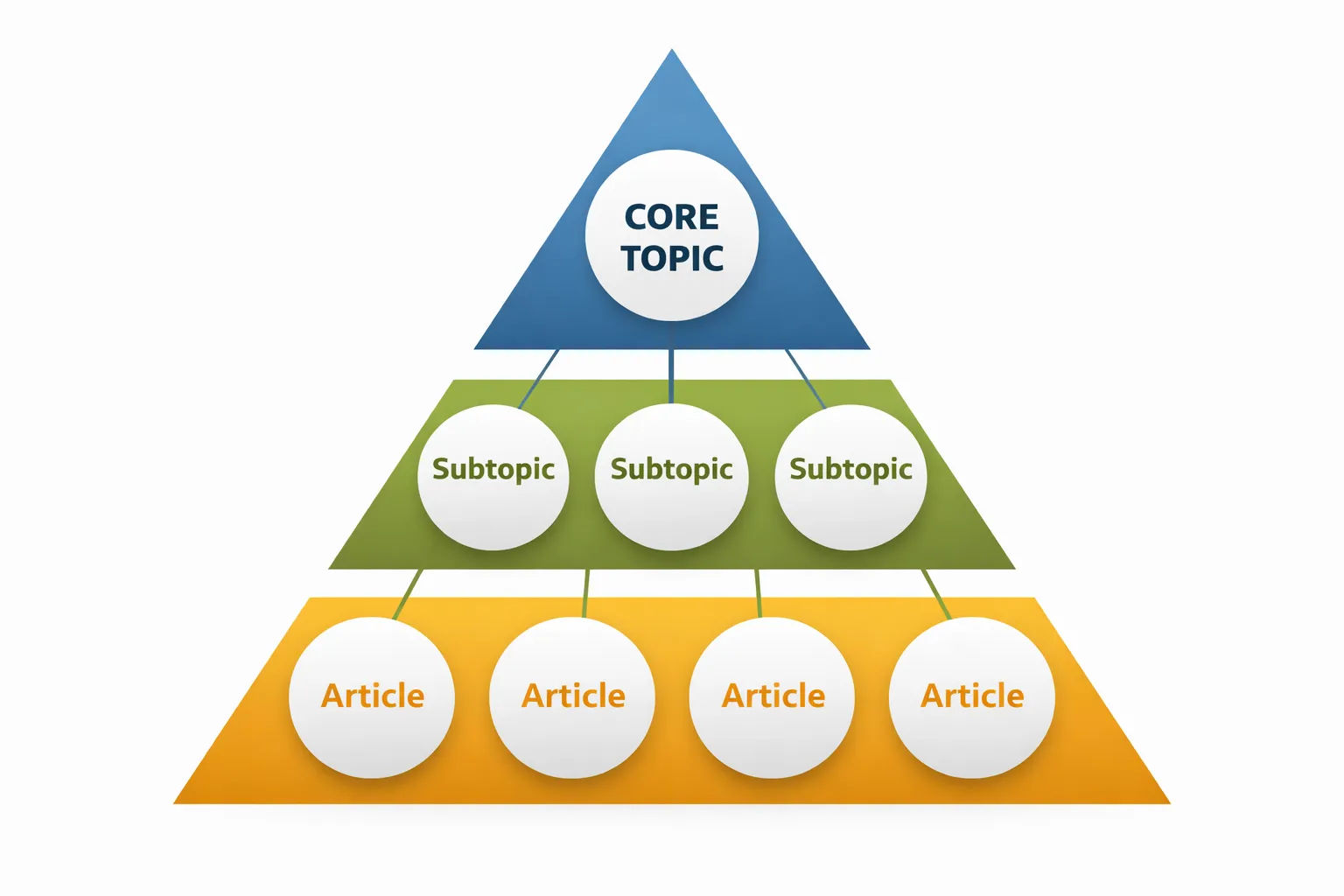
A strong site isn’t a pile of articles. It’s a system. Think of one central page that owns the main topic, supported by focused pieces that explore specific angles. The main page gives the big picture. The supporting pages go deep. Together, they signal that you don’t just touch the topic, you understand it from multiple sides.
Here’s how that depth usually unfolds:
- Beginner guide – Introduces the topic clearly. Definitions, fundamentals, common mistakes.
- Intermediate expansion – Explains frameworks, processes, and practical applications.
- Advanced breakdown – Covers edge cases, nuanced scenarios, and trade-offs.
- Related problem-solving posts – Answer real-world questions people struggle with inside the same theme.
Logical next Step – A strong site anticipates the next question, using high-utility internal links so a helpful page never becomes an isolated island.
When these pieces connect naturally, they reinforce each other. The central page becomes stronger because it’s supported by depth. The supporting pages gain context because they’re part of something larger. That’s how authority compounds.
Internal Reinforcement Loops
When pages reference each other with purpose, they create reinforcement loops. A beginner article links to the deeper guide. The advanced guide links back to foundational explanations. Problem-solving posts point readers toward a broader context.
What this really means is simple: relevance becomes layered. Search engines see semantic relationships. Readers see continuity. Nothing feels isolated. Every page strengthens the rest.
If you want to understand how these cross-page signals compound into authority, read how trust signals work across multiple pages. It breaks down how consistency between related URLs builds cumulative trust.
Intent Layering
A mature topic ecosystem doesn’t serve one type of search. It captures curiosity, comparison, and decision in one structure.
| Intent Type | Example Query | Supporting Role |
|---|---|---|
| Informational | What is technical SEO? | Core explainer |
| Comparative | Technical SEO vs on-page SEO | Context builder |
| Decision-stage | Best technical SEO checklist | Action driver |
When all three exist under one roof, the site feels complete.
Raising the Quality Floor
Your ranking ceiling depends on your lowest-performing page. Weak content drags perception down. Strong sites protect their baseline.
- Update outdated or thin pages with real depth.
- Merge overlapping articles into stronger unified assets.
- Delete content that adds no value or relevance.
Sometimes growth comes from subtraction.
Case Comparison — Which Site Would You Trust?
Site A — The Lone Masterpiece
Site A has one exceptional article. Deep research. Clear insights. Practical value. It truly helps.
But step outside that single page, and the picture changes. There are forty other posts. Thin content. Surface-level takes. No real depth. No internal links guiding you to related ideas. Each article feels isolated, like it was published and forgotten.
The result? The great piece feels accidental, not intentional. It looks like a lucky strike rather than a reliable pattern.
Site B — The Reinforced System
Site B does not rely on one superstar page.
Instead, it has twenty well-developed posts. Each covers a focused subtopic. They reference one another naturally. Concepts built across articles. The structure feels deliberate.
The site communicates consistency. It shows expertise through repetition and reinforcement, not randomness.
The Reflection
| Factor | Site A — Lone Masterpiece | Site B — Reinforced System |
|---|---|---|
| Content Depth | One exceptional page | Multiple strong pages |
| Topical Focus | Scattered | Focused |
| Internal Links | Weak or random | Strategic |
| User Experience | Inconsistent | Cohesive |
| Perceived Authority | Accidental | Intentional |
If you were researching something important, which site would you trust?
Here’s the thing: authority is not a moment. It’s a pattern.
But What About Viral Pages?
Temporary Spikes vs Sustainable Authority
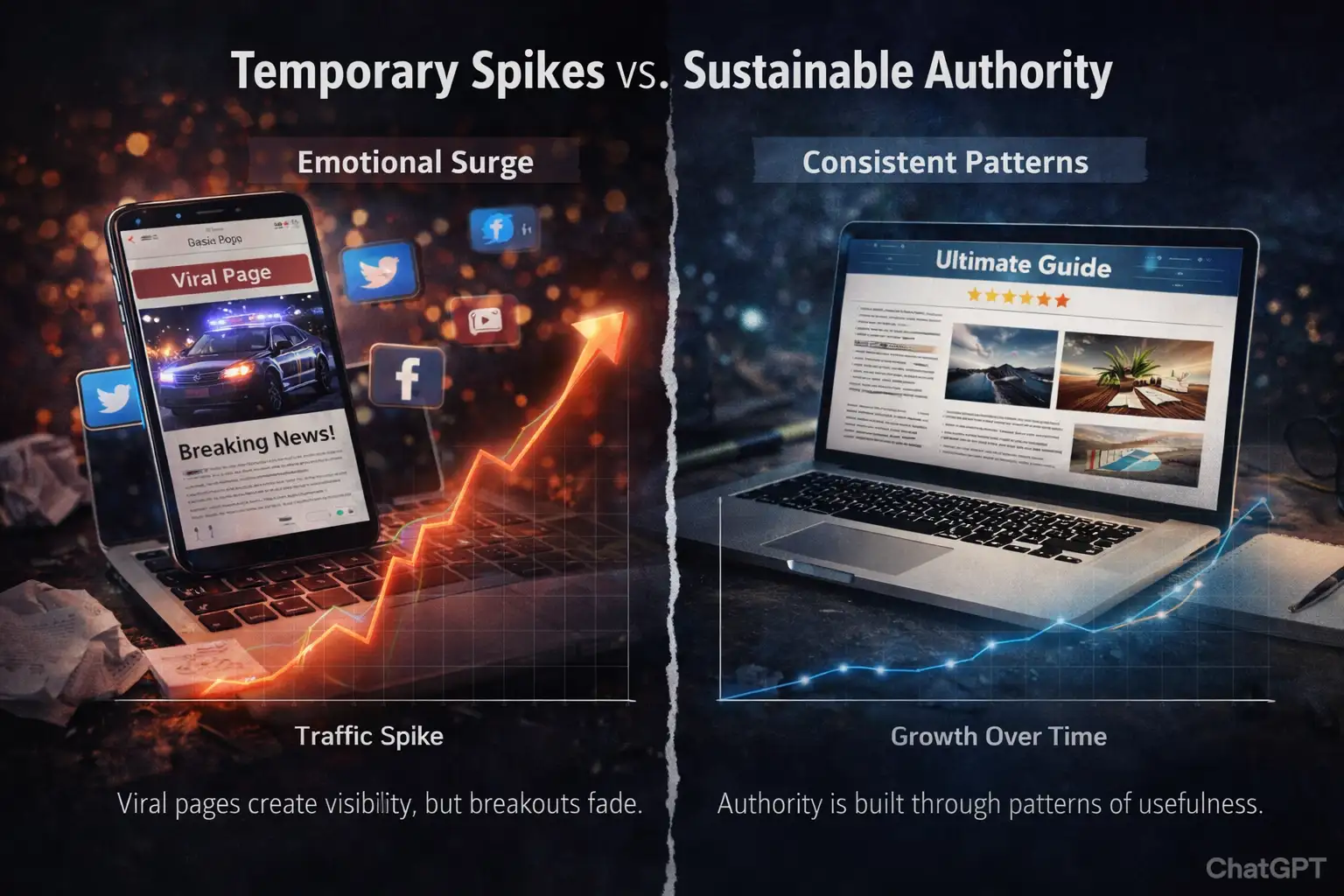
Viral pages look powerful. They explode on social media, ride trending hashtags, and pull massive traffic in days. News-driven content, especially, can surge because timing is perfect. But here’s the thing: spikes are emotional reactions, not trust signals. Once the trend fades, traffic drops, links slow down, and rankings wobble. Search engines reward consistency, depth, and interconnected value across a site. A single breakout page cannot carry weak surrounding content for long. Authority is built through patterns of usefulness, not moments of attention. Viral hits create visibility; structured, topic-aligned ecosystems create stability.
The Site Strength Formula
The Compounding Authority Model
Authority doesn’t grow from one strong page. It compounds across the entire site.
Here’s the framework:
Authority = Topical Focus × Internal Depth × Intent Coverage × Quality Consistency
Notice the multiplication. Not addition. That matters.
If topical focus is scattered, you dilute relevance. If internal depth is shallow, you limit understanding. If intent coverage misses key user needs, gaps appear. If quality consistency fluctuates, trust erodes.
Because this is multiplication, a weak factor doesn’t just lower the total. It drags everything down.
You can’t compensate for poor structure with great writing. You can’t fix thin intent coverage by publishing more random articles. One zero in the chain and the result collapses.
What this really means is simple: authority compounds only when every layer supports the others. Strength is systemic, not accidental.
Actionable Hack: Perform a ‘Zero-Weight’ Audit. Sort your pages by traffic over the last 6 months. Any page with zero visits and no backlinks is dead weight. It consumes crawl budget and dilutes topical focus. Merge it, improve it, or remove it. Growth in 2026 is often about subtraction, not addition.
Quick Site Strength Audit
Five Hard Questions
- Do at least 80% of your pages clearly support one central theme?
- Are supporting articles actually strengthening your core topics instead of drifting into random territory?
- Is your internal linking deliberate, guiding readers and search engines through a logical path?
- If you removed your top three posts, would your site still have a clear identity?
- Are there thin, outdated, or zero-traffic pages adding noise without adding value?
Be honest. Fix what’s weak. That’s how real authority is built.
When My Best Article Wasn’t Enough
I once published a detailed SEO guide that I was proud of. It was well researched, structured properly, and genuinely helpful. For a few weeks, it picked up impressions and even ranked briefly on page two.
But traffic never stabilised.
When I checked the rest of my site, the issue was obvious. I had thin supporting posts, weak internal links, and unrelated topics mixed in. The strong page looked like an exception, not the standard.
So I removed six low-quality articles, merged a few overlapping ones, and built tighter internal links around that core topic.
Two months later, the same guide climbed higher.
I didn’t rewrite the hero page.
I strengthened the site around it.
This is exactly why content writing services need to focus on ecosystems, not one-off pieces.
The Real Takeaway — Build Systems, Not Showpieces
Here’s the thing: a single impressive page doesn’t fix structural weakness. If the rest of the site lacks depth, consistency, and clear topical direction, that one helpful article becomes decoration. It might attract attention for a moment, but it has nothing supporting it. Real strength comes from interconnected content, internal links that make sense, and a clear theme that builds trust over time.
What this really means is shifting from page thinking to ecosystem thinking. A helpful page inside a weak site is fragile. A helpful page inside a strong site is inevitable.
Frequently Asked Questions
If My Content Is Truly High Quality, Why Doesn’t Google Rank It Anyway?
Here’s the uncomfortable truth: quality on its own doesn’t carry weight in isolation. Search systems evaluate patterns across your entire domain — internal links, topical depth, user behaviour, consistency. One excellent article sitting inside a thin ecosystem looks like an outlier, not an authority. Algorithms reward reinforced context, not standalone brilliance.
Can Backlinks to One Strong Page Compensate for a Weak Site?
Backlinks help. They always help. But they amplify what’s already structurally sound. If the rest of the site signals weak topical depth or poor engagement, links can create a temporary lift, not lasting authority. External validation without internal strength eventually collapses.
What If I Delete My Weak Content — Will Rankings Improve?
Sometimes, yes. Pruning low-value pages can raise your overall quality baseline. But blind deletion isn’t a strategy. Often, merging thin articles into stronger consolidated pieces works better. The goal isn’t fewer pages; it’s stronger ones that genuinely deserve to exist.
How Many Supporting Articles Do I Actually Need Around a Main Topic?
Forget counting. What matters is coverage. Address beginner intent, intermediate exploration, and advanced nuance. When someone can move through your site without needing another resource, you’ve built enough depth.
Is It Better to Build One Big Guide or Multiple Interconnected Posts?
Both approaches work when structured intentionally. A comprehensive guide anchors authority, while interconnected posts create reinforcement loops. The strength comes from how they support each other. Think systems, not standalone pages.
For local expertise, see SEO agency in Firozabad →
— authority is accumulated, not declared. —