How Long Should a Blog Post Be for SEO?
Most blog posts that rank on page one sit somewhere between 1,200 and 2,000 words. That’s the practical range you’ll see across competitive industries. But here’s the thing: they don’t rank because they’re that long. They rank because they solve the reader’s problem completely.
What really determines length is information density and the reader’s goal. A comparison guide, a deep tutorial, and a quick definition post all require different levels of depth. Word count is simply the outcome of covering the topic well, not the strategy itself.
Takeaway: Aim to fully satisfy the search intent — length will take care of itself.
Quick Answer: For most SEO‑focused blog posts, 1,200–2,000 words works well — as long as every section adds real value.
📌 TL;DR — No Time? Read This.
Most page‑one blog posts land between 1,200 and 2,000 words. Not because Google loves long content. Because those posts fully solve the problem.
Here’s what actually matters:
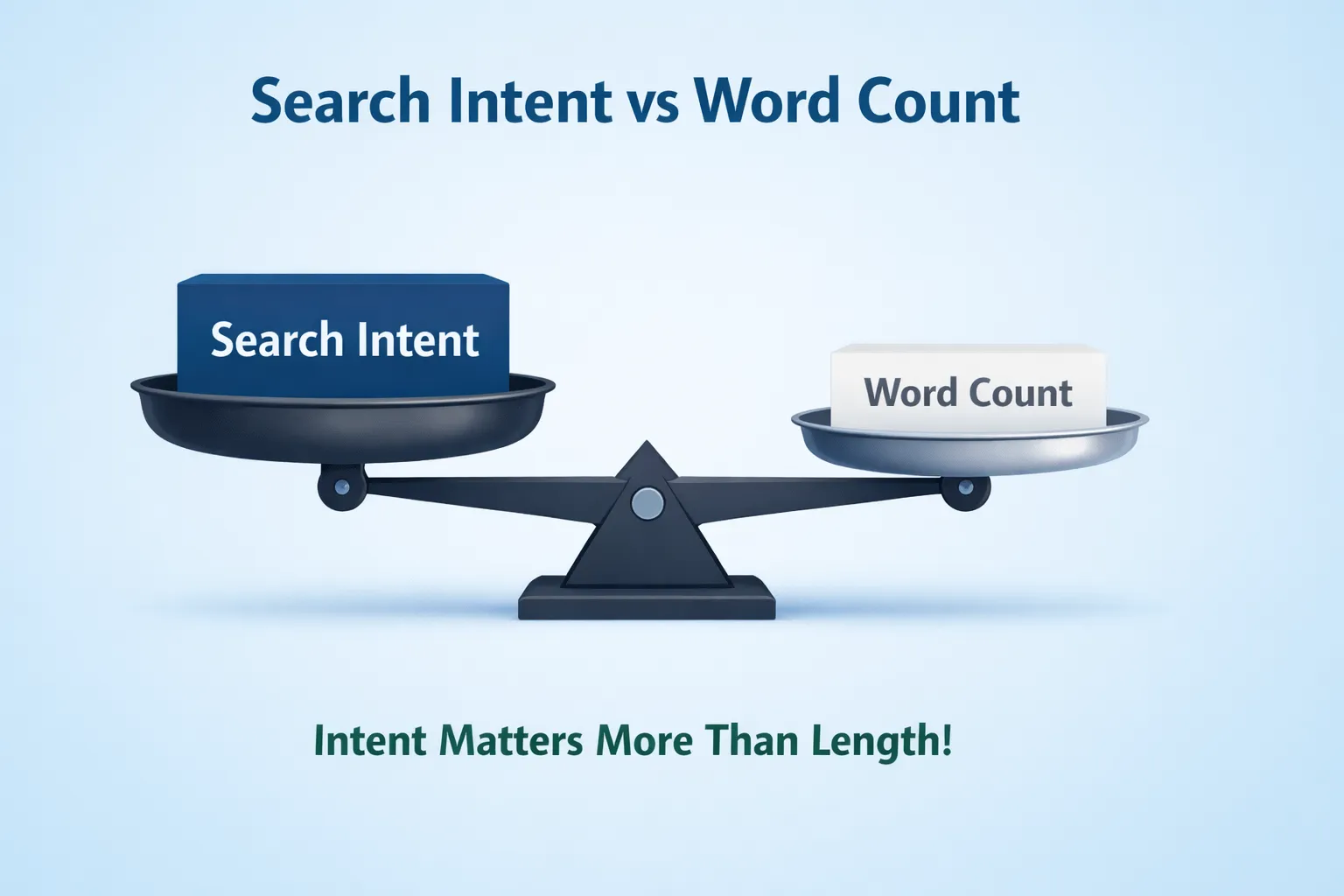
Search intent > word count
Information density > fluff
Clarity first, depth second
If the query needs a quick answer, 400 words can win.
If it’s a complex decision, 2,500+ words make sense.
The real strategy is simple:
Answer fast. Expand smartly. Stop when the problem is solved.
Length isn’t the goal.
It’s the outcome of doing the job properly.
Stop Chasing a Magic Number — Start Matching the Reader’s Goal
Word count isn’t a target you hit. It’s a byproduct of solving the right problem. The right length depends on what someone is trying to accomplish when they land on your page.
If they want a fast answer, give it fast. If they’re making a serious decision, give them depth. Length follows intent, not the other way around.
The 1,500-Word Myth (And Where It Came From)
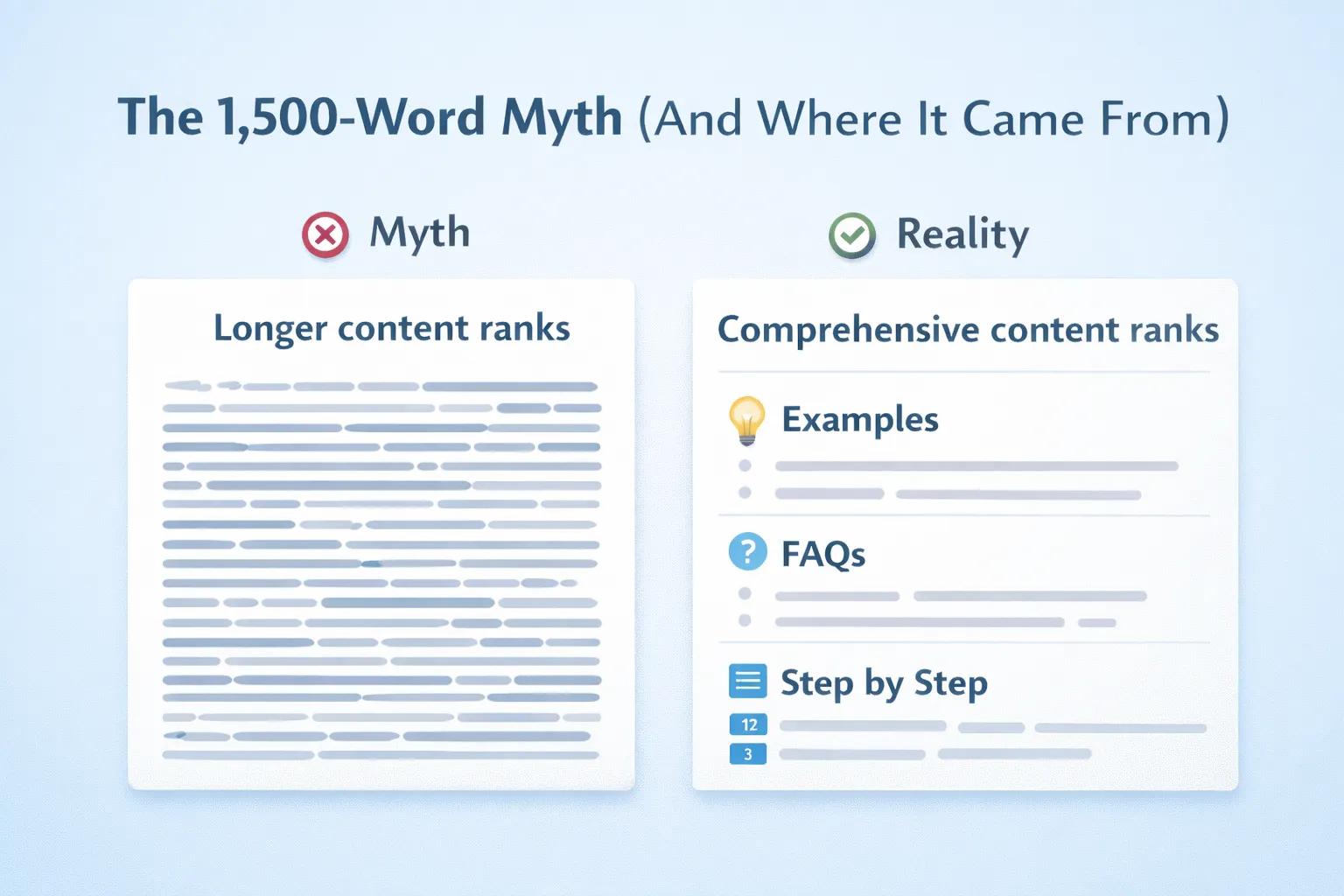
A few early SEO studies noticed that higher‑ranking pages often had more words. People simplified that into “longer ranks better.” But that was correlation, not causation. Longer pages weren’t winning because they were long. They were winning because they covered more angles.
Compare a 300‑word article answering one surface question with a 1,800‑word guide that explains context, mistakes, examples, and FAQs. The second piece satisfies more intents, earns more links, and keeps readers longer. Of course, it performs better.
Length doesn’t rank. Comprehensiveness does.
This confusion is why many creators force‑feed fluff. For a deeper look, read why long‑form content doesn’t always rank — it explains when depth backfires.
When 400 Words Is More Than Enough
Some searches don’t need depth. They need clarity. If someone wants a definition or a single action step, stretching the answer only frustrates them.
Short‑form works well for:
- Definitions and terminology
- Login URLs or contact details
- Simple one‑step fixes
Add fluff here, and the bounce rate climbs.
When 2,500 Words Actually Makes Sense
Now think about complex decisions: choosing a career path, understanding treatment options, or setting up advanced software. These topics require layered thinking.
Depth matters because:
- Readers need context before they trust advice.
- Examples and case scenarios reduce confusion.
- FAQs and objections remove hesitation.
In these cases, depth builds confidence. And confidence drives action.
The “Answer First” Framework That Google Rewards
Search engines don’t rank pages just because they’re long. They rank pages that solve the query fast and then expand intelligently. Structure shapes satisfaction. And satisfaction shapes rankings. If users get clarity in seconds, engagement improves. When they have to dig for it, they leave.
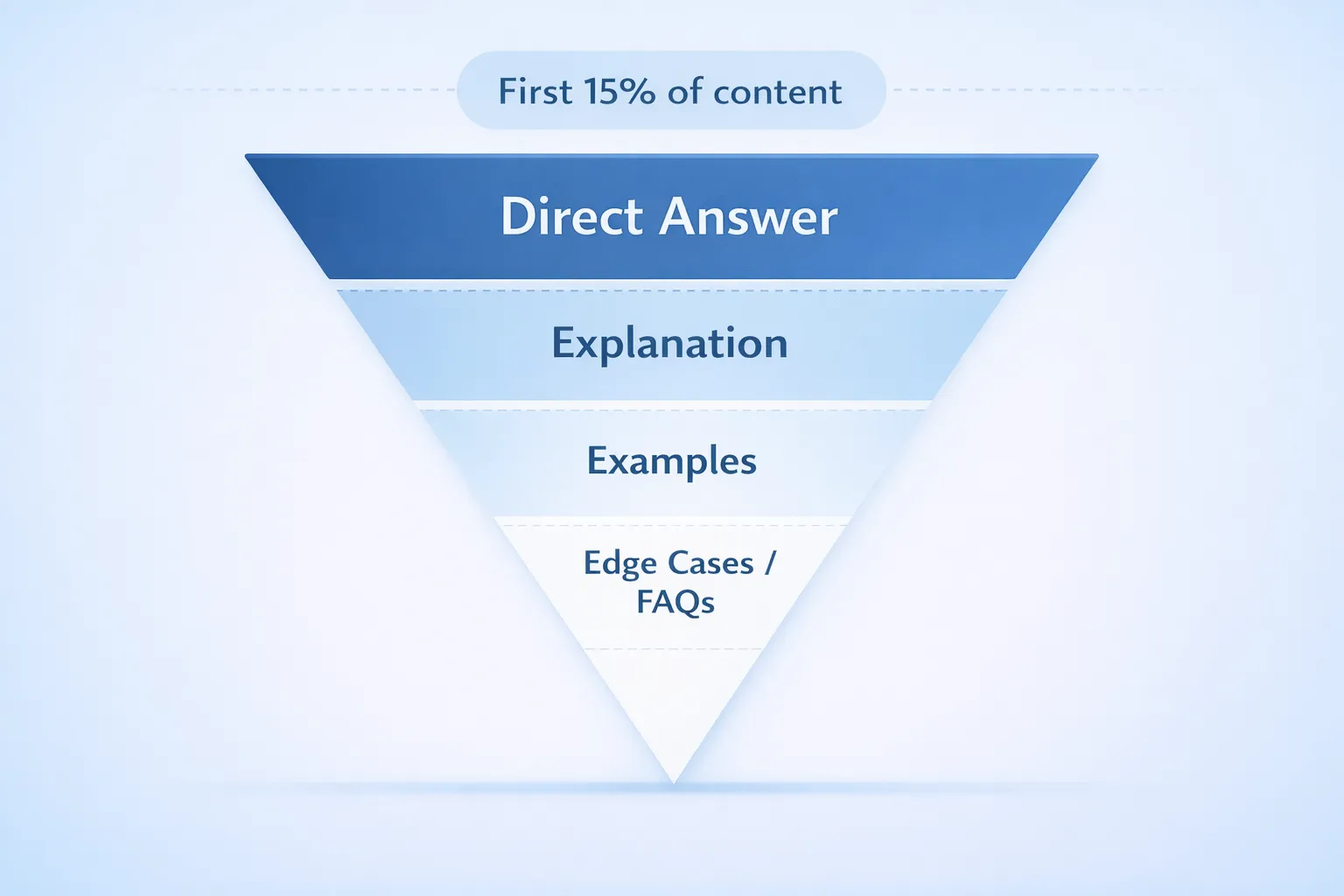
Put the Bottom Line in the First 15%
Time to Answer matters more than total word count. When readers land on your page, they’re scanning for confirmation that they’re in the right place. If the core solution is buried under storytelling or context, bounce rates rise and dwell time drops.
Start with the clearest possible response. Then expand.
Example: The ideal blog post length for SEO is typically 1,200 to 1,800 words, depending on search intent and competition.
That single sentence satisfies the query immediately. Everything after that supports, explains, or qualifies it.
If helpful, place this in a subtle summary box near the top. It anchors attention and sets expectations.
Build Depth After the Answer (Not Before)
Once the answer is clear, layer in context.
- Direct answer
- Why it works
- When it doesn’t
- Practical example
This format keeps logic tight and easy to follow. Add examples, edge cases, and common mistakes only after clarity is established. Keep paragraphs short and focused. Each section should feel like a natural expansion, not a detour.
Design for the Skimmer
Most readers skim before they commit. Formatting reduces perceived effort and increases retention.
Use:
- Short paragraphs
- Descriptive H3s
- Tables for comparisons
- Bold key phrases
Avoid dense blocks of text. Make clarity visible.
Blog Length Depends on Content Type (Not Ego)
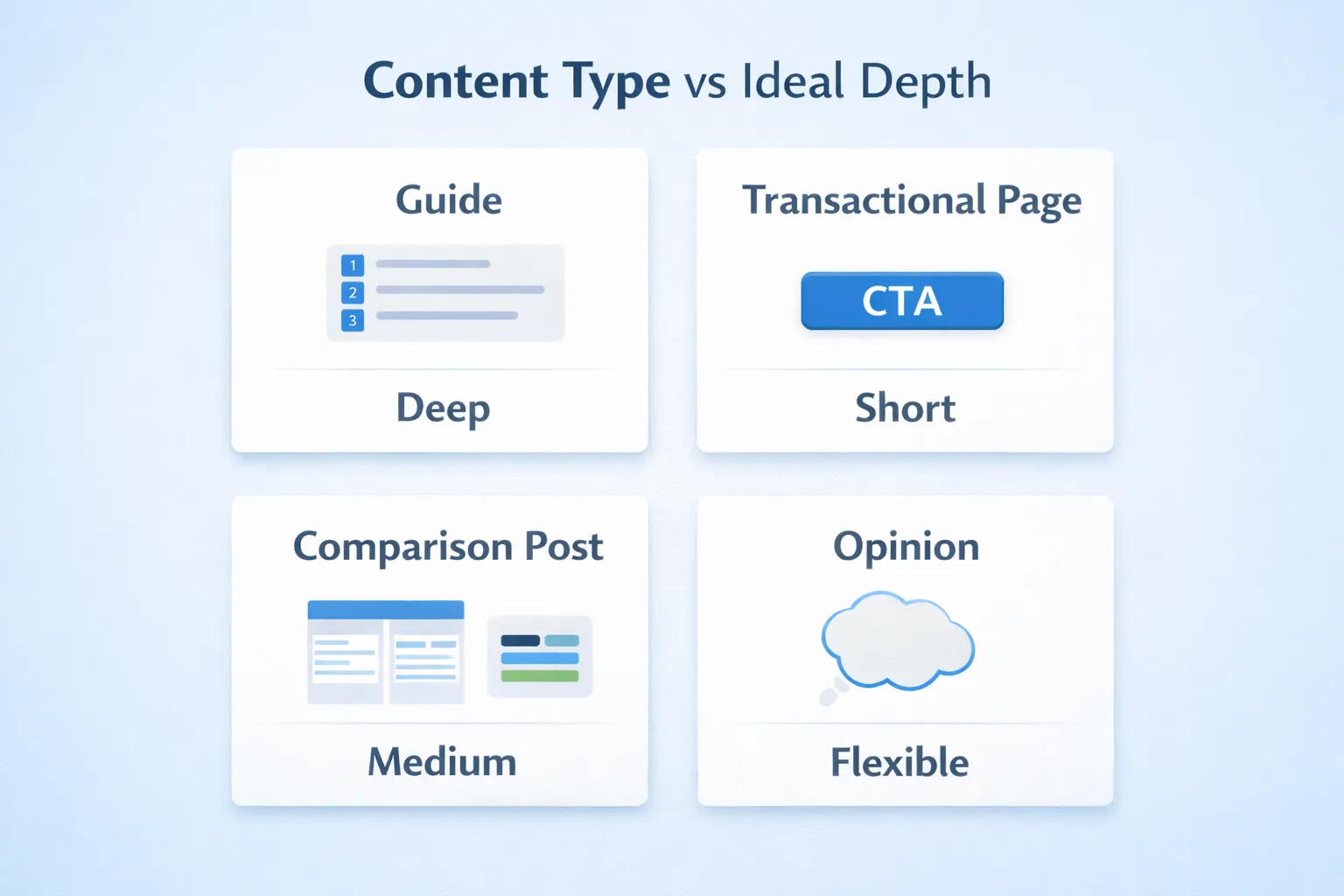
Different goals demand different depth. A tutorial meant to teach cannot be treated the same as a sales page meant to convert. Length should follow purpose. When you match depth to intent, the content feels complete instead of bloated or thin.
Informational Guides (Deep Dive Content)
Step‑by‑step tutorials and educational articles need room to breathe. If you’re teaching someone how to do something, you can’t rush it. Each step builds on the previous one. That means layered explanations, real examples, and clarification where confusion might happen.
Break the guide into clear sub‑steps so readers never feel lost. Keep paragraphs medium in length, but break them frequently to maintain momentum. Suggest adding screenshots wherever a process might feel technical or abstract. Visual reinforcement reduces friction. Close with an FAQ block that answers common follow‑up questions and captures related search intent.
Transactional Pages (Short and Persuasive)
Product comparisons, landing pages, and service descriptions work differently. Here, clarity beats length. Focus on benefits, objections, proof, and a clear next step.
Use bullet lists to highlight advantages. Include comparison tables when helpful. Keep paragraphs short and persuasive. Avoid storytelling overload. Every section should move the reader closer to a decision.
Comparison Posts (Mid‑Length Sweet Spot)
Comparison posts often perform well between 1,000 and 1,800 words. That range allows depth without overwhelming readers.
Start with a table:
| Feature | Option A | Option B |
|---|---|---|
| Price | $29 | $49 |
| Ease of use | High | Medium |
Then follow with a short, focused analysis under each section. Clarity wins.
Opinion or Thought Leadership Posts
Authority‑driven posts are flexible in length, but they must introduce a fresh angle. Write in a conversational tone. Use short, punchy sections. Add personal insight blocks that highlight experience, not theory.
The Information Density Rule
If a 900-word article answers the question clearly and adds something new, it will beat a 2,500-word piece packed with repetition. This is where many people confuse thin content with short content — they are not the same. If you want a clear breakdown, read thin content vs short content: key differences.
What “Information Gain” Really Means
Information gain is the difference between what already exists and what you add. If you repeat what the top ten results already say, you’ve contributed nothing new. That’s invisible value.
Here’s the thing. Imagine ten articles explaining that internal links help SEO because they pass authority. If you add a tested framework showing exactly how many contextual links per 1,000 words improve crawl depth without over‑optimising, you’ve created information gain. One fresh, specific insight can outperform a longer post that simply rephrases common advice.
Short answer: originality beats volume.
The “So What?” Editing Test
Use this three‑step filter before publishing:
- Ask: Does this paragraph add a new idea, example, or proof?
- If not, does it clarify something complex more simply?
- If it does neither, delete it without hesitation.
Tight writing ranks better because it respects attention.
Signs Your Post Is Too Long
- You restate the same idea in different words
- Your introduction takes too long to reach the point
- Transitions feel padded instead of purposeful
- You add sections only to increase word count
- Keywords appear unnaturally often
If your content feels heavy, it probably is.
How to Decide the Right Length Before You Start Writing
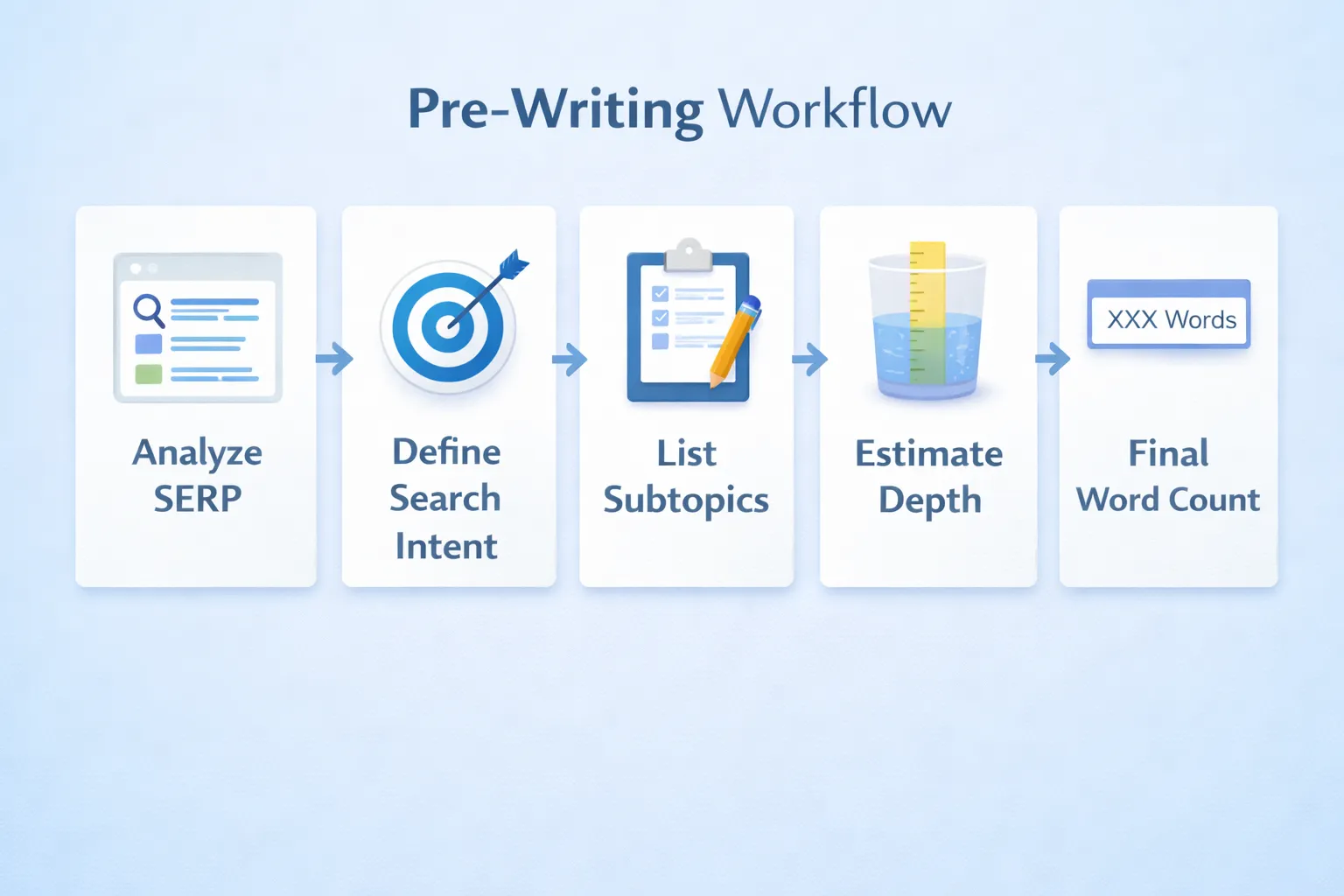
Before you write a single sentence, pause. Length isn’t something you stretch or shrink at the end. It’s a decision you make upfront. Think of this as a clarity check. When you know how deep the topic needs to go, the word count almost decides itself.
If you want a practical, step-by-step method for doing this properly, read how to decide blog post length based on search intent — it breaks the process down clearly.
Analyse the Top 3 Ranking Pages (But Don’t Copy Them)
Start with research, not assumptions.
- Scan their structure. Count main sections, look at how detailed each one is, and note how deeply they explain concepts.
- Identify subtopics. What angles are consistently covered? Definitions, examples, tools, case studies?
- Spot gaps. What questions are left unanswered? What feels rushed or outdated?
Your goal isn’t imitation. It’s understanding the level of depth Google already rewards and then finding space to add something better.
Define the Reader’s Real Goal
A keyword is just a doorway. The real question is: what outcome does the reader want?
If someone searches for a topic, they’re trying to fix, learn, compare, or decide something.
Ask yourself:
- What problem are they trying to solve right now?
- How much context do they actually need?
- Are they looking for quick clarity or a complete walkthrough?
Clarity here prevents overwriting or under‑delivering.
Decide the Reading Session Type
Not every post needs to be a deep dive. Match length to attention span.
| Reading Session | Typical Length | Content Depth |
|---|---|---|
| Coffee break | ~500 words | Quick answer, tight focus, minimal examples |
| Lunch break | ~1,200 words | Step‑by‑step guidance with examples |
| Weekend deep dive | 2,500+ words | Comprehensive coverage, case studies, frameworks |
When you define the session first, writing becomes intentional instead of bloated.
If you’re still unsure, try the ideal blog length finder — a quick tool that suggests a range based on your topic and intent. (Yes, it’s designed to make you click and check.)
My Pre‑Writing Word Count Rule
Before I write a single paragraph, I already know roughly how long the piece needs to be. Not because I pick a number. Because I reverse‑engineered it.
First, I open the top three ranking pages. I’m not checking their word count. I’m studying in depth. What questions do they answer? Where do they stay vague? Where do they repeat themselves? Then I define the reader’s actual goal in one sentence. If I can’t state that clearly, I don’t start writing. After that, I list the subtopics required to fully solve that goal. Not more. Not less.
Only then do I estimate length. If a section needs 200 words to be clear, I give it 200. If it needs 80, I stop at 80. I don’t set a random 2,000‑word target. I don’t stretch examples. I don’t pad introductions.
When the problem is solved, I stop. The word count follows the logic, not the other way around.
Final Verdict — Length Is a Consequence, Not a Strategy
When you zoom out, the answer becomes simple. Word count is not a lever you pull. It’s the result of how well you solve the reader’s problem. Short posts win when the question is narrow. Long posts win when the topic demands depth. The length follows the intent, the complexity, and the clarity of execution.
The Only Rule That Actually Matters
Write until the problem is fully solved, then stop. If the reader needs context, examples, or proof, include them. If they only need a clear explanation and a direct answer, don’t pad it. Depth should feel necessary, not forced.
Clarity beats volume. Structure beats rambling. Information density beats repetition. When every section earns its place, the word count takes care of itself.
Solve completely. Cut ruthlessly. That’s the strategy.
Quick Clarity Corner — Real Questions About Blog Length
Does Google Prefer Longer Blog Posts?
No, Google does not prefer longer blog posts by default. It rewards completeness and usefulness. Longer content often ranks because complex queries require deeper answers, not because of the number itself. That’s correlation, not causation. When a topic demands detail, depth wins. When it doesn’t, extra words just dilute clarity.
Is 1,000 Words Enough to Rank?
Yes, if the topic is focused and fully covered. A narrow query with clear intent can be satisfied in 1,000 words or fewer. Competition matters, and so does search intent. If top results are comprehensive guides, you may need more depth. If they’re concise explainers, precision beats length.
Can a 300-Word Blog Post Perform Well?
Yes, in the right context. A clear definition, a quick fix, a short update, or a direct comparison can perform well in 300 words. When someone wants a fast answer, clarity and speed matter more than volume. Short works when it delivers exactly what the searcher came for.
How Do I Know If My Post Is Too Long?
If you’re repeating points, padding the intro, or answering questions nobody is asking, it’s too long. Watch for reader fatigue. Endless scrolling without new insight is a warning sign. When every section adds value, length feels natural. When it doesn’t, trimming improves impact.
Should I Update Length Based on Competitors?
Look at them, but don’t imitate blindly. Analyse what angles they cover, what questions they answer, and where they fall short. Word count is just a byproduct of coverage. Instead of matching their numbers, fill the gaps they missed and make your version clearer and sharper.
— trust grows in systems, not silos —