
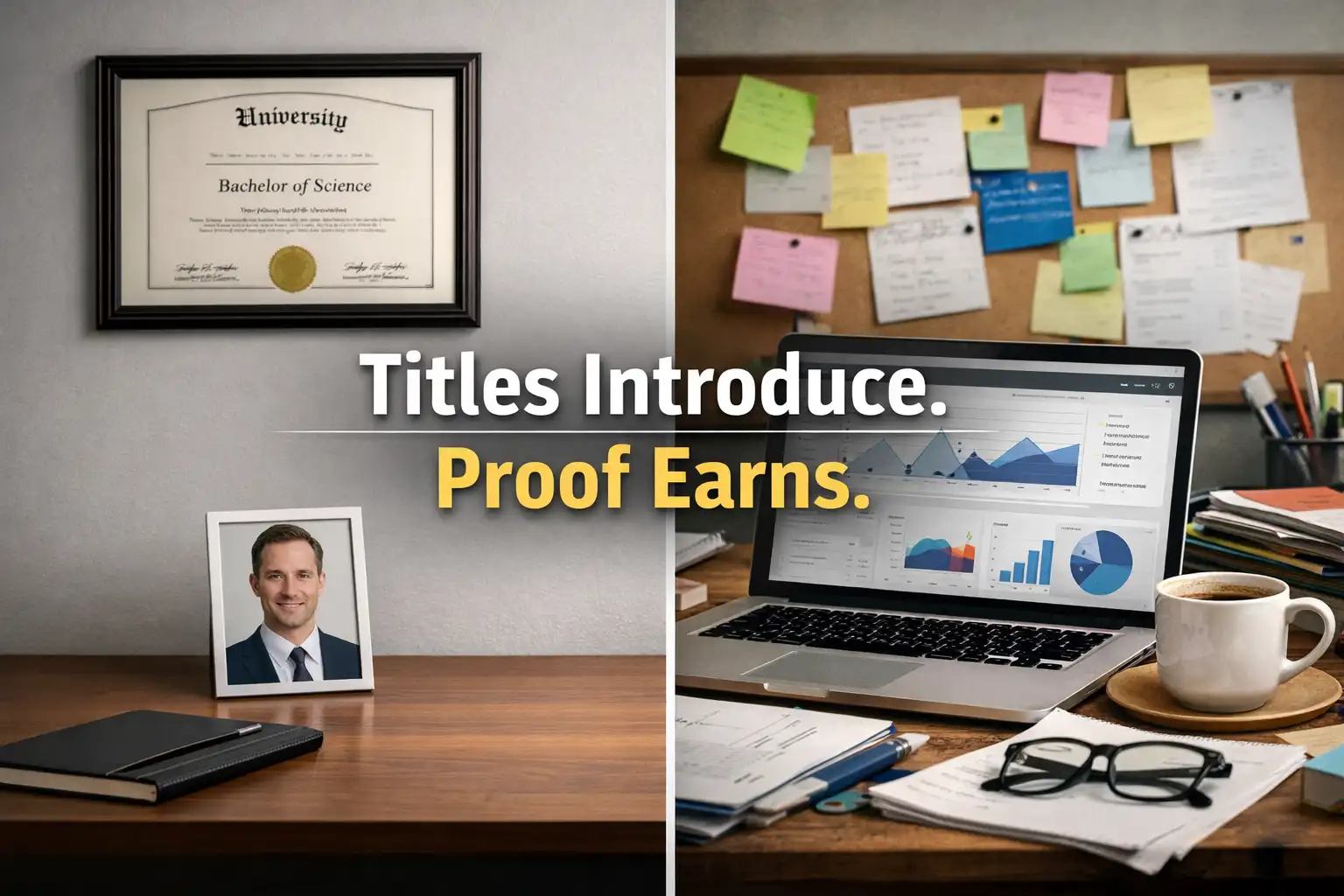
The Myth of Credentials: Why They Don’t Automatically Increase Website Trust
A PhD publishes a perfectly formatted article filled with citations, technical jargon, and polished language. It looks impressive, it sounds intelligent, yet it leaves readers confused and unconvinced. Now compare that to a practitioner sharing raw lessons from real failures, practical steps, and honest mistakes. One feels distant. The other feels real.
Here’s the uncomfortable truth: credentials may open the door, but they don’t make people stay. Google’s E-E-A-T framework isn’t about titles alone. It’s about experience, clarity, and usefulness. Visitors trust what solves their problem, not what flexes authority.
Credentials may attract attention, but consistent value is what earns trust.
📌 TL;DR
Credentials may open the door, but they rarely convince anyone to stay. Trust online is not built through titles, degrees, or polished bios. It forms when users feel understood, helped, and confident in what they read. Google measures that response through behavior, not badges. Authority today is earned through experience, clarity, and consistent usefulness, not status.
- Credentials are baseline signals, not automatic trust builders.
- Google evaluates engagement, clarity, and real usefulness.
- Strong user experience can outweigh formal expertise markers.
- First-hand experience builds deeper credibility than titles.
- Specific, actionable insights create durable authority.
- Transparency strengthens trust more than polished branding.
- Information Gain separates original thinkers from recycled experts.
Trust is the sum of experience, evidence, clarity, and user satisfaction. Titles introduce you. Proof earns you.
The Credential Paradox: Why Your Bio Alone Isn’t Impressive
The Myth: “Add an Expert Bio, Rankings Go Up”
Many site owners believe that adding a polished expert bio with degrees, certifications, and big titles will instantly boost rankings and credibility. The thinking is simple: show authority, earn trust, win traffic. So they pour time into headshots, awards, and long credential lists, assuming Google sees that and rewards the page automatically.
A shiny bio feels powerful, but it rarely changes how people behave.
The Reality: Google Tracks Behaviour, Not Just Titles
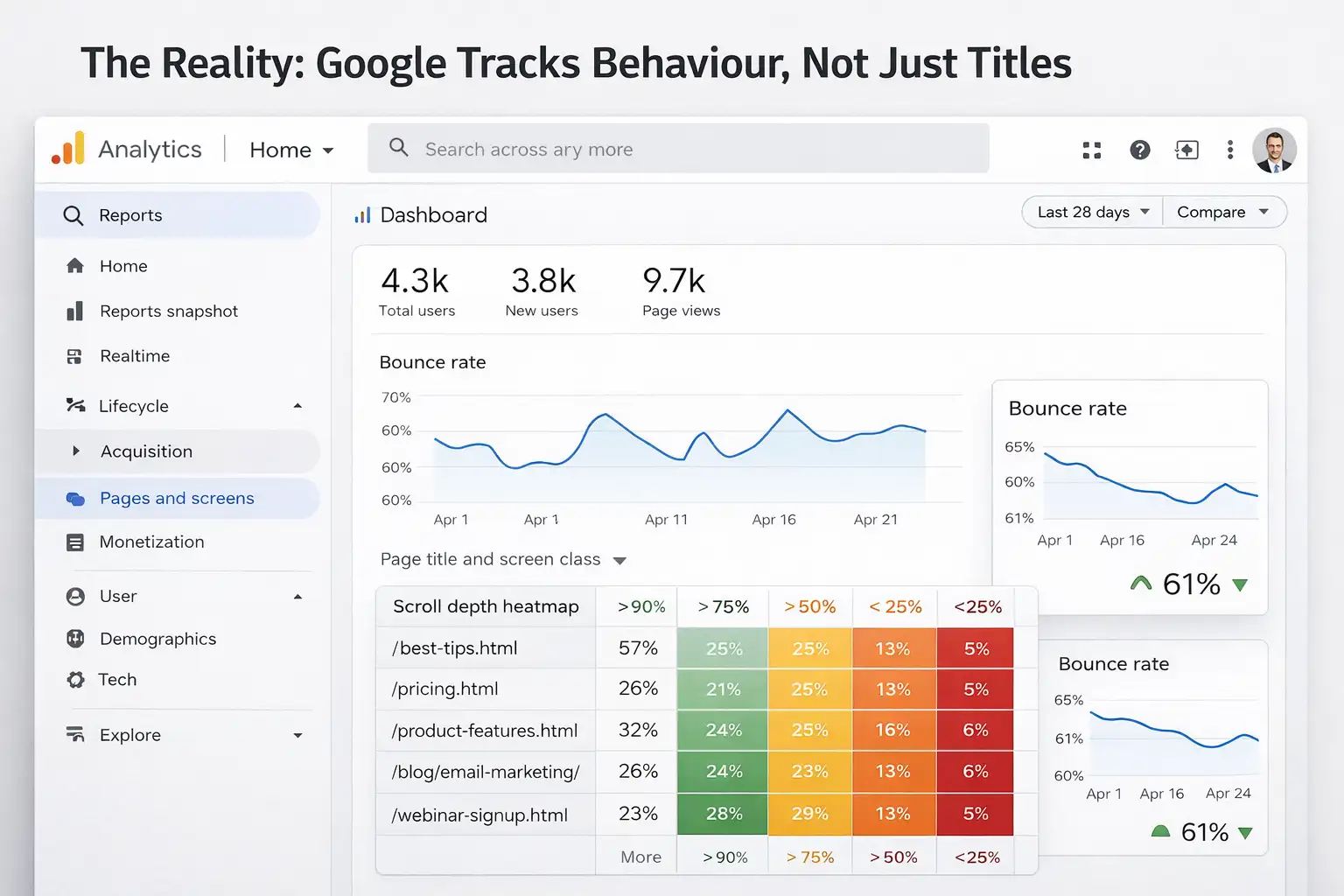
Here’s the thing: search engines don’t just read your job title. They observe what users actually do once they land on your page. If visitors leave quickly or skim without interacting, credentials won’t save you. What keeps rankings stable is how well your content satisfies intent and holds attention.
- Bounce rate signals instant dissatisfaction
- Scroll depth shows real interest
- Engagement reflects relevance
- Time-on-page reveals value delivered
What this really means is simple: authority is proven through user experience, not declared in a bio.
The Doctor Waiting Room Analogy (Real-World Proxy)
Imagine walking into a clinic. The doctor’s degree hangs proudly on the wall, framed in gold. But the waiting room is dirty, the staff is rude, and the doctor barely listens. The credentials suddenly feel meaningless.
That’s exactly how users experience a slow website, aggressive popups, and generic advice. Impressive titles cannot compensate for a frustrating experience, and visitors quietly leave without trusting a word.
A PhD Doesn’t Fix a Bad User Experience
The “Vibe Check” Users Do in 5 Seconds
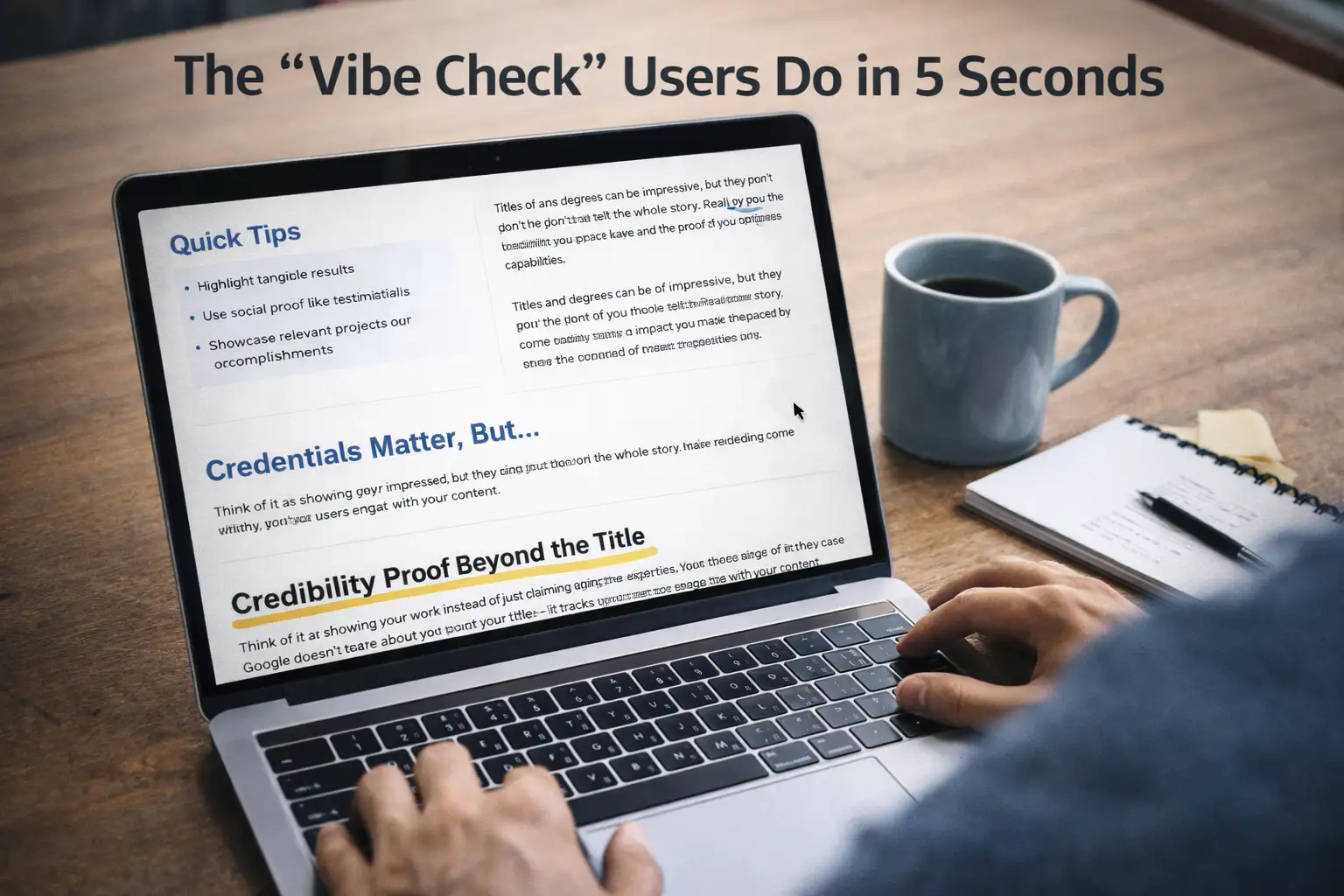
The moment someone lands on your page, they are not checking your degrees. They are scanning. In five seconds, they decide whether to stay or leave. They are asking simple questions: Is this useful? Is it easy to understand? Does this feel like it was written for someone like me? If the answer is no, credentials won’t save you.
Most visitors do not read line by line. They skim headlines, glance at formatting, and look for clarity. If your message feels heavy, confusing, or self-important, they bounce. Authority is not declared. It is felt through clarity and relevance. Trust is earned in seconds, not printed in a bio.
The Shadow of Doubt: When Academic Tone Backfires
An overly academic tone can quietly push readers away instead of building credibility. When content feels like a research paper rather than guidance, distance replaces connection. Readers don’t want to decode your expertise; they want to benefit from it.
- Dense jargon that makes simple ideas feel complicated
- Overly formal language that sounds cold and impersonal
- Excessive citations that interrupt the flow and overwhelm
Mini Case Example (First-Person Insert)
⚡ I once worked on a website run by three PhDs. On paper, it looked impressive. In reality, traffic kept dropping. The articles were technically accurate but filled with jargon and long explanations. I rewrote key pages with practical examples, removed unnecessary academic language, and added screenshots and real data to show outcomes. Within weeks, engagement improved, and bounce rates dropped.
Expertise works best when it feels usable.
Experience vs Paper: Why Lived Proof Wins in 2026
The First “E” in E-E-A-T Is Doing the Heavy Lifting
In 2026, experience carries more weight than framed certificates. Anyone can study theory, summarise research, or rewrite what already ranks. Very few can show what actually happened when real money, real traffic, or real reputation was on the line. Search engines are smarter now. They look for signals that someone has done the work, not just described it. Demonstrations matter. Case data matters. Real outcomes matter. If you explain how you increased conversions, show the numbers. If you claim authority in SEO, reveal the tests you ran and what failed. Lived proof creates texture in content. It adds specifics, context, and nuance that generic advice simply cannot replicate. Theory explains what should happen. Experience reveals what actually did happen. That difference is everything.
Experience is no longer a bonus signal. It is the credibility engine.
What “Evidence of Work” Looks Like on a Website
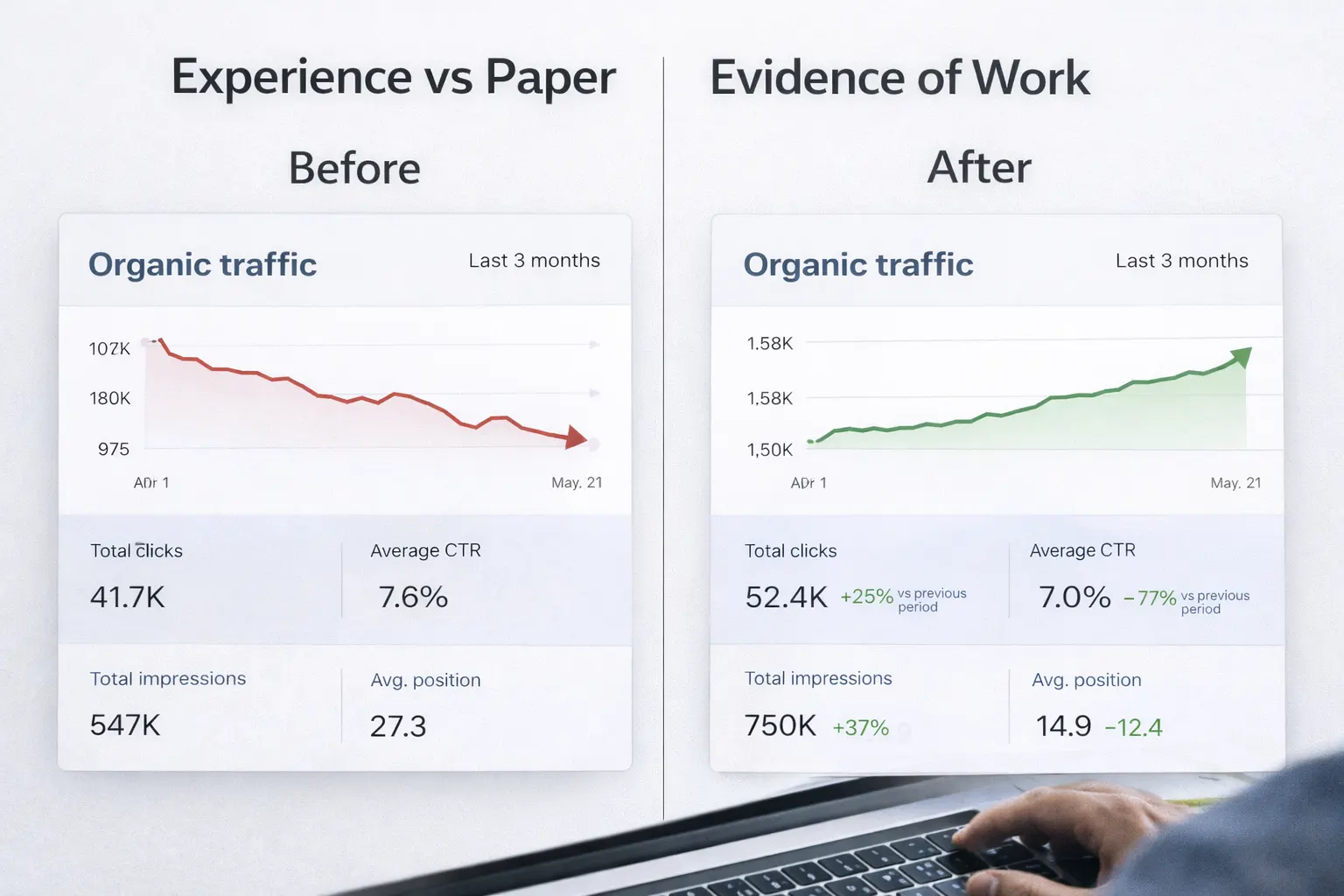
Trust becomes visible when proof replaces claims.
- Screenshots of dashboards or ranking improvements
- Before and after performance comparisons
- Real mistakes are openly admitted and explained
- Specific numbers instead of vague promises
- Tool references like Ahrefs, SEMrush, or GA4
Proof turns statements into substance.
Information Gain: The Trust Multiplier
If your page repeats what ten others already say, it blends into the noise. Search systems reward information gain, not repetition. When you share a unique test result, a counterintuitive insight, or a lesson from failure, you create new value. That originality signals depth and real involvement. Honest observations outperform polished generalities. Safe summaries get ignored. Specific lived insight gets surfaced.
New insight is what separates authority from imitation.
The Myth vs Reality Table
| The Old Myth | The 2026 Reality | The Fix |
|---|---|---|
| Degrees = Trust | Utility = Trust | Solve one real problem clearly |
| Author Bio = Authority | Engagement = Authority | Improve clarity and depth |
| Formal Tone = Professional | Clear Tone = Credible | Write like a human |
People don’t trust titles, labels, or stiff language anymore. They trust outcomes. If your page answers their question fast, proves it understands the problem, and makes the next step obvious, credibility follows. What this comparison teaches is simple: trust is earned through usefulness, not presentation. Focus on helping first. Signals of authority grow naturally after that.
The Behavioural Trust Checklist
Run This 6-Point Trust Audit on Your Site
- Update your About page with current credentials, real experience, clear roles, and recent work. Remove outdated claims and vague positioning.
- Show proof for every major claim. Use data, screenshots, case studies, timelines, or first-hand insights instead of empty statements.
- Explain why you cite something, not just link it. Add context, reasoning, and interpretation so readers understand your thinking.
- Make your advice actionable. Provide steps, examples, or frameworks readers can apply immediately without guessing what to do next.
- Admit limitations clearly. State what your content doesn’t cover, where results may vary, and when someone should seek expert help.
- Keep your page fast and distraction-free. Remove clutter, reduce pop-ups, optimise load speed, and make navigation effortless.
Kill the Credential Crutch
A degree alone does not build trust. Readers care about outcomes, clarity, and honesty. Lead with real results, show transparent processes, and speak with precise details instead of broad claims. Explain what you did, how you did it, and what changed because of it. Specific examples beat titles every time. Authority is earned through evidence, not displayed through labels.
Frequently Asked Questions About Credentials and Website Trust
If I add a certified expert as an author, will my rankings improve automatically?
No. Certifications alone do not trigger ranking boosts. Improvements happen when content genuinely helps users, earns engagement, and clearly solves the specific problem behind the search.
Does Google ignore degrees and professional certifications now?
No. Expertise signals still matter, but they support credibility. They cannot replace clear explanations, practical insight, and useful information that directly answers real search intent.
Why is my expert-written content not performing well?
Check whether it matches search intent, stays clear and practical, and includes proof. Academic tone, vague advice, or poor page experience can weaken strong expertise.
What builds more trust — qualifications or real-life case studies?
Case studies and real examples usually build stronger trust. They demonstrate outcomes, data, and lived experience instead of simply claiming authority through titles or credentials.
How can a small website compete without big credentials?
Focus on solving one clear problem deeply. Share transparent processes, practical insights, and measurable results. Consistent value builds trust faster than impressive but unsupported qualifications.
— trust is earned through evidence, not displayed through labels. —