What Is a Meta Title in SEO?
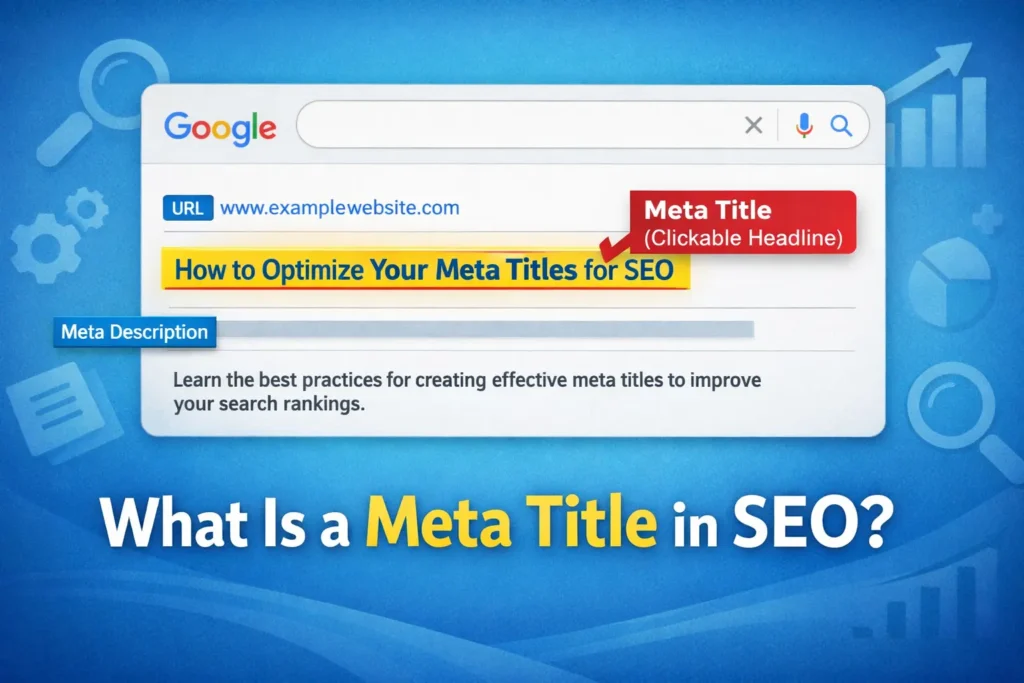
A meta title is the headline of a webpage shown in search engine results and browser tabs. It tells users and search engines what the page covers and often determines whether someone clicks your listing or ignores it completely today.
Meta titles matter because they shape first impressions in search results. When someone scans a results page, the title is usually the first element they read. Search engines also use it to understand topic relevance and user intent signals clearly.
In this guide, you will learn how meta titles work, how to write them correctly, and why strong titles improve click-through rate and search visibility in real results pages.
Where the Meta Title Appears in Search and Why That Position Matters?
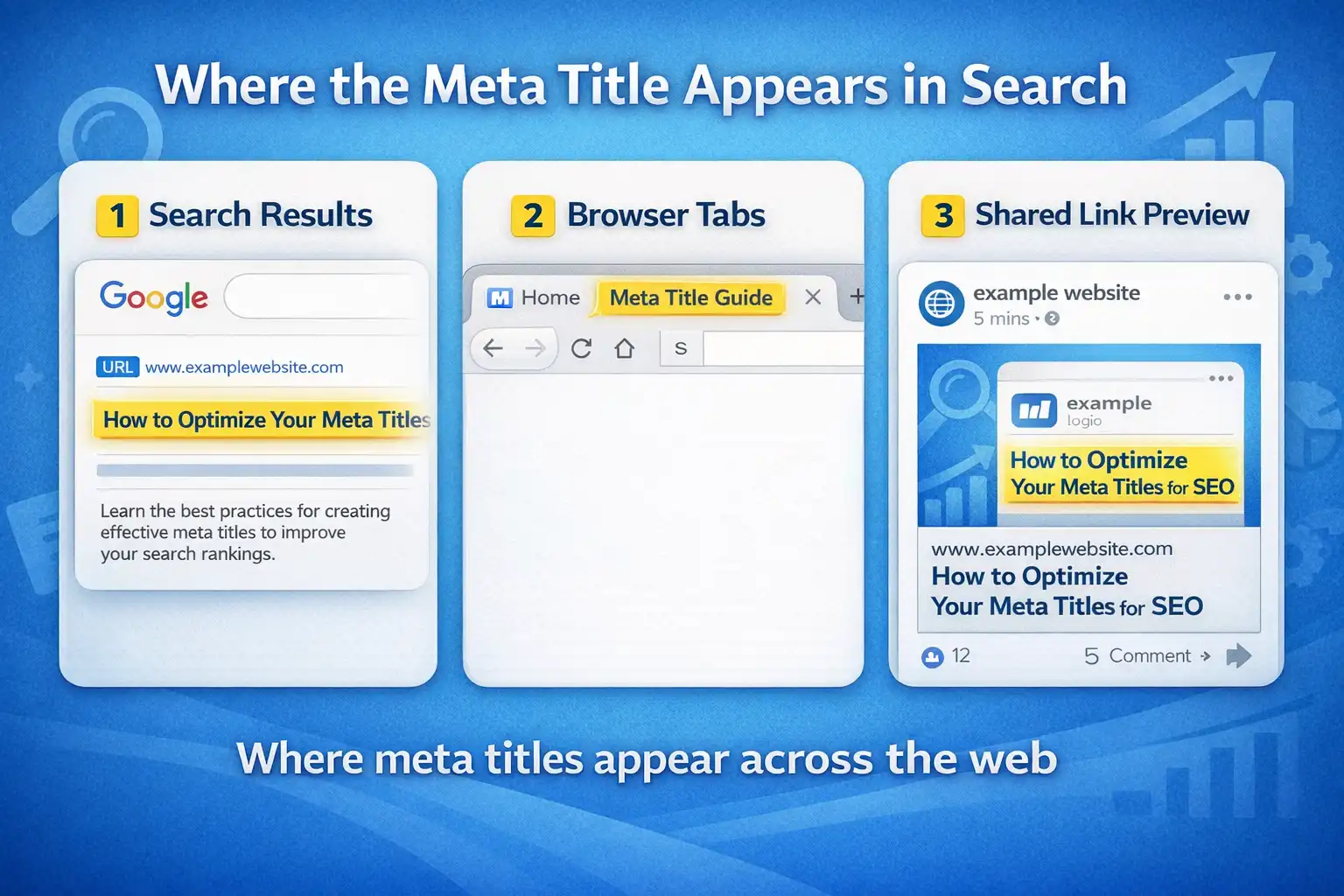
Meta titles show up in several places, not just search results. Each location shapes how people recognise and judge your page. The same line of text influences visibility, trust, and clicks.
The Search Result Headline Users See First
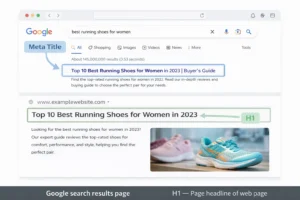
In search results, the meta title becomes the main clickable headline. It tells users what the page is about before they open it, so clarity and relevance matter. People scan results quickly and choose the title that best matches their intent.
SERP Example
Title: What Is a Meta Title in SEO?
URL: example.com/meta-title-guide
Description: Learn how meta titles work and why they matter for search visibility.
The Browser Tab Title
Meta titles also appear on browser tabs. When users open multiple pages, the title helps them quickly identify and return to the right tab.
Example:
Meta Title Guide | SEO Basics
Keyword Research Tips | SEO Basics
On-Page SEO Checklist
Social and External Link Previews
When a page link is shared or saved, the meta title often becomes the visible headline. This influences whether people trust the link and decide to open it.
Where titles appear: search results • browser tabs • shared links • bookmarking tools
What Actually Makes a Meta Title “Good” in SEO?
A good meta title sits at the intersection of search relevance and human clarity. It helps search engines understand the page while giving users a quick, confident reason to click. The best titles are simple, specific, and immediately useful.
Clear Topic Communication
A strong meta title tells users exactly what the page is about. When a title is vague or overly clever, people hesitate to click because the topic feels unclear or unreliable.
Before: SEO Tips That Work
After: On-Page SEO Tips for Higher Google Rankings
Keyword Placement That Feels Natural
Keyword placement in meta titles helps search engines quickly understand the page topic when the main keyword appears early. But forcing keywords into the title can make it sound robotic. The goal is a natural sentence that still highlights the primary search phrase.
Examples of natural keyword placement:
Meta Title SEO Guide for Beginners
Meta Title Optimization Tips for Higher CTR
How to Write a Meta Title That Ranks
A Reason for the User to Click
A meta title should promise value. Users click when they expect a clear answer, practical steps, or useful insight.
Common value modifiers: Guide • Step-by-Step • Examples • Checklist • Tips • Best Practices
Meta Title vs H1 Tag — Why People Often Confuse Them?
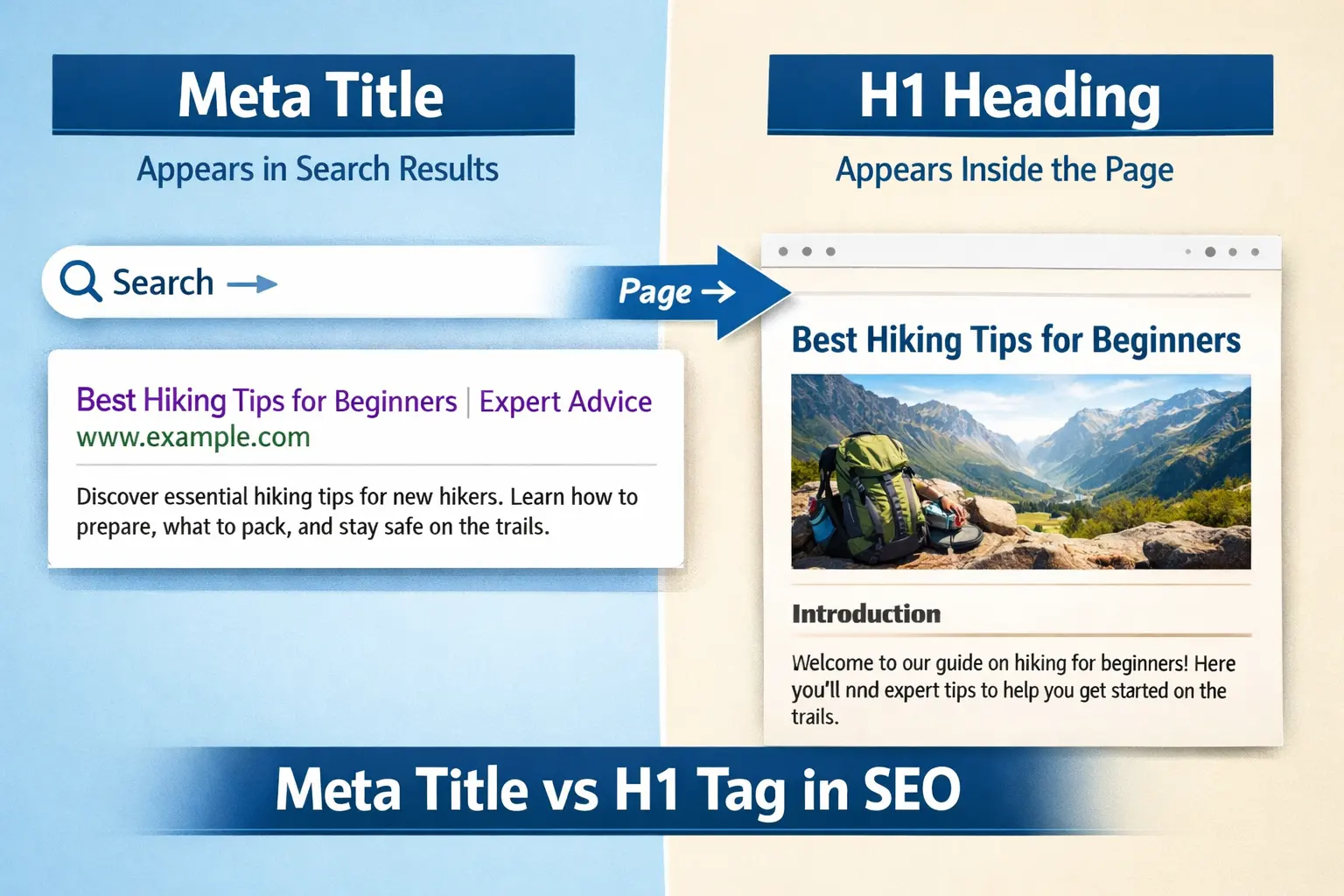
Meta titles and H1 tags often look similar, so many people assume they are the same thing. In reality, they serve different roles. One helps search engines present your page, while the other guides readers after they click. If you want a deeper explanation of how these elements differ, read our guide on Meta Title vs H1.
The Meta Title’s Role in Search Results
The meta title is the headline search engines show in results pages. It appears in the browser tab and is often used when a page is shared online. Its main job is to signal relevance to search queries and attract clicks from users scanning the SERP.
The H1 Tag’s Role Inside the Page
The H1 tag is the primary heading visitors see after opening the page. It introduces the topic and confirms they landed in the right place. Unlike the meta title, it focuses more on clarity and readability for humans.
When Both Titles Should Be Similar (But Not Identical)
Best practice is to keep them aligned but not identical.
| Element | Purpose | Where It Appears |
|---|---|---|
| Meta Title | Search headline | SERP, browser tabs |
| H1 | Page heading | Inside the article |
The Ideal Meta Title Length (And Why Google Sometimes Cuts It)
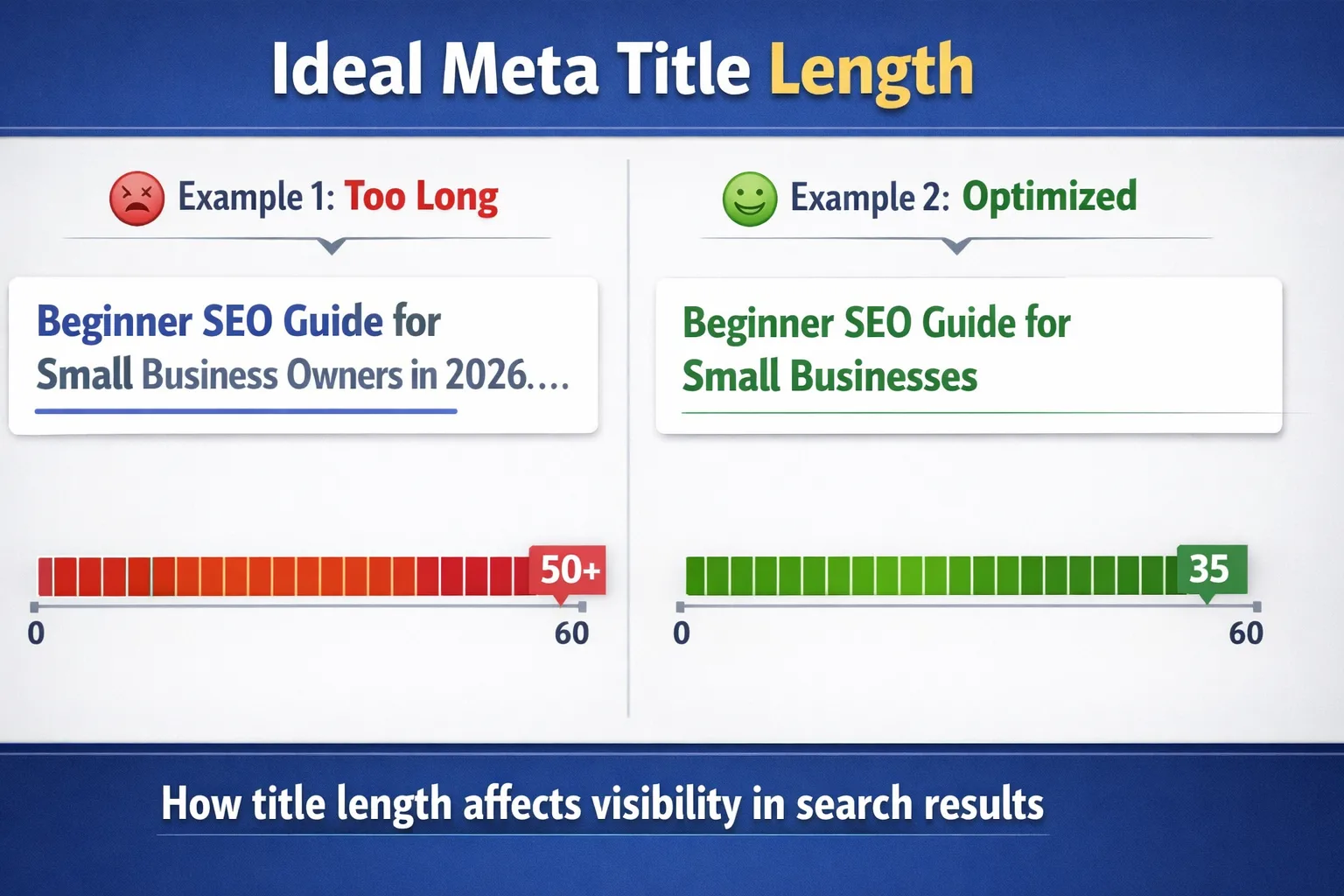
Meta title length affects how much of your message appears in search results. But the real goal is clarity: even a shorter title works if the main idea is visible immediately.
The Typical Character Limit
In most search results, Google shows about 50 to 60 characters of a title before cutting the rest. If you want a deeper explanation of why this happens and how to avoid truncation, read our guide on meta title length.
Example: Beginner SEO Guide for Small Business Owners in 2026 might appear as Beginner SEO Guide for Small Business…
Why Pixel Width Matters More Than Characters
Google measures the visual width of letters, not just the number of characters. Wider letters like W or M take more space than narrow ones like I or l.
Practical Rule for Writing Safe Titles
A simple way to keep titles safe: Start with primary keyword • Put context or benefit next • Add brand name last if space allows.
✍️ Real‑world practice: title rewrite that lifted CTR
An e‑commerce brand changed its meta title from “Buy Blue Suede Shoes” to “Blue Suede Shoes: Comfortable & Classic | Free Shipping”. The primary keyword stayed early, but they added a benefit (“comfortable & classic”) and a trust element (“free shipping”). Clicks increased by 27% in six weeks — same page, better headline.
Takeaway: small value‑adds inside titles influence real user behaviour.
A Simple Formula for Writing Effective Meta Titles
Writing a good meta title becomes easier when you follow a clear pattern. Instead of guessing each time, use a structure that balances keywords with readability. This keeps titles natural for users while still signalling relevance to search engines.
The Basic Meta Title Formula
The most reliable structure is simple: primary keyword, value modifier, then brand. The keyword signals the topic. The modifier adds a benefit or angle that attracts clicks. Placing the brand at the end reinforces recognition without distracting from the search intent. If you’re unsure how to implement this on a page, see our guide on how to add a meta title.
Formula Structure
Primary Keyword + Value Modifier + Brand
Examples
Meta Title Guide for Beginners | YourBrand
SEO Checklist for Small Websites | YourBrand
Example Titles for Different Search Intent
Title wording should match what the searcher wants. Someone learning expects guidance, someone with a problem wants a solution, and someone ready to act looks for a tool or product.
| Search Intent | Title Style Example |
|---|---|
| Informational | Meta Title Guide for Beginners |
| Problem‑solving | How to Write Meta Titles That Rank |
| Transactional | SEO Meta Title Tool |
The “Read It Aloud” Test
Read the title out loud. If it sounds stuffed or unnatural, simplify it. Clear language almost always performs better than forced keywords.
Check Your Meta Title Instantly
Use our free Meta Title Checker Tool to test title length, pixel width, and see how it appears in Google search results.
The AI Overviews Factor: Why Meta Titles Now Need a Stronger Promise
Search behaviour has started shifting with the introduction of Google AI Overviews. In many queries, users see an instant AI-generated summary at the top of the results page before traditional links.
This changes the role of a meta title. If the AI summary already explains the basic answer, users will only click results that promise something deeper or more practical. A plain descriptive title may no longer be enough to earn attention, especially as meta titles are no longer a direct ranking factor for AI Overviews.
Effective titles now highlight value that AI summaries usually cannot provide, such as:
- Step-by-step processes
- Real examples or case studies
- Practical checklists
- Expert insights or strategies
Example comparison:
Basic title: Meta Title Guide for Beginners
Stronger AI‑era title: Meta Title Optimization Checklist with Real Examples
The idea is simple. When the quick answer is already visible, your title must signal that the page offers something more useful than the summary alone.
Common Meta Title Mistakes That Reduce Click-Through Rate
Even a well-researched keyword can fail if the title is poorly written. Small mistakes in meta titles reduce clarity, weaken trust, and often lower click-through rates from search results.
Keyword Stuffing in the Title
Repeating the same keyword multiple times makes a title look unnatural and spammy. Searchers prefer titles that read like clear headlines, not keyword lists.
Bad title example: SEO Meta Title Tips | Meta Title SEO Guide | Best Meta Title for SEO
Improved title: Meta Title Tips: How to Write SEO Titles That Get More Clicks
Writing Titles That Don’t Match the Page Content
A title that promises one thing while the page delivers something else quickly frustrates users. When visitors leave immediately, search engines interpret it as a poor experience, which can weaken rankings.
Using the Same Title on Multiple Pages
Duplicate titles make it harder for search engines to understand which page is relevant. Common problems: unclear page focus, diluted ranking signals, poor indexing clarity.
Quick Checklist to Evaluate Any Meta Title
Before publishing a page, run your meta title through this quick checklist:
- Does it clearly explain the page topic? Anyone reading it should instantly understand what the page is about.
- Is the main keyword included naturally? The primary keyword should appear without sounding forced or repetitive.
- Does it promise value to the reader? The title should hint at a benefit, solution, or useful information.
- Is the most important information at the start? Placing the key phrase early improves visibility in search results.
- Does it stay under roughly 60 characters? Shorter titles reduce the risk of truncation in search results.
A strong title determines whether your content gets attention or gets ignored.
Frequently Asked Questions About Meta Titles
Can Google Change or Rewrite Your Meta Title?
Yes. Google may rewrite a title when it doesn’t clearly match the page content or search intent. This usually happens when the title is vague, misleading, or disconnected from the page topic. To avoid this, make sure the title accurately reflects the page content and aligns with the main heading and primary keyword. When both match the topic clearly, Google is less likely to change it.
Should Every Page on a Website Have a Unique Meta Title?
Yes. Each page should have a unique title that clearly reflects its specific content. Duplicate titles make it harder for search engines to understand page differences.
Do Meta Titles Directly Affect Search Rankings?
Not directly. Titles help search engines understand the page topic and influence click-through rates, which can support overall search performance.
Is It Necessary to Include a Brand Name in the Meta Title?
Not always. It helps on homepages, product pages, or official resources, but for informational content the topic usually matters more.
Can Emojis or Special Characters Be Used in Meta Titles?
Yes, but carefully. They may display differently across devices, and overusing them can reduce clarity or appear unprofessional.
— trust grows in systems, not silos —
 Add Content Decoded as a preferred source