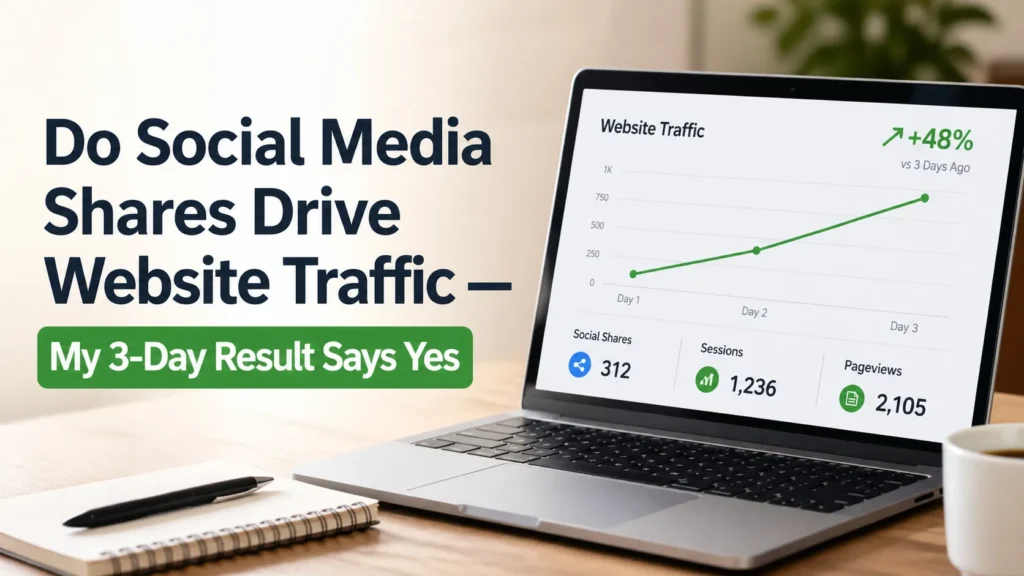
Do Social Media Shares Drive Website Traffic — My 3-Day Result Says Yes
For years, this question keeps coming up in SEO circles: Do social media shares actually drive website traffic, or is it just vanity engagement?
Short answer: yes, they do—and sometimes much more than you expect.
I didn’t arrive at this conclusion from theory or general advice. I saw it happen with my own blog.
For weeks, my content was performing normally, relying only on search traffic and bringing in slow, steady clicks. Then one simple LinkedIn post changed the pattern completely.
Within just three days, the same blog almost matched the traffic it had generated over the previous two months.
This wasn’t a guess or assumption. It was based on real data, tracked over time, with a clear before-and-after difference that is hard to ignore.
The Reality Before Social Push (Feb 11 – April 21)
Let’s begin with the baseline, because without that, the result later will not make much sense.
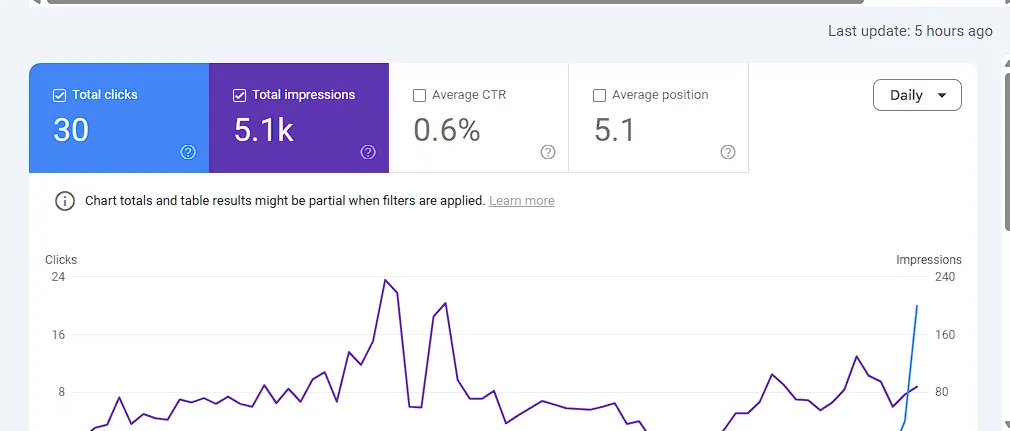
I published a blog, “Why Long-Form Content Doesn’t Always Rank Under Helpful Content Systems?” on February 11, 2026, and for the next couple of months, it behaved exactly like most new blog posts do when they depend only on search engines. Actually, at that time, I didn’t know what to do after publishing the blog.
Here is the complete picture from February 11 to April 21:
| Metric | Value |
| Total Clicks | 30 |
| Total Impressions | 5,100 |
| Average CTR | 0.6% |
At first glance, this looks acceptable. The impressions were decent, which means Google was showing my content to people searching for related topics. The ranking was not the problem.
But the clicks tell a different story.
Even after appearing more than five thousand times, only thirty people clicked.
That gap between impressions and clicks shows something important:
Because People were seeing my blog but did not click on it, or did not find a strong reason to click it.
This is a very common situation. Your content exists, it ranks, and it gets visibility, but it does not stand out enough to attract attention.
The Turning Point: One LinkedIn Post
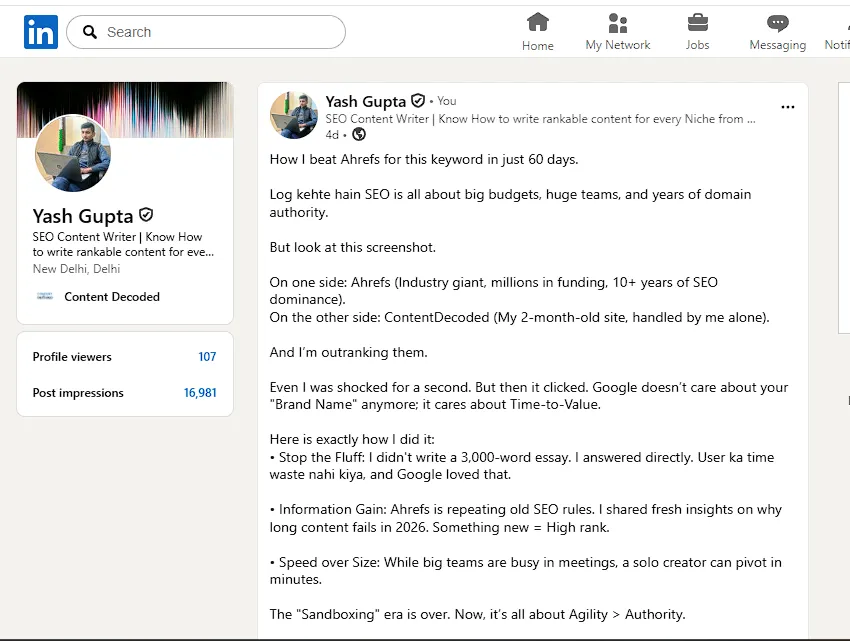
Everything changed with one simple action.
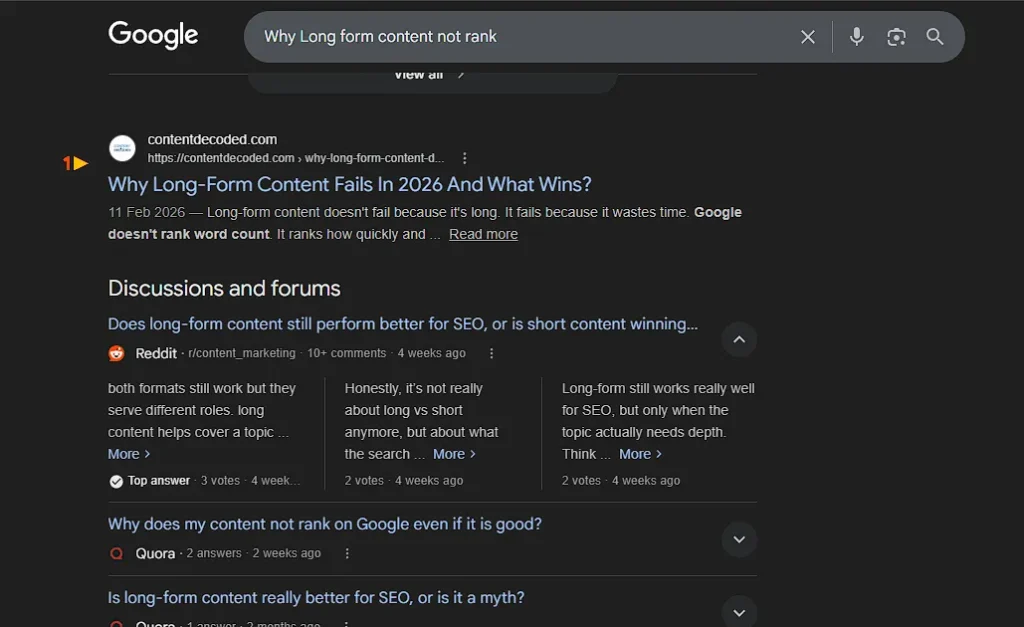
On April 22, I noticed that my blog was ranking above Ahrefs, a well-known SEO platform, for the keyword “Why Long Content doesn’t rank.”. That was not expected, and it immediately stood out.
Instead of keeping it to myself, I decided to share it.
Here is exactly what I did:
- Took a screenshot of the search result
- Highlighted my position
- Wrote a short, clear statement around it
- Posted it on LinkedIn
There was no complicated strategy behind it, no planning for traffic, and no paid push involved.
One important detail, which later became a key learning:
- I did not include the blog link in the post
At that moment, it felt like a small oversight, but it helped reveal something deeper about how people behave.
What Happened Next (And What People Questioned)
The response to the LinkedIn post was not passive. People didn’t just like it and move on—there was a clear pattern in how they reacted.
- Some agreed with the claim
- Some questioned it
- Some went to Google to verify it
And that’s the key part.
Instead of clicking a link, many people searched the keyword themselves. When they found my blog, they clicked to see the following:
- What I had written
- Why it was ranking
- Whether the claim actually made sense
A few others noticed the domain in the screenshot and visited directly. So even without a link, the post still pushed people toward the blog.
At the same time, the comments added another layer:
- Some pointed out it was a low or zero-search-volume keyword, so easier to rank
- Some said, “anyone can rank for this.”
- A few even shared screenshots saying they couldn’t see my ranking when they checked
This actually helped more than it hurt.
- More people went to check the keyword
- The discussion stayed active
- The post reached more people
Even the disagreement created curiosity, and that curiosity brought more people back to the blog.
The 3-Day Result (April 22 – April 24)
Now comes the part that changed my perspective.
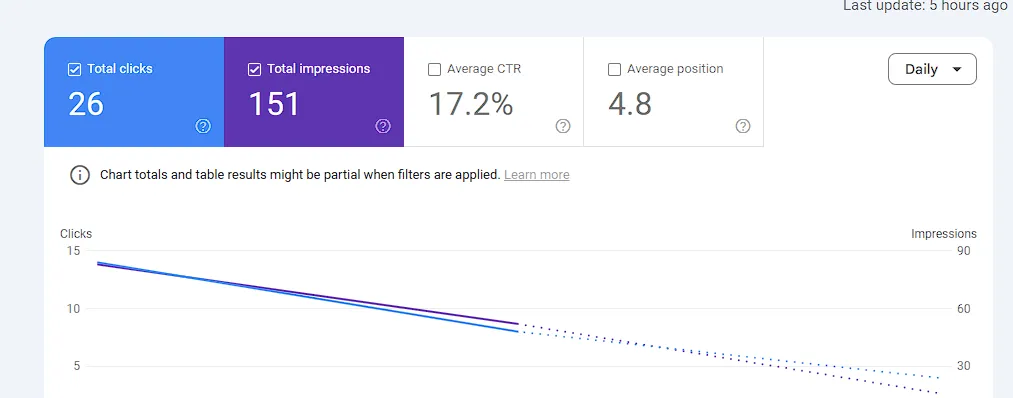
Here is the performance of the same blog in just three days after that LinkedIn post:
| Metric | Value |
| Total Clicks | 26 |
| Total Impressions | 151 |
| Average CTR | 17.2% |
When you compare this with the earlier data, the difference becomes very clear.
- Earlier: 30 clicks from 5,100 impressions
- Now: 26 clicks from only 151 impressions
This is not a small improvement. It is a complete shift in how people interacted with the same content.
The most important change was the CTR, which jumped from 0.6% to 16.9%.
That kind of increase does not happen randomly.
What Changed? Not the Ranking — The Intent
The ranking of the blog did not suddenly improve in a major way because it is already #1.
What changed was the type of audience.
Before the LinkedIn post:
- People discovered the blog randomly through search
- They had no prior context
- They compared it with other results
After the LinkedIn post:
- People already knew about the blog
- They came with curiosity or intent
- They were specifically looking for that result
This difference explains the jump in clicks. Actually this content had not any search demand, but I actually created search demand for it, which results in traffic.
When someone already has a reason to click, they do not hesitate. They do not compare ten results. They go straight to the one they came for.
Direct vs Indirect Traffic (This Is the Real Insight)
Most people think of social media traffic in a very direct way: Someone clicks your post and lands on your website
That does happen, but it is only one part of the picture.
In my case, the journey looked different:
Someone sees the LinkedIn post → gets curious → goes to Google → searches → finds the blog → clicks
This type of journey does not always show up clearly as social media traffic in analytics.
But the source of that action is still social media.
This is what can be understood as
Indirect Traffic
This kind of traffic has a few strong qualities:
- The user chooses to search
- The user already trusts the content enough to check it
- The click happens with a clear purpose
- And when people click my results over others, Google ranks them higher
That makes it more valuable than random clicks.
Why This Worked
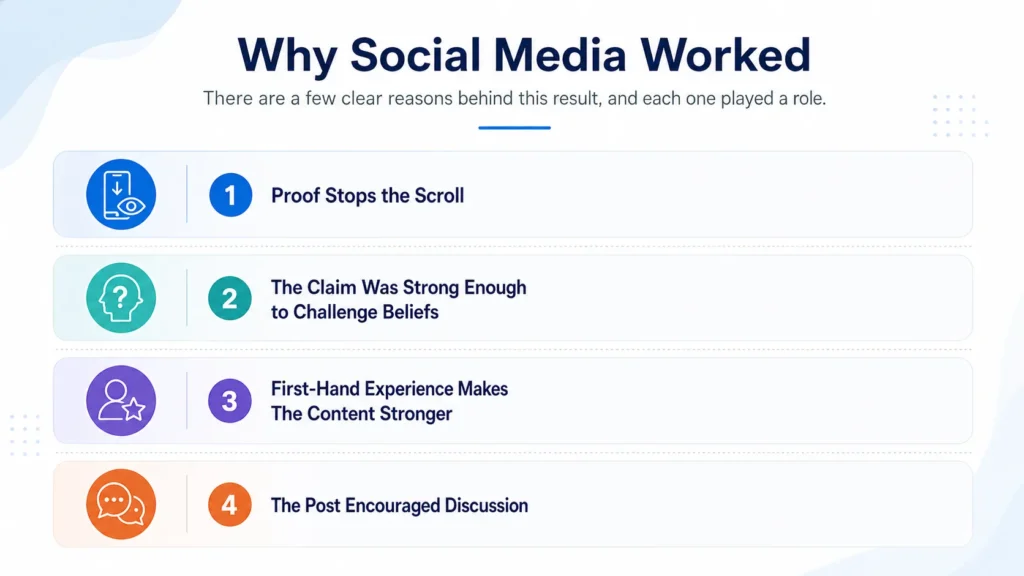
There are a few clear reasons behind this result, and each one played a role.
1. Proof Stops the Scroll
Instead of making a claim, I showed it.
That screenshot acted as immediate evidence, which made people pause and look again. When something can be verified easily, people are more likely to engage with it.
2. The Claim Was Strong Enough to Challenge Beliefs
The idea of a smaller blog ranking above a well-known platform is not common.
That contrast created curiosity and even doubt, which pushed people to check it themselves instead of ignoring it.
3. First-Hand Experience Makes the Content Stronger
The post was not based on general advice or theory.
It was based on something that actually happened, and that made it more believable. People respond more to real experiences than repeated information.
Check your first hand experience in content now- First-Hand Experience in Content Checker
4. The Post Encouraged Discussion
The content allowed people to agree or disagree.
That led to more comments and interactions, which helped the post reach more people over time and increased its visibility.
The Mistake I Made (And Why It Still Taught Me Something)
Not adding the blog link was clearly a mistake.
It created extra effort for people who were interested, and some of them likely chose not to search manually.
That means I lost some potential traffic.
However, it also created a different kind of behaviour:
- People who were truly interested made the effort to search
- Those users had stronger intent
- The clicks that came were more meaningful
If I were to repeat this, the better approach would be:
- Add the blog link to reduce effort
- Keep the post engaging enough to create curiosity
- Make it easy, but still interesting
How to Turn Social Posts Into Traffic (What Actually Works)
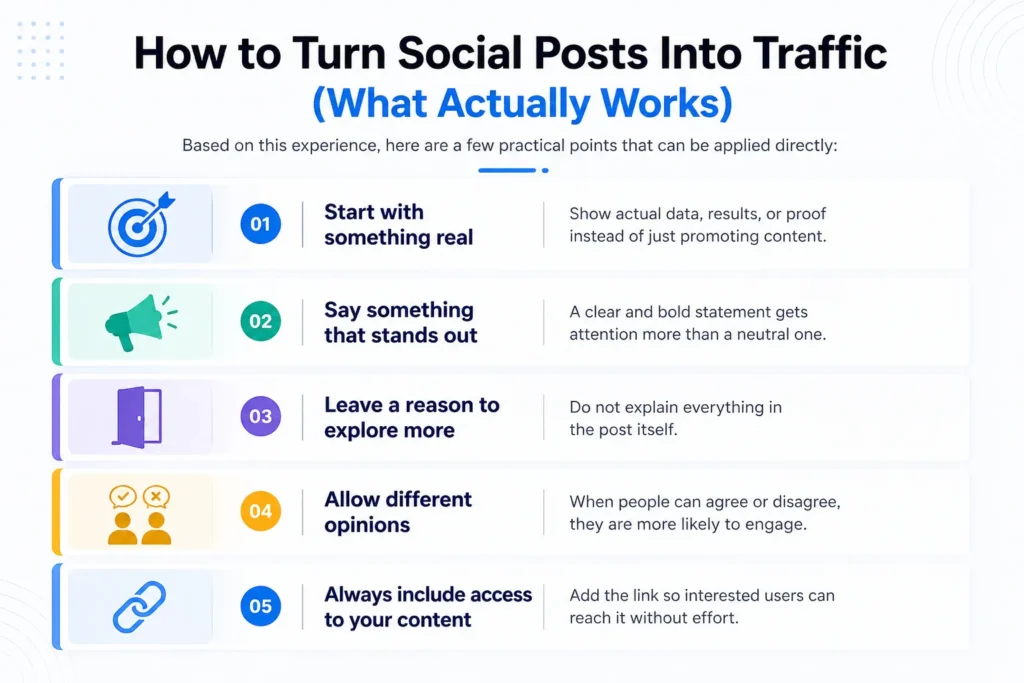
Based on this experience, here are a few practical points that can be applied directly:
- Start with something real
Show actual data, results, or proof instead of just promoting content. - Say something that stands out
A clear and bold statement gets attention more than a neutral one. - Leave a reason to explore more
Do not explain everything in the post itself. - Allow different opinions
When people can agree or disagree, they are more likely to engage. - Always include access to your content
Add the link so interested users can reach it without effort.
Social Media as a Second Search Engine
Social media is often seen as a place for sharing updates, but it also plays another role.
It creates demand.
Search engines respond to what people are already looking for. Social media influences what people decide to look for in the first place.
When someone sees useful or interesting content and then searches for it, a loop is created:
Social media → curiosity → search → click → understanding
This loop connects both platforms in a way that increases visibility and traffic.
Final Answer: Does Social Media Drive Website Traffic?
Yes. Absolutely yes.
But what matters is how you use it. A “check out my blog” post will not do this. What works is:
- Sharing real data and proof
- Saying something that makes people stop and think
- Leaving room for people to agree and disagree
- Giving them a reason to go look for more
My blog ranking above Ahrefs was not the point of the post. The point was to show that good content, done right, can beat even the biggest players. That message resonated. And it sent traffic.ly.
Key Takeaways
- Social media creates search intent. Your post makes people curious. They go to Google. They find you.
- Real data beats opinions. Show proof. Screenshots, numbers, results — these stop scrollers.
- Always include a direct link. Even a highly motivated audience loses some people without it.
- First-hand experience is irreplaceable. Your numbers are yours. Nobody else has them.
- LinkedIn and Other Social media are second search engine. Use it like one.
 Add Content Decoded as a preferred source