Does YMYL Content Need Personal Experience or Professional Expertise?
One of the most common questions in SEO is whether YMYL content needs professional expertise or personal experience to rank well.
The answer is simple: it depends on the purpose of the content and what the user is looking for.
YMYL content does not always require a doctor, lawyer, financial advisor, or other certified expert. Likewise, personal experience is not automatically enough. Google decides what matters most based on search intent.
Expertise is critical for medical, financial, legal, and safety guidance, while first-hand experience is valuable for practical tips and real-life insights.
This distinction is why some YMYL searches are dominated by expert websites, while others surface personal blogs, forums, and videos. Understanding the difference is essential because many websites apply the same content strategy to every YMYL topic, even though Google evaluates them differently.
Understanding the Difference
YMYL covers topics that can affect a person’s health, finances, safety, or other important life decisions. Because incorrect information in these areas can cause real harm, Google applies much higher quality standards than it does for topics like entertainment or hobbies.
However, not every YMYL search carries the same level of risk. Some queries require accurate information that aligns with accepted medical, financial, legal, or safety guidance, while others focus on personal experiences, practical challenges, and everyday life.
A useful way to understand this is by thinking about high-risk and low-risk YMYL queries.
High-risk YMYL queries involve situations where incorrect information can directly impact a person’s health, finances, safety, or legal standing. Because users may make significant decisions based on this information, Google places a strong emphasis on accuracy, reliability, and expert-backed sources.
Low-risk YMYL queries also cover important life topics but focus more on everyday experiences, practical challenges, and personal perspectives. In these cases, first-hand experience can be highly valuable, as users often seek realistic insights and actionable advice.
The mistake many content creators make is treating all YMYL queries the same. Google evaluates the intent behind the search and determines whether expertise or experience is more useful for the user.
When Professional Expertise Is Required
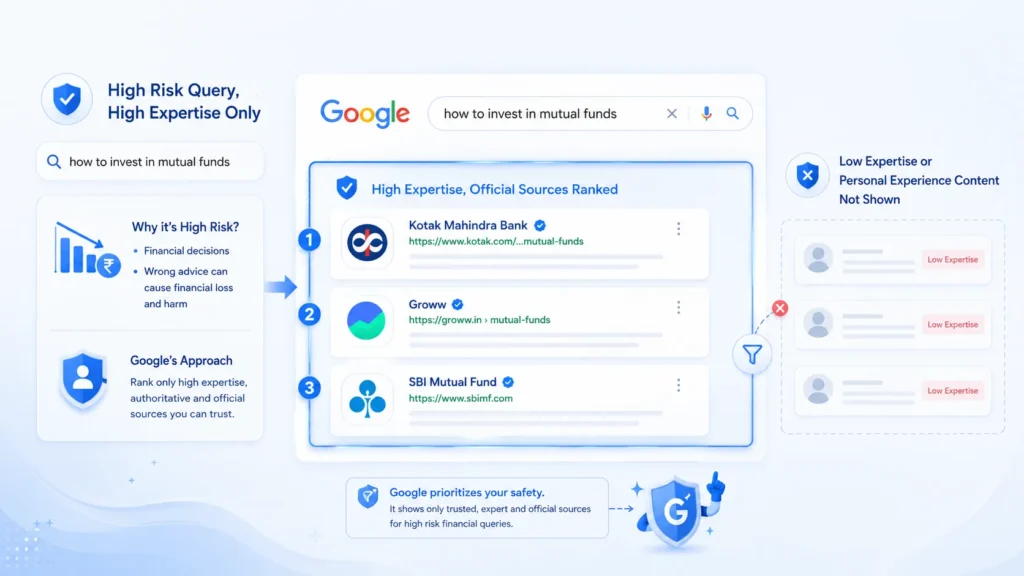
Professional expertise becomes essential when the purpose of the content is to provide factual information, official instructions, or advice that could influence important decisions.
When users search for information that affects their health, money, legal responsibilities, or personal safety, Google wants to show content that is accurate, trustworthy, and aligned with accepted expert knowledge. A mistake in these situations can have serious consequences, which is why expertise matters.
Common examples include:
- Medical treatment options
- Medication safety information
- Tax filing instructions
- Legal procedures
- Banking and loan guidance
- Investment processes
- Retirement planning information
For example, consider the query:
“How to invest in mutual funds”
The user is not looking for a personal story. They want to understand the actual process involved in investing. They need information about account setup, KYC requirements, investment methods, regulations, and other important financial steps.
If the information is incorrect, the user could make costly financial mistakes. Because of this risk, Google typically favours trusted financial websites, banks, investment platforms, and established financial publishers that can provide accurate and up-to-date guidance.
The same principle applies to medical and legal topics. When users need instructions or guidance that can directly affect important decisions, professional expertise becomes the most important requirement.
When Personal Experience Is Valuable
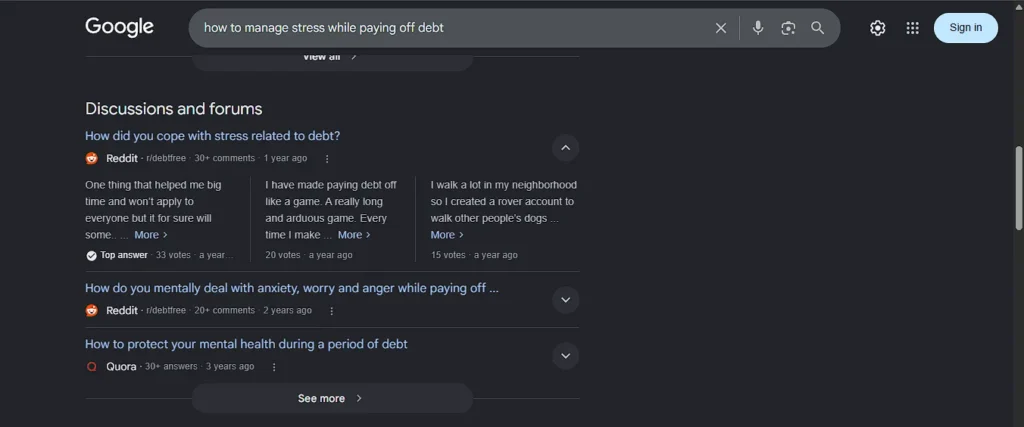
Personal experience becomes valuable when users are looking for real-life perspectives, practical advice, emotional support, or day-to-day solutions rather than formal guidance.
These are typically lower-risk queries where the information is unlikely to cause direct harm. Users are often less interested in official instructions and more interested in learning what worked for someone who has been through the same situation.
Examples include:
- A patient’s experience during cancer treatment
- A parent’s morning sickness routine
- Reviews of a budgeting app after months of use
- Personal investing journeys
- Daily life with an injury or disability
- Experiences managing debt or saving money
What makes this content useful is not professional training but first-hand knowledge.
For example, a financial advisor can explain the economic facts about interest rates, but a person in debt can explain practical routines that helped them reduce stress, stay motivated, or manage everyday emotional challenges. Both types of information have value, but they serve different purposes.
This is why Google often surfaces blogs, discussion forums, YouTube videos, and community content for experience-based queries. Users are looking for perspectives that come from real life rather than formal instruction.
The Difference Between Advice and Experience
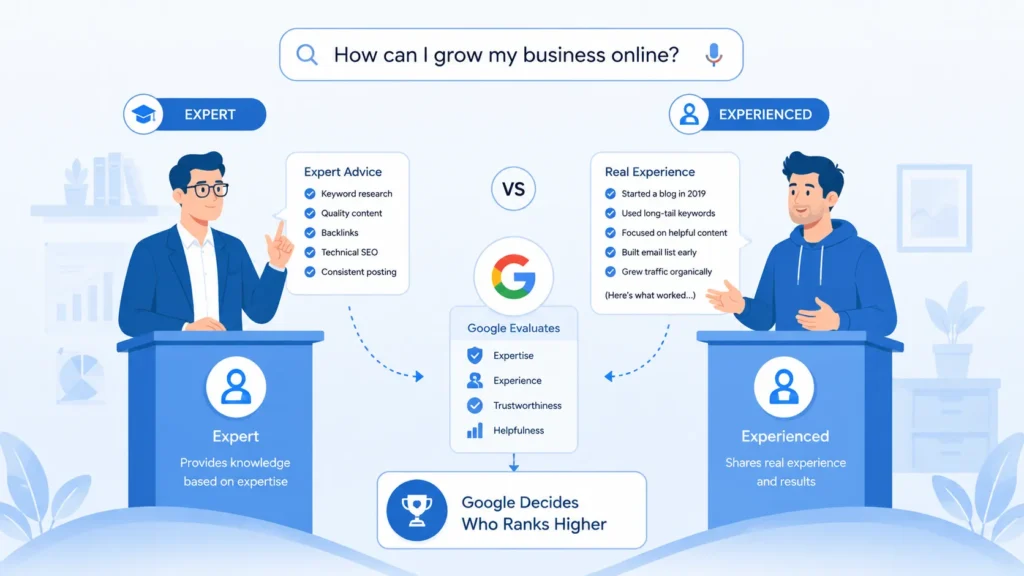
One of the easiest ways to understand YMYL content is to separate advice from experience.
When users need instructions, rules, recommendations, or guidance that could affect important decisions, expertise becomes the priority.
When users want practical insights, personal stories, or day-to-day coping strategies, experience becomes more valuable.
The difference looks like this:
| Search Query | Primary Need | Best Content Type |
| How to invest in mutual funds | Financial guidance | Expert content |
| What are the symptoms of a stroke | Medical information | Expert content |
| Groww vs Zerodha review | Real user feedback | Personal experience |
| My investing journey at age 25 | Personal story | Personal experience |
| Life after knee surgery | Practical recovery experiences | Personal experience |
This distinction explains why two searches within the same topic can produce completely different search results.
A user asking for instructions needs expertise. A user asking for lived experiences needs experience.
Google’s job is to understand which one the searcher is looking for and rank content accordingly.
Why Forums and Personal Blogs Sometimes Rank
Many people see Reddit threads, forums, and personal blogs ranking for YMYL-related searches and assume Google is treating expertise as less important than before.
That is not what is happening.
Google is simply matching content to user intent.
When users need factual information, professional guidance, or official instructions, authoritative sources usually dominate the search results.
When users want practical experiences, product reviews, emotional support, or everyday advice, first-hand perspectives become more useful.
The difference can be seen clearly in the examples below:
| Query | User Intent | Likely Results |
| How to invest in mutual funds | Learn the process | Financial institutions and expert sites |
| Groww vs Zerodha review | Compare user experiences | Forums, reviews, blogs |
| Cancer treatment options | Medical guidance | Hospitals and medical authorities |
| Living through cancer treatment | Personal experiences | Patient communities and blogs |
| How to file taxes | Official instructions | Government and financial websites |
| Tax filing mistakes I learned from | Personal lessons | Blogs and discussion forums |
Google is not choosing one over the other. It is choosing the content format that best matches what the user is trying to accomplish.
Can Personal Experience Replace Expertise?
No.
This is one of the most important principles in YMYL SEO.
A real person’s experience does not automatically make content safe, accurate, or trustworthy. Someone can genuinely believe that a particular treatment, investment strategy, or legal shortcut worked for them, but that does not mean it is correct or safe for everyone else.
For high-risk topics, Google looks for accuracy first. Personal experience only becomes valuable after the information aligns with accepted expert knowledge.
A first-hand story can strengthen content, but it cannot replace the need for trustworthy information when users are making important decisions.
The Best Combination: Expertise Plus Experience
The strongest YMYL content often combines professional expertise with first-hand experience.
This approach gives users accurate information while also making the content more relatable and practical.
Examples include:
- A doctor sharing lessons learned from years of treating patients
- A financial planner discussing personal investing experiences
- A lawyer explaining common mistakes they regularly see clients make
- A therapist sharing patterns observed throughout years of practice
This combination satisfies both needs. Users receive reliable information while also gaining practical insights that are difficult to find in purely factual content.
When expertise and experience work together, content often becomes more useful, more trustworthy, and more engaging.
What Happens When Websites Fake Expertise?
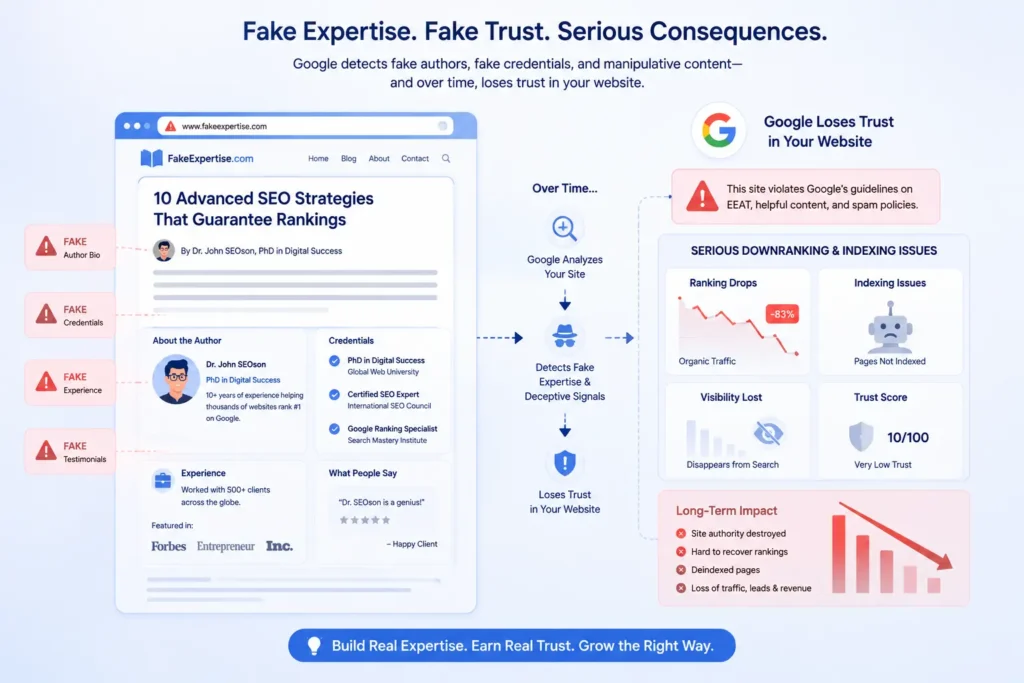
Google places a strong emphasis on trust, especially for high-risk YMYL topics.
If a website presents itself as an authority without demonstrating real knowledge, trust can become a serious issue. This is particularly true when the content contains inaccurate information or makes claims that conflict with accepted expert guidance.
Credentials alone can’t increase trust, as they can be faked.
Google evaluates more than just the words on a page. It looks for signals that help establish whether a website and its content deserve to be trusted.
For YMYL topics, trust is the foundation. Without it, expertise claims carry very little value.
A website that publishes accurate, helpful, and trustworthy information will always have a stronger long-term position than a website that tries to appear authoritative without delivering reliable content.
Case Study: Accuracy Beats Authority
Imagine two websites targeting the keyword “How to invest in mutual funds.”
| Website | Content Quality | Likely Outcome |
| Website A | Strong authority but inaccurate or unsafe advice | Rankings decline because trust is lost |
| Website B | Limited authority but accurate, helpful, and well-researched content | Better chance to earn rankings and trust over time |
This highlights an important YMYL principle: authority alone is not enough.
A well-known website cannot rely on its reputation if the information is misleading or incorrect. At the same time, a smaller website can still build visibility when its content is accurate, helpful, and aligned with trusted sources.
The takeaway is simple: in YMYL SEO, trust and accuracy matter more than claimed authority.
How Small Websites Can Demonstrate Expertise
A small website does not need to be a famous brand to demonstrate expertise. The key is publishing accurate, well-researched content that aligns with trusted sources and established knowledge.
This can be done by citing reliable sources, referencing official guidance, explaining topics clearly, and avoiding unsupported claims. Over time, consistently helpful and trustworthy content can build credibility, even for newer websites.
The Final Answer
YMYL content does not automatically require professional expertise or personal experience. What matters is the intent behind the search.
For high-risk topics involving health, finance, law, or safety, expertise, accuracy, and trust are essential. For practical, lower-risk topics, first-hand experience can be equally valuable because users are often looking for real-world insights rather than formal guidance.
| Content Purpose | What Matters Most |
| High-risk advice and guidance | Professional expertise |
| Practical experiences and everyday solutions | Personal experience |
| The strongest content | Expertise plus experience |
The key is matching the content to what the user actually needs.
 Add Content Decoded as a preferred source