Is It Possible to Build Topical Authority Without Mentioning an Author on Your Website?
Yes, you can build topical authority without displaying a specific author on your website. Search engines can recognise expertise through comprehensive topic coverage, high-quality content, and strong internal linking, even when content is published under a brand or editorial team. However, not showing authors can make it harder to build trust, especially in certain industries where expertise and credibility matter more.
Understanding the Difference Between Author Authority and Topical Authority
Before discussing anonymous publishing, it’s important to separate author authority from topical authority. They influence rankings in different ways.
Author Authority
Author authority is tied to a specific person. It comes from their experience, expertise, credentials, and reputation, helping users and search engines trust the content.
Topical Authority
Topical authority is tied to the website, not an individual author. It is built by consistently publishing comprehensive content that covers a subject from multiple angles.
For example, a single article about email marketing does not create topical authority. A collection of content covering campaigns, automation, deliverability, segmentation, analytics, and related topics can. This is why many brand-owned websites rank well even without displaying individual authors.
How Topical Authority Works Without an Author
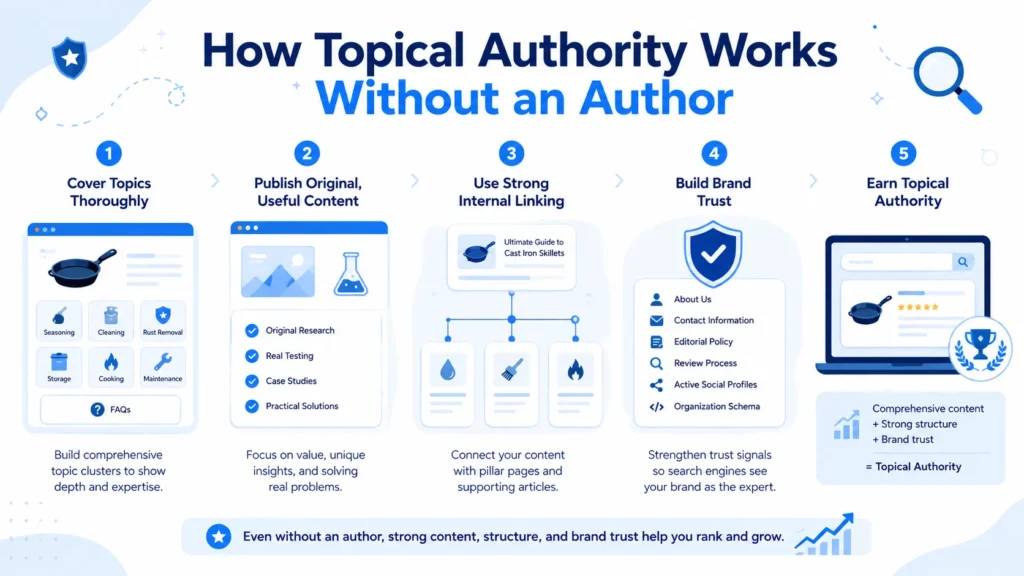
If you don’t display author names, your website needs stronger signals to demonstrate expertise and trust. Search engines will rely more heavily on your content quality, topic coverage, site structure, and brand credibility.
Cover Topics Thoroughly
Topical authority comes from covering a subject comprehensively, not from targeting isolated keywords.
For example, a cast iron skillet website should cover seasoning, cleaning, rust removal, storage, cooking techniques, maintenance mistakes, and FAQs. Building clusters of related content helps search engines understand your expertise and depth.
Publish Original, Useful Content
Authority is built through value, not volume.
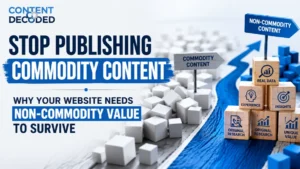
Instead of writing commodity content, focus on original research, case studies, testing, real examples, unique insights, and practical solutions. The most effective content solves problems clearly, regardless of length.
Use Strong Internal Linking
Internal links help search engines understand how your content connects.
A clear structure with pillar pages and supporting articles can:
- Improve content discovery
- Strengthen topical relevance
- Show relationships between topics
- Distribute authority across pages
Build Brand Trust
Without a visible author, your brand becomes the expert.
Strengthen trust with clear business information, an About page, contact details, editorial policies, review processes, active social profiles, and organisation schema markup.
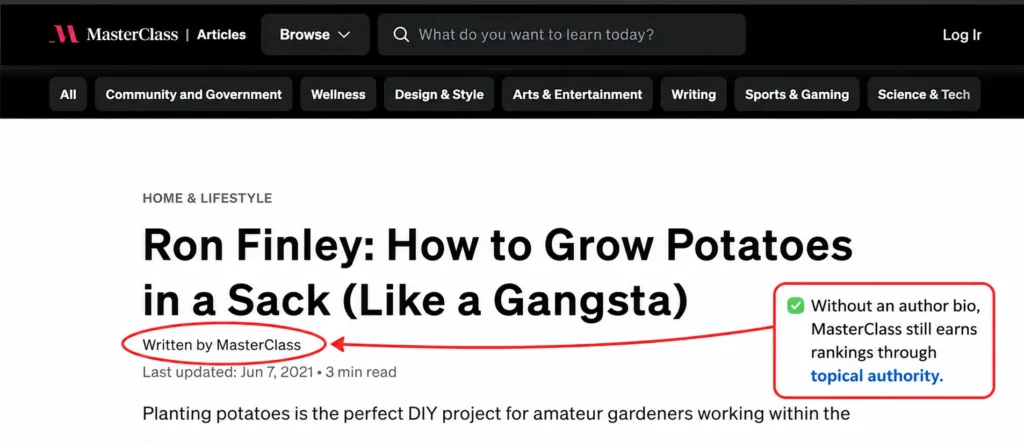
Many successful brand-led websites such as “MasterClass” rank without highlighting individual authors because they provide comprehensive content, maintain strong site structure, and consistently demonstrate expertise through their content ecosystem.
When Anonymous Publishing Works Well
Whether anonymous publishing works depends largely on the niche you operate in. Some industries place a much higher importance on author credentials than others.
Low-Risk Niches
In many low-risk industries, users primarily care about getting a helpful answer.
Examples include:
- Gaming
- Gardening
- Cooking
- Home improvement
- DIY projects
- Creative hobbies
- Software tutorials
- Product troubleshooting
In these niches, users are generally focused on solving a problem or learning a skill. As long as the information is accurate, clear, and useful, an author bio is often less important than the quality of the content itself.
SaaS and Technical Websites
Many software companies publish content under their company name rather than individual authors.
This works because users often trust the company that built the product to explain how it works. Documentation, tutorials, troubleshooting guides, and technical resources can perform very well without individual bylines when the information is accurate and solves user problems effectively.
When Author Names Become Important
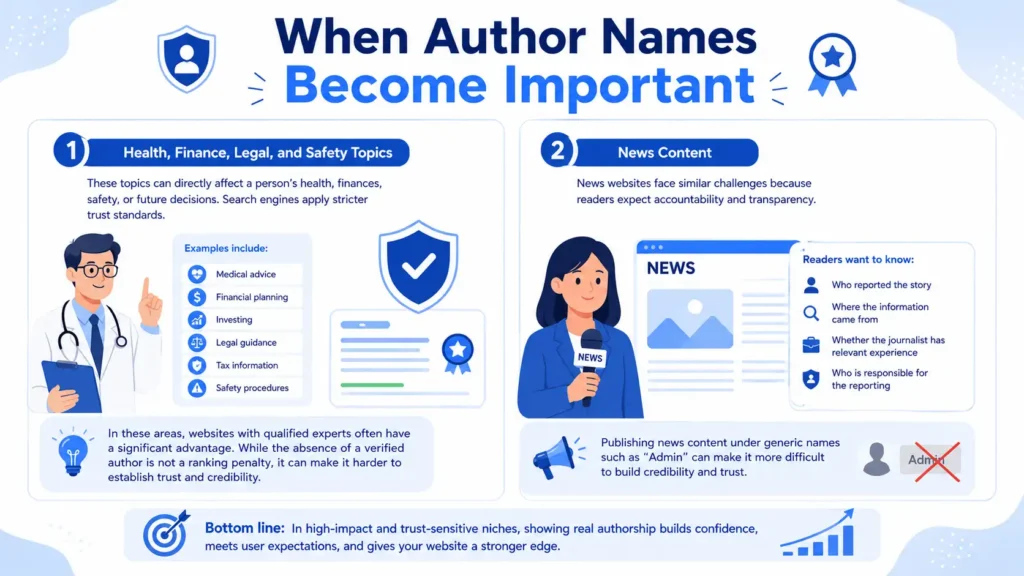
While anonymous publishing can work in many niches, visible expertise becomes far more important in certain industries.
Health, Finance, Legal, and Safety Topics
These topics can directly affect a person’s health, finances, safety, or future decisions. Because of this, search engines apply stricter trust standards.
Examples include:
- Medical advice
- Financial planning
- Investing
- Legal guidance
- Tax information
- Safety procedures
In YMYL areas, websites with qualified experts often have a significant advantage. While the absence of a verified author is not a ranking penalty, it can make it harder to establish trust and credibility.
News Content
News websites face similar challenges because readers expect accountability and transparency.
They want to know:
- Who reported the story
- Where the information came from
- Whether the journalist has relevant experience
- Who is responsible for the reporting
Publishing news content under generic names such as “Admin” can make it more difficult to build credibility and trust.
Anonymous Publishing vs Author-Based Publishing
The table below shows where each approach performs best.
| Factor | Anonymous or Brand Publishing | Author-Based Publishing |
| Topical Authority | Can be built successfully | Can be built successfully |
| Trust Building | Slower | Faster |
| Low-Risk Niches | Works very well | Works very well |
| Health and Finance Topics | Difficult | Strong advantage |
| News Content | Challenging | Preferred |
| User Confidence | Depends on brand trust | Often stronger |
| Future Updates | More risk | More protection |
| Credibility Signals | Must come from content and brand | Can come from both author and content |
Common Author Bio Myths
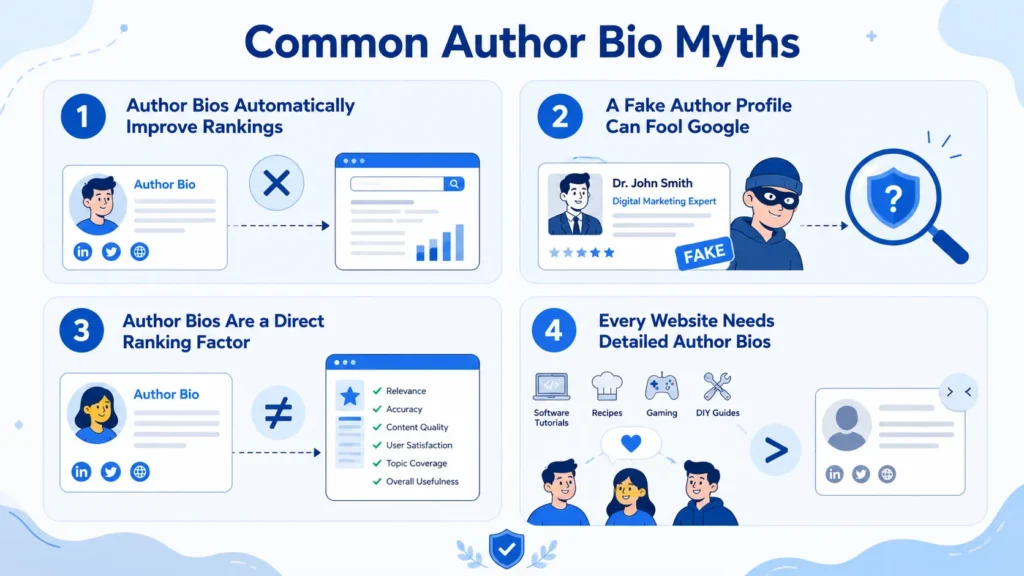
Myth #1: Author Bios Automatically Improve Rankings
Many people believe that simply adding an author bio will improve rankings. That is not how search engines work.
A famous expert cannot save weak content. If an article does not answer the user’s question, lacks useful information, or provides a poor experience, it will struggle regardless of who wrote it.
Search engines still evaluate factors such as:
- Relevance
- Accuracy
- Content quality
- User satisfaction
- Topic coverage
- Overall usefulness
An author bio helps support trust, but it cannot replace strong content. Google does not penalise websites for missing author bios, but it can make trust and rankings harder to earn in certain niches.
Read More- The Myth of Credentials: Why They Don’t Automatically Increase Website Trust
Myth #2: A Fake Author Profile Can Fool Google
Some website owners believe they can create a fake expert profile using a stock photo, made-up credentials, and a fictional name.
In reality, search engines look for signs that an author is a real person. If there is no supporting online presence, no professional profiles, and no evidence that the person exists, those trust signals become much weaker, and the website looks spammy.
Myth #3: Author Bios Are a Direct Ranking Factor
An author bio itself is not a direct ranking factor.
Search engines do not rank pages higher because an author bio contains more words or keywords. Instead, author profiles help identify who created the content and provide additional trust signals through things like social profiles, professional backgrounds, and schema markup.
Myth #4: Every Website Needs Detailed Author Bios
Not every website needs extensive author profiles.
For topics such as software tutorials, recipes, hobbies, gaming, or DIY guides, users usually care more about getting a correct answer than learning the author’s background.
In these niches, clear instructions, accurate information, and a good user experience often matter far more than a detailed author bio.
Why Real Author Profiles Help
Although they are not always required, real author profiles can make trust-building much easier.
When readers see a real person behind the content, they often feel more comfortable trusting the information.
A strong author profile may include:
- Real name
- Professional experience
- Industry background
- Certifications
- Social profiles
- Published work
- Speaking engagements
- Industry recognition
These signals help both users and search engines understand that there is genuine expertise behind the content.
This becomes especially valuable in competitive industries where trust plays a major role.
If You Use Author Bios, Make Them Real
Simply adding a stock photo and writing something like “John has 10 years of marketing experience” is no longer enough. Search engines and users both look for real proof behind the person.
Show Real Experience
If an author is presented as an expert, the content should demonstrate actual experience. This can be done through:
- First-hand examples
- Case studies
- Original data
- Real screenshots
- Certifications and qualifications
For example, instead of giving generic advice, an article can explain what happened during a real project, test, or campaign and share the results.
Connect the Author’s Online Presence
A real author should have a visible online footprint.
This can include:
- LinkedIn profile
- Industry website profiles
- Social media accounts
- Published work on other websites
These signals help search engines and users verify that the author is a real person with genuine experience in the topic.
Use Proper Schema Markup
Schema helps search engines understand who owns the website and who created the content. If you use author bios, adding schema gives search engines clear information instead of making them guess.
Example Organisation Schema
In this example, search engines can clearly understand that Example SEO is the organisation behind the website and Sarah Johnson is the person responsible for the content. This makes it easier to connect the website, the author, and their online profiles.
What to Do If You Don’t Want Individual Authors
Many businesses use multiple writers, editors, freelancers, or ghostwriters.
In these situations, publishing under an editorial team or brand name can be a practical solution.
However, transparency is still important.
Your website should explain:
- Who creates the content
- How information is reviewed
- How facts are checked
- How updates are handled
- How corrections are made
Many successful websites use an editorial team model while maintaining strong trust signals throughout the site.
The Real Key: Show Expertise Inside the Content
If you choose not to display author bios, your content must clearly demonstrate expertise on its own. The best way to do this is through evidence rather than claims.
Strong authority signals inside the content include:
- First-hand experience
- Original research
- Case studies
- Custom data
- Real-world testing
- Unique examples
- Screenshots
- Practical insights
- Accurate information
Instead of telling users that you are an expert, show them through the quality of the information you provide.
This approach builds trust naturally and helps create a stronger content experience.
So, Should You Add an Author Bio?
Building topical authority without an author bio is absolutely possible, but it depends on how well your website is executed.
A site can rank under a brand name or editorial team if it provides complete topic coverage, publishes accurate information, demonstrates real experience, and maintains a strong internal linking structure. In many low-risk niches, these factors matter far more than a visible author profile.
That said, a real author bio remains one of the easiest trust signals you can add. It is not required for rankings, but it can strengthen credibility, support your E-E-A-T signals, and help protect your website as search engines continue placing greater emphasis on transparency and accountability.
If you are building a long-term website, the best approach is simple: focus on creating genuinely helpful content first, then support it with a real author profile, active social presence, and basic schema markup whenever possible.
 Add Content Decoded as a preferred source