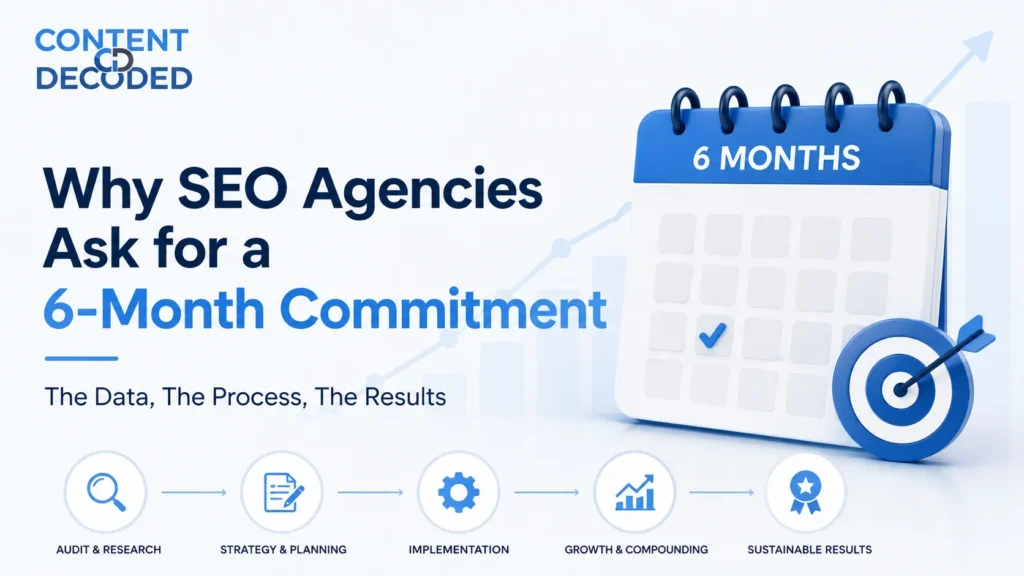
Why SEO Agencies Ask for a 6-Month Commitment
Many businesses wonder why most SEO agencies ask for a 6-month contract instead of offering month-to-month services. The simple reason is that SEO takes time. Unlike paid ads, where traffic can start almost immediately, SEO is a long-term process that builds results over time.
A 6-month commitment gives the agency enough time to improve your website, allow search engines to recognize those improvements, and start delivering meaningful results.
Why SEO Takes Time
Search engines don’t update rankings overnight that can explain why your content not rank. When changes are made to your website, search engines need time to:
- Revisit your website.
- Process the new content and improvements.
- Compare your website with competitors.
- Update search rankings.
Because of this, noticeable improvements often take several months.
What Happens During the First 6 Months?
The first few months are focused on building a strong foundation before traffic starts to grow.
| Timeline | What Happens |
| Month 1 | Website audit, keyword research, competitor analysis, and fixing tracking tools. |
| Month 2 | Fix technical issues, improve page speed, optimize existing pages, and resolve indexing problems. |
| Month 3 | Publish new content, improve internal linking, and begin building website authority. |
| Months 4-6 | Rankings improve, traffic grows, and leads or sales start increasing. |
This is why a one or two-month contract rarely gives enough time to measure SEO success.
What Should Improve by Month 3?
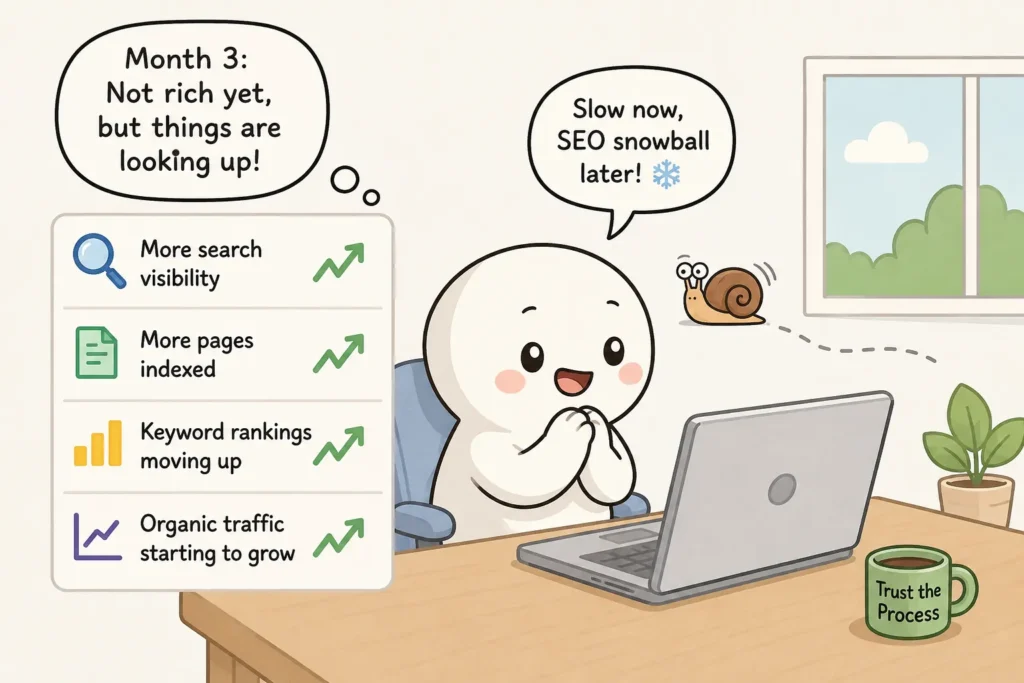
You may not see a huge increase in leads yet, but you should see signs that the campaign is moving in the right direction.
Look for improvements like:
- More search visibility (check Google Search Console for impressions).
- More pages indexed correctly (check the Pages report in Google Search Console).
- Keyword rankings moving up (track with tools like Semrush, Ahrefs, or Google Search Console).
- Organic traffic starting to grow, especially for less competitive searches (check Google Analytics 4 (GA4)).
These are early indicators that your SEO campaign is making progress, even if leads or sales haven’t increased yet.
What If You Stop SEO After 3 Months?
For a new website, stopping SEO after three months usually means stopping before the results begin to appear.
The first three months are spent building the foundation by fixing technical issues, optimizing pages, and publishing content. Search engines often need more time to do trust and process these changes.
While the improvements you’ve made will remain, your website may struggle to gain momentum, and competitors who continue investing in SEO are more likely to outrank you.
What Usually Takes Longer?
Some results naturally need more time.
For example:
- Ranking in the top positions for highly competitive keywords.
- Significant growth in leads or sales.
- Building strong website authority.
These improvements usually happen between Months 4 and 6, and sometimes longer in competitive industries.
Why New Websites Take Longer
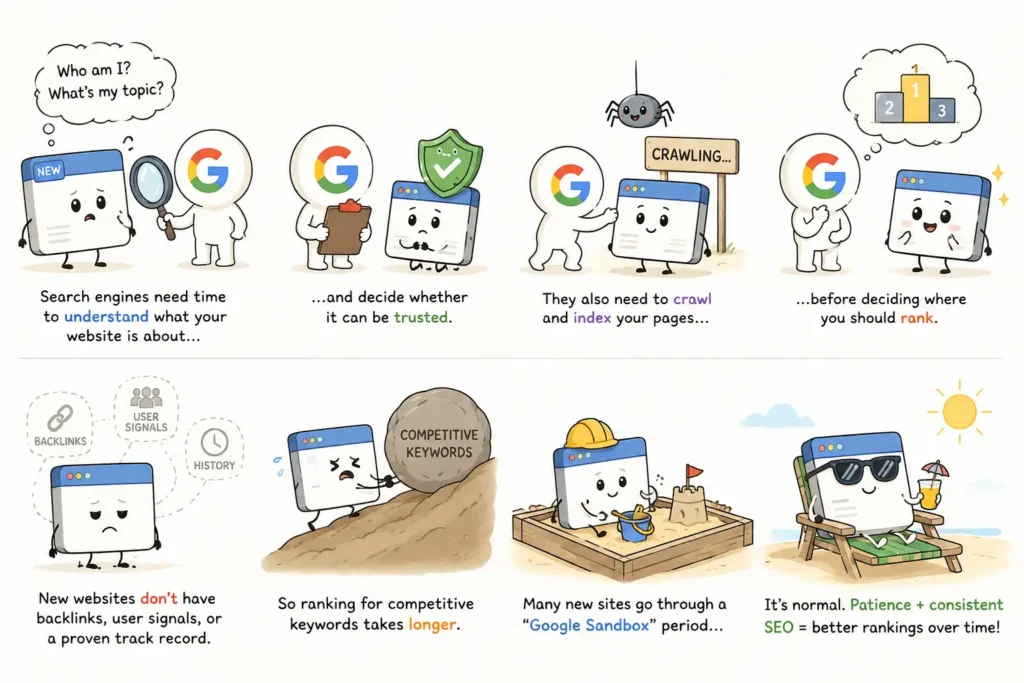
A brand-new website has no history or authority, so search engines need time to understand what the website is about and whether it can be trusted. They also need to crawl and index your pages before deciding where they should rank.
Unlike established websites, new sites don’t have existing backlinks, user signals, or a proven track record. As a result, ranking for competitive keywords usually takes longer.
Although Google doesn’t officially use the term Google Sandbox, many new websites experience a period where rankings improve slowly while search engines evaluate the quality and trustworthiness of the site. This is a normal part of SEO and one of the main reasons agencies recommend a longer commitment for new websites.
Established Websites Can See Faster Results
Established websites often see results faster because search engines already know and trust them. Instead of building authority from scratch, an SEO agency can focus on improving what already exists.
Some advantages include:
- Faster indexing: Search engines usually crawl established websites more often, so changes are picked up quickly.
- Existing keyword rankings: Many pages are already ranking on Page 2 or near Page 1, making them easier to improve.
- Built-in authority: Older websites often have existing backlinks and trust signals that help new content rank faster.
Because of these advantages, noticeable improvements can often appear within 2 to 3 months.
However, long-term growth still takes time. Reaching more competitive keywords, publishing quality content, and building authority are ongoing efforts, which is why many agencies still recommend a 6-month SEO plan.
Factors That Affect SEO Timelines
Not every website follows the same timeline. Results depend on several factors, including:
- Competition in your industry: The more businesses targeting the same keywords, the longer it usually takes to rank.
- Nature of your niche: Industries like health, finance, or legal (YMYL) require stronger trust signals and often take longer to see results.
- Website quality: A fast, well-structured website with useful content is easier for search engines to understand and rank.
- Technical issues: Problems like slow speed, indexing errors, or broken pages can delay SEO progress until they’re fixed.
- Previous SEO work: A website with a good SEO history usually improves faster than one recovering from poor SEO practices.
- Website age and authority: Older websites with existing trust and backlinks generally see results faster than brand-new websites.
A website with major technical problems or strong competition will usually take longer than a well-maintained website in a niche market.
Green Flags to Look For
A good SEO agency should provide clear progress every month.
Positive signs include:
- A clear SEO roadmap.
- Regular reports.
- Technical issues being fixed.
- New content published on schedule.
- Keyword rankings gradually improving.
- Better search visibility over time.
Even if traffic hasn’t increased significantly yet, you should see steady progress.
Red Flags to Watch Out For
Be cautious if an agency:
- Guarantees #1 rankings.
- Doesn’t explain what they’re working on.
- Misses agreed deliverables.
- Uses “SEO takes time” as an excuse without showing progress.
- Provides vague or confusing reports.
These are signs of a scammy agency. A good agency should always be able to show what has been completed and what comes next.
What If There Are No Results After 6 Months?
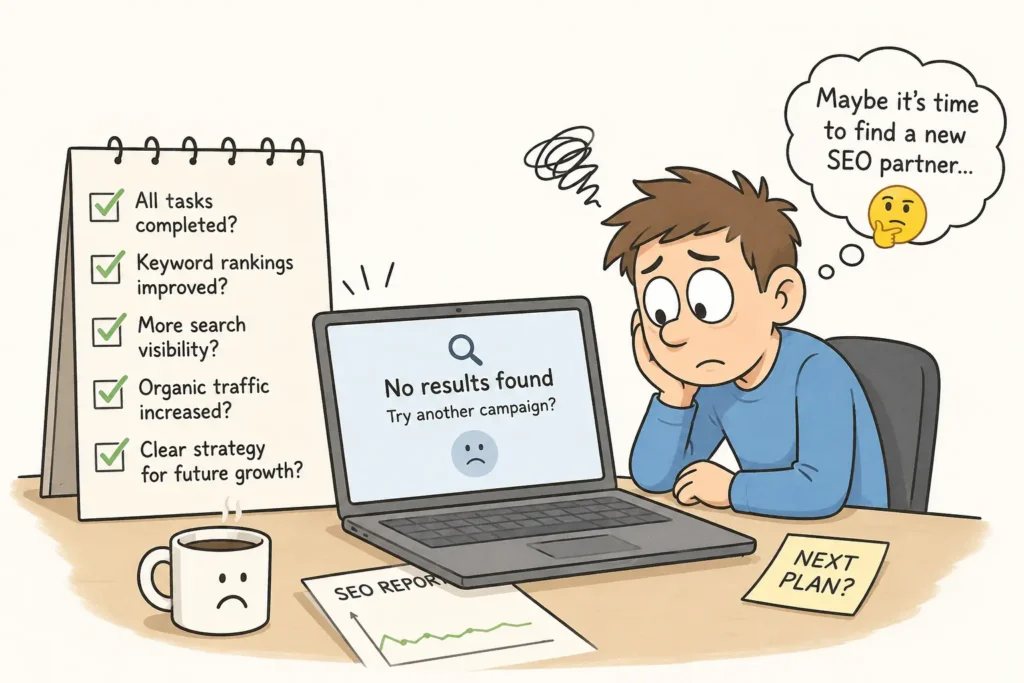
By the end of six months, you should have enough data to evaluate the campaign.
Review questions like:
- Were all agreed tasks completed?
- Have keyword rankings improved?
- Is your website getting more search visibility?
- Has organic traffic increased?
- Is there a clear strategy for future growth?
If there has been little or no progress and the agency cannot explain why, it may be time to consider another SEO partner.
Can You Ask for a Shorter Contract?
Yes. If your website is already established, you can ask for:
- A 3-month trial.
- A contract with clear milestones.
- A 30-day cancellation option after Month 3.
A confident agency should be willing to discuss reasonable terms based on your website’s condition and goals.
3-Month vs. 6-Month SEO Plan
The right plan depends on your website’s current condition, goals, and budget.
| Factor | 3-Month Plan | 6-Month Plan |
| Best for | Established websites or businesses wanting to test an agency. | New websites or businesses focused on long-term growth. |
| Main focus | Technical fixes, on-page optimization, and quick wins. | Complete SEO strategy, authority building, and sustainable growth. |
| Expected results | Early ranking improvements and increased search visibility. | Better rankings, more organic traffic, and measurable business results. |
| Risk | Lower commitment with more flexibility. | Higher commitment but gives SEO enough time to deliver results. |
The Bottom Line
A 6-month SEO commitment isn’t about locking you into a long contract. It’s about giving the strategy enough time to work.
The first few months are spent fixing problems, improving your website, and creating non-commodity and quality content. The following months are when those improvements begin turning into better rankings, more traffic, and eventually more leads or sales.
What matters most isn’t the contract length. It’s whether the agency delivers consistent work, communicates clearly, and shows measurable progress throughout the campaign.
Frequently Asked Questions
Is a 6-month SEO contract legally required?
No. A 6-month contract is a business agreement, not an SEO requirement. Some agencies also offer shorter plans or month-to-month services.
Can I switch SEO agencies during the project?
Yes. Before switching, make sure you have full ownership of your website, Google Search Console, Google Analytics, and all SEO assets created during the project.
Will my rankings drop if I stop SEO after 6 months?
Not immediately. However, rankings can gradually decline if competitors continue improving their websites while yours remains unchanged.
Does spending more on SEO mean faster results?
Not necessarily. A larger budget can increase the amount of work completed, but search engines still need time to crawl, evaluate, and rank your website.
Should I choose the cheapest SEO agency?
Price shouldn’t be the only factor. It’s better to choose an agency with a clear strategy, transparent reporting, and a proven track record than one that simply offers the lowest quote.
 Add Content Decoded as a preferred source