
How to Manage a Website and Do SEO for Seasonal Businesses
Seasonal businesses only get high demand during certain times of the year. Examples include summer camps, ski resorts, holiday gift stores, landscaping services, tax consultants, and air cooler sellers.
Many business owners focus on their website only during the busy season. This is a mistake. Your website should stay active throughout the year so that search engines continue to trust it and customers can still find your business before the next season starts.
The best strategy is to keep improving your website all year and start preparing for the next season several months before demand increases.
Below are all the key strategies, best practices, and do’s and don’ts for managing your website and improving SEO for a seasonal business.
Use Evergreen URLs
Your page URLs should never include a year.
Avoid
- /summer-camp-2026/
- /holiday-sale-2025/
Use instead
- /summer-camp/
- /holiday-sale/
Every year, simply update the content on the same page.
This helps because:
- The page keeps its search rankings.
- Existing backlinks remain valuable.
- Google already trusts the page.
- You don’t have to build authority from scratch every year.
Keep Seasonal Pages Live
Never delete or unpublish seasonal pages after the season ends.
If you remove a page, you may lose:
- Search rankings
- Website traffic
- Backlinks from other websites
Instead, keep the page online. Also, make sure the page continues to return a 200 OK status code. This tells search engines the page is still available and should continue to be crawled and indexed. Avoid returning a 404 (Page Not Found) error or using a 302 temporary redirect, as these can reduce the page’s SEO value.
During the off-season, you can:
- Remove it from the main menu.
- Display a message saying bookings are currently closed.
- Allow visitors to join a waiting list or newsletter.
- Let customers register for early access.
Example:
We are currently closed for this season. Join our waiting list, and we’ll let you know when bookings open again.
This keeps the page useful while protecting its SEO value.
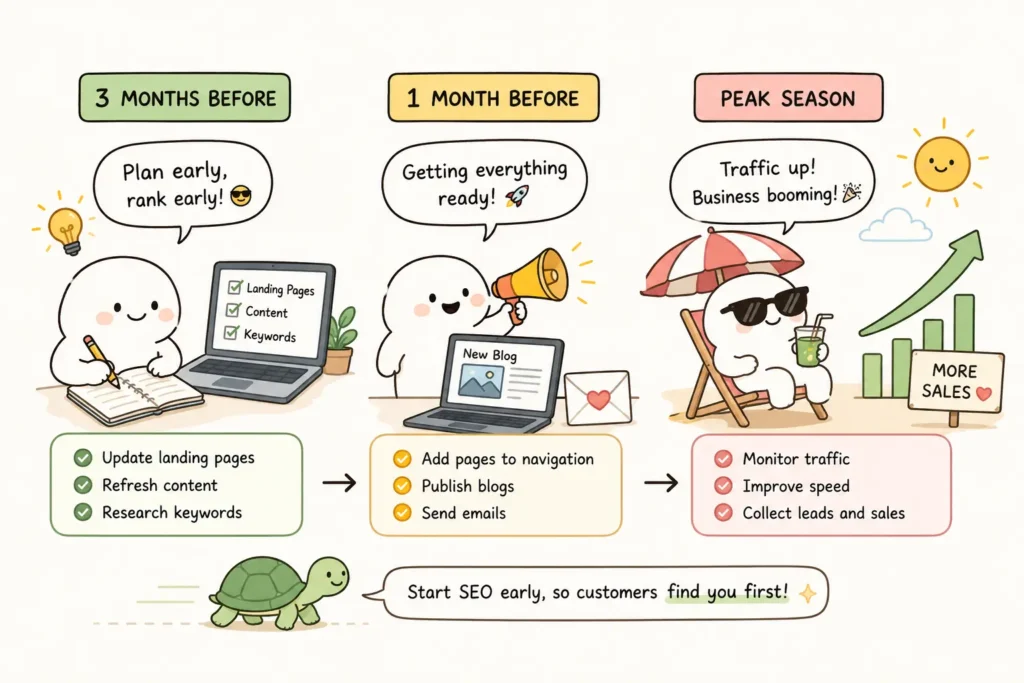
Start SEO at Least 3 Months Before the Season
SEO takes time.
Google needs time to discover, understand, and rank new or updated pages. If your business becomes busy in June, don’t wait until June to update your website.
Instead:
| Time | What You Should Do |
| 3 Months Before | Update landing pages, refresh content, research keywords |
| 1 Month Before | Add pages to navigation, publish blogs, send emails |
| Peak Season | Monitor traffic, improve speed, collect leads and sales |
Planning early gives your pages a much better chance of ranking before customers start searching.
Target Different Keywords Throughout the Year
People search for different things depending on the season.
Before the season
Before the season begins, most customers are researching and comparing their options rather than making a purchase.
Examples:
- When do ski resorts open?
- Best summer camp for kids
- How to prepare a lawn for summer
These are informational searches. By creating helpful content that answers these questions, you build trust with potential customers. When the peak season arrives, and they’re ready to book or buy, they’re more likely to return to your website because it already helped them find the information they needed.
During the season
Customers are ready to buy.
Examples:
- Book ski resort online
- Summer camp near me
- Lawn mowing service
These are buying keywords.
Your website should include content for both types of searches.
Website Management for Seasonal Businesses

Keep Business Information Updated
If you have a local business, always keep your information accurate.
Update:
- Business hours
- Phone number
- Address
- Holiday timings
If you’re temporarily closed, mark your business as temporarily closed instead of permanently closed.
This prevents confusion for both customers and Google.
Keep Collecting Leads During the Off-Season
Your website should continue generating leads even when you’re not selling.
You can offer:
- Early booking
- Waiting lists
- Free guides
- Discount coupons
- Email newsletters
Example:
Download our Spring Gardening Guide and get 10% off when bookings open.
This helps you build a list of interested customers before the season starts.
Make Sure Your Website is Fast
During peak season, many people may visit your website at the same time.
A slow website can reduce sales.
Improve speed by:
- Compressing images.
- Removing unnecessary files.
- Testing your website on mobile devices.
- Using reliable website hosting.
A fast website also helps your SEO.
Website Maintenance Throughout the Year
Your work doesn’t stop after the season ends.
Here’s a simple yearly plan.
| Season | Main Goal | Tasks |
| Peak Season | Get sales | Collect reviews, monitor traffic, improve customer experience |
| After Season | Review performance | Check keywords, remove expired offers, ask customers for feedback |
| Off-Season | Improve website | Update pages, publish blogs, Get backlinks, fix errors |
| Before Season | Prepare for launch | Refresh content, update page titles, start email campaigns |
Doing small improvements throughout the year is much easier than rebuilding everything before the season begins.
Create Useful Off-Season Content
Even when people aren’t ready to buy, they still search for helpful information.
Write articles that answer their questions.
Examples:
A landscaping company can publish:
- How to protect your lawn during winter
- Best indoor plants for beginners
- Soil care tips
A holiday gift store can publish:
- Birthday gift ideas
- Wedding gift inspiration
- Home decoration ideas
This keeps visitors coming to your website all year.
Add Structured Data
Use schema markup to help search engines better understand your website. For seasonal businesses, add Product, Event, or Local Business schema to show details like availability, event dates, and business hours. This can improve how your pages appear in search results.
Find New Uses for Seasonal Products
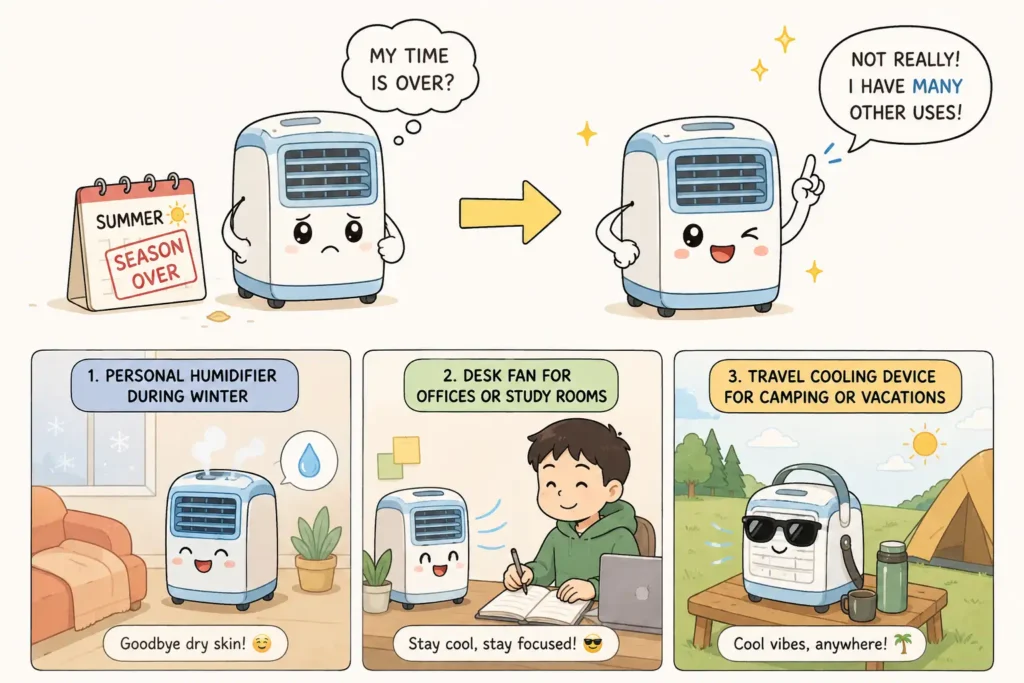
Sometimes, a seasonal product can still solve problems even when its main season is over. Instead of marketing it for only one purpose, highlight other ways customers can use it throughout the year.
For example, a portable air cooler can also be promoted as:
- A personal humidifier during winter.
- A desk fan for offices or study rooms.
- A travel cooling device for camping or vacations.
Finding alternative uses for seasonal products helps you attract new customers, create content throughout the year, and generate sales even during the off-season.
Publish Content Early
Don’t wait until customers start searching.
Start publishing content several months before demand increases.
Benefits include:
- Google has time to rank your pages.
- Pages gain more authority.
- Visitors spend more time reading your content.
- Other websites may link to your articles.
By the time the busy season arrives, your website is already ready.
Build Trust During the Off-Season
The off-season is a great time to improve your website’s credibility.
You can publish:
- Customer success stories
- Case studies
- Industry reports
- Product comparisons
- Helpful guides
You can also update older articles with new information so they stay fresh and useful.
Create a Seasonal SEO Calendar
A seasonal SEO calendar helps you plan your website updates, content, and marketing activities before customer demand increases.
Instead of waiting until the busy season starts, plan your actions throughout the year.
Example:
| Time | What to Do |
| 3–6 Months Before Season | Update important pages, research keywords, publish helpful content, and improve SEO |
| 1–2 Months Before Season | Add seasonal pages to navigation, start email campaigns, update offers, and prepare ads |
| During Peak Season | Focus on sales, collect reviews, monitor website performance, and fix issues quickly |
| After Season Ends | Update content, analyze performance, collect customer feedback, and plan improvements |
A seasonal calendar helps you stay prepared, keeps your website active throughout the year, and gives search engines enough time to rank your pages before customers start searching.
Expand to Other Countries
Some businesses have different peak seasons in different parts of the world.
For example:
When it’s winter in India, countries like Australia and New Zealand are experiencing summer.
If your products can be shipped internationally, you can:
- Create country-specific landing pages.
- Display local prices.
- Offer international shipping.
- Run advertising campaigns for those countries.
This allows your business to earn sales throughout the year instead of only during one season.
Keep Your Website Ready for High Traffic
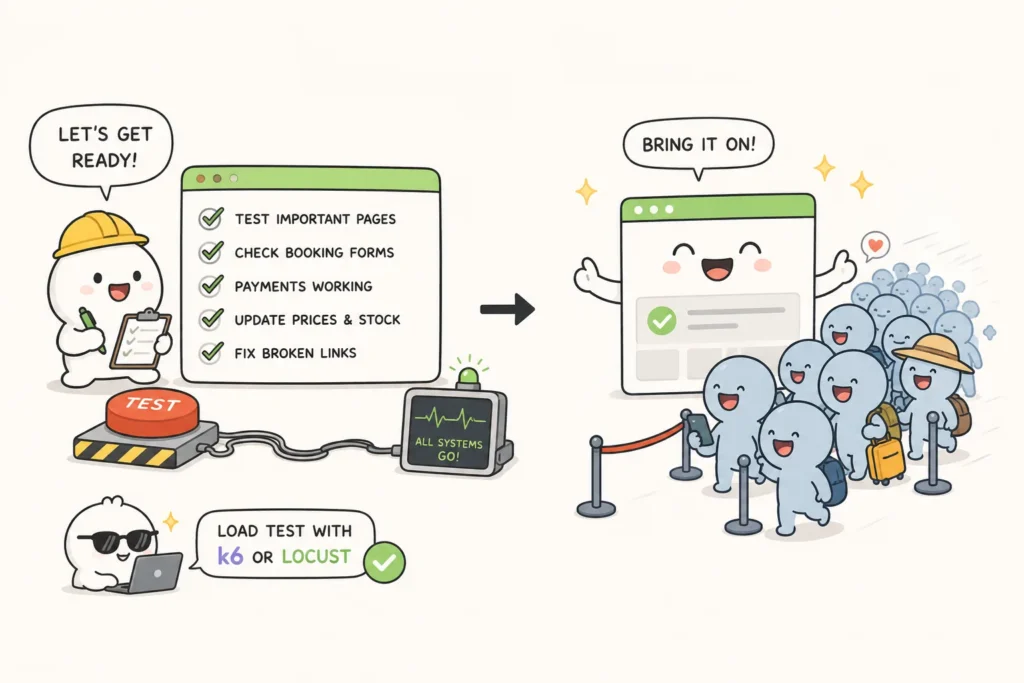
When demand suddenly increases, your website should continue working smoothly.
Before the season begins:
- Test important pages.
- Check that booking forms work.
- Make sure payments can be completed.
- Update prices and stock availability.
- Fix broken links and outdated information.
A website that loads quickly and works properly creates a better experience for customers and prevents lost sales.
You can load test your website with tools like k6 or Locust before peak season to make sure your booking or checkout system can handle high traffic.
Keep Important Pages Updated
Your main service or product pages are the most valuable pages on your website.
Never abandon them.
Instead, regularly update:
- Titles
- Headings
- Product details
- Prices
- Images
- FAQs
- Customer reviews
If you need to mention a new year, update the content on the same page instead of creating a new URL.
For example:
Instead of creating:
- /best-air-cooler-2027/
Use:
- /best-air-cooler/
Then simply update the content every year.
Example: Portable Mini Air Cooler
A portable mini air cooler is mainly sold during summer.
Instead of ignoring the product after summer ends, you can keep promoting it throughout the year.
During Summer
Focus on:
- Cooling performance
- Energy savings
- Customer reviews
- Fast delivery
After Summer
Publish articles like:
- How to clean your portable air cooler
- Best way to store your cooler after summer
- How to increase the life of your cooler
During Winter
Show other uses such as:
- Personal humidifier
- Office desk fan
- Travel cooling device
Before the Next Summer
Update the product page with:
- Latest features
- New images
- Updated prices
- Customer testimonials
- Early-bird discounts
Because the page stayed active all year, Google is more likely to rank it when people start searching again.
Key Takeaways
Managing a seasonal business website is about staying active all year, not just during your busiest months.
To achieve better SEO:
- Use evergreen URLs without years.
- Keep seasonal pages live even when the season ends.
- Start updating content at least three months before demand increases.
- Publish helpful content throughout the year.
- Keep your website fast and mobile-friendly.
- Collect reviews and customer feedback during the busy season.
- Update your important pages regularly instead of creating new ones.
- Use the off-season to improve your website, build trust, and prepare for the next peak season.
A website that stays useful throughout the year builds stronger search rankings, attracts more visitors, and is ready to generate leads and sales whenever the next season begins.
 Add Content Decoded as a preferred source